If you’ve ever hesitated between writing absence or absense, you’re not alone. This is one of those small spelling mistakes that can easily slip into emails, essays, or exams.
The confusion is understandable—but once you learn the correct form of absence vs absense, you’ll never get it wrong again.
Quick Answer
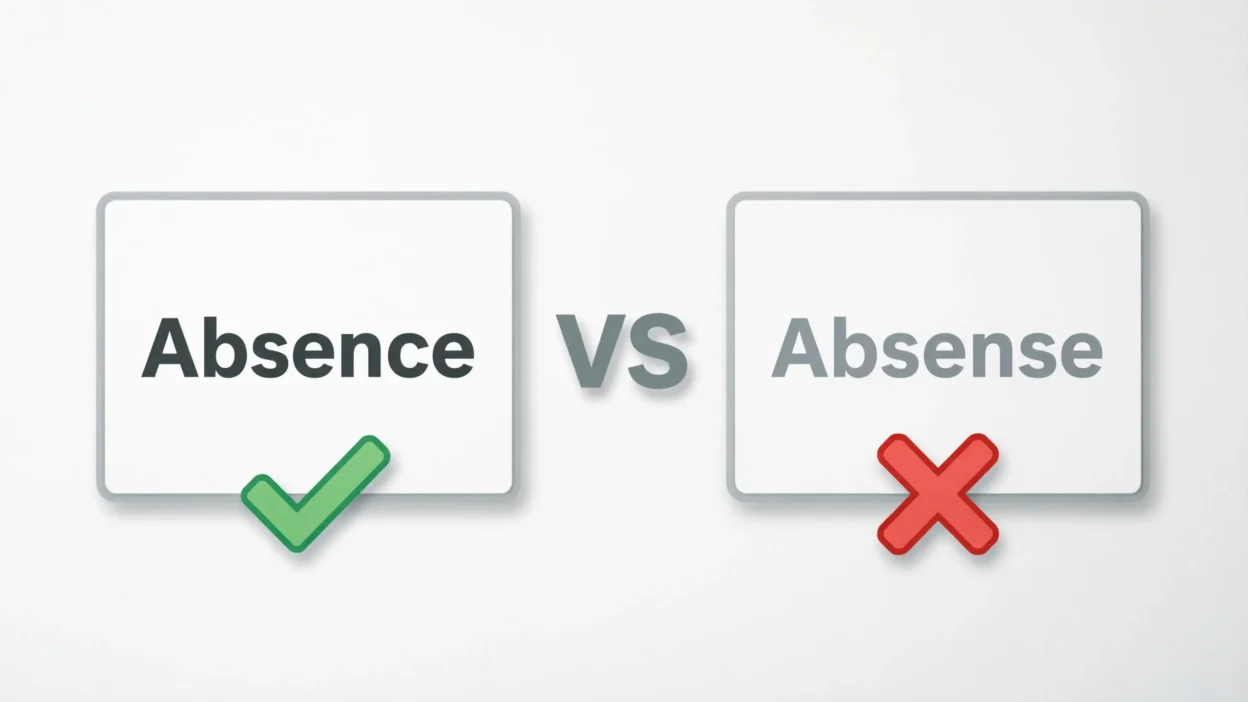
“Absence” is correct. “Absense” is incorrect.
“Absence” is the proper English spelling, while “absense” is just a common mistake.
What Does “Absence” Mean?
“Absence” is a noun that means:
- The state of being away or not present
- Lack or unavailability of something
- Missing from a place or situation
Examples:
- His absence was noticed at the meeting.
- She was marked absent due to her absence from class.
- The absence of evidence made the case weak.
In all these examples, “absence” is used correctly.
What About “Absense”?
“Absense” is not a real English word. It has no meaning and is considered incorrect.
People often write “absense” because:
- It sounds similar to “sense”
- English spelling patterns can be confusing
- Typing quickly leads to mistakes
Why “Absence” Is Correct
The word “absence” comes from Latin and follows a specific spelling pattern ending in “-ence”, not “-ense”.
👉 Many English nouns use “-ence” endings:
- difference
- presence
- existence
So:
- absence ✅
- absense ❌
Examples to Make It Clear
Correct Usage:
- Her absence affected the team’s performance.
- I noticed your absence yesterday.
- The teacher recorded his absence.
Incorrect Usage:
- Her absense affected the team ❌
- I noticed your absense ❌
Common Mistakes People Make
Here’s why learners confuse absence vs absense:
- ❌ Replacing “-ence” with “-ense”
- ❌ Spelling based on pronunciation
- ❌ Mixing it with words like “sense” or “license”
Helpful Tip:
👉 Words ending in “-ence” often come from Latin roots and follow consistent patterns.
Comparison Table: Absence vs Absense
| Feature | Absence ✅ | Absense ❌ |
|---|---|---|
| Correct spelling | Yes | No |
| Meaning | Being not present | No meaning |
| Usage | Standard English | Incorrect form |
| Example | In your absence | Not valid |
Absence in Real-Life Sentences
Using correct spelling makes your writing more professional:
- Due to his absence, the meeting was delayed.
- Her long absence worried everyone.
- The absence of light made the room dark.
- Students must explain any absence.
American vs British English
There is no difference between American and British English for this word.
- 🇺🇸 American English: absence ✅
- 🇬🇧 British English: absence ✅
Both use the same spelling and meaning.
Related Words and Forms
Understanding related words helps reinforce correct spelling:
- Absent (adjective)
- Absently (adverb)
- Absentee (noun)
- Absenteeism (noun)
All are connected to the root “absence.”
Easy Memory Trick
Here’s a simple trick:
👉 “Absence has ‘ence’ like presence.”
Since both are common English words, remembering one helps you spell the other.
Why Correct Spelling Matters
Using “absence” correctly helps you:
- Avoid embarrassing mistakes
- Improve writing clarity
- Perform better in exams
- Sound more professional
Even small spelling errors can affect how your writing is judged.
FAQs
1. Is “absense” ever correct?
No, “absense” is always incorrect.
2. Why do people confuse “absence” and “absense”?
Because of similar pronunciation and confusion with “sense.”
3. What does “absence” mean?
It means being not present or the lack of something.
4. Is “absence” formal or informal?
It is used in both formal and informal English.
5. Are there similar words with “-ence”?
Yes, like presence, difference, and existence.
6. Is spelling the same worldwide?
Yes, both American and British English use “absence.”
7. How can I remember the correct spelling?
Link it with “presence”—both end in “-ence.”
Final Summary
The difference between absence vs absense is straightforward. “Absence” is the correct spelling and widely used in English, while “absense” is simply a common misspelling.
Once you remember the “-ence” ending and connect it with similar words like “presence,” you’ll avoid this mistake easily. Consistent practice makes correct spelling second nature.
Actionable Takeaway
- Always use “absence”
- Avoid writing “absense”
- Remember: absence = presence (both use -ence)
- Practice similar words
- Double-check spelling when writing
Small improvements like this can make a big difference in your English.