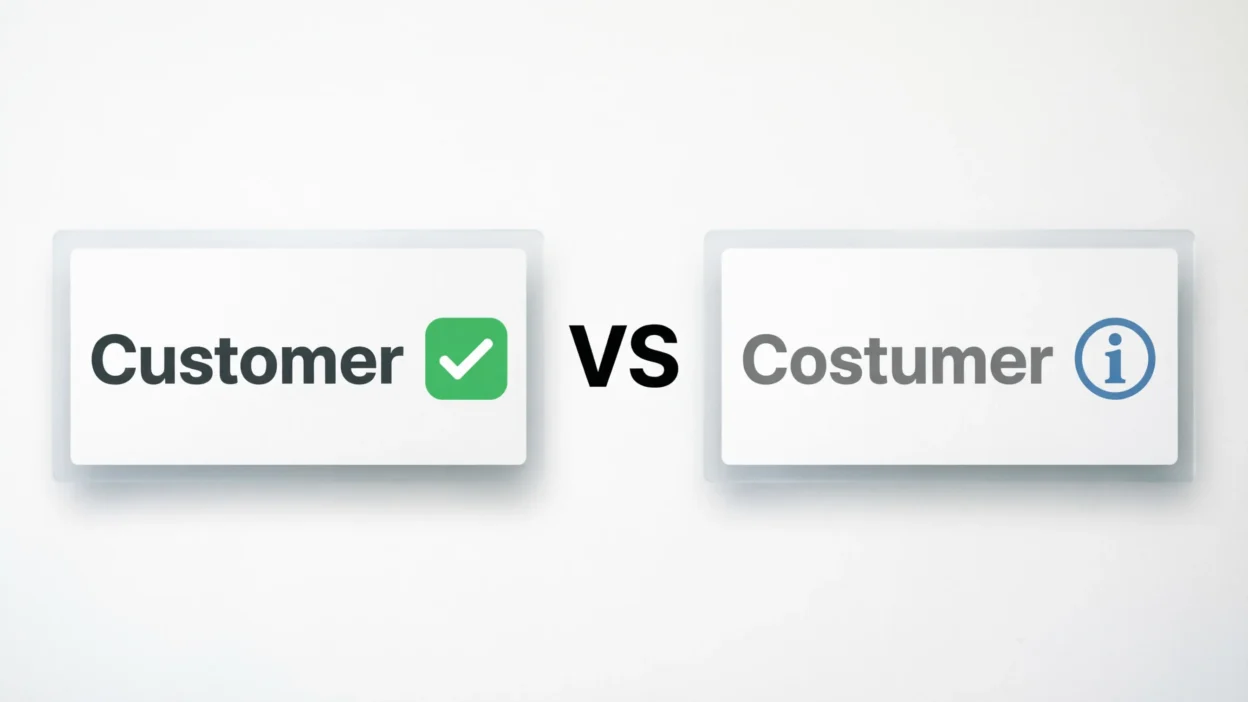
If you’ve ever typed costumer when you meant customer, you’re not alone. These two words look very similar, but they have completely different meanings—and using the wrong one can change your sentence entirely.
In this guide on costumer vs customer, you’ll learn the correct usage, meanings, examples, and simple tricks to avoid this common mistake.
Quick Answer
Both “costumer” and “customer” are correct—but they mean different things.
- Customer = a person who buys something
- Costumer = a person who makes or sells costumes
What Does “Customer” Mean?
“Customer” is a noun that means:
- A person who buys goods or services
- A client or buyer
- Someone who shops from a business
Examples:
- The customer was happy with the service.
- We value every customer.
- She is a regular customer at this store.
This is the word you’ll use most often in daily life.
What Does “Costumer” Mean?
“Costumer” is also a noun, but it has a completely different meaning:
- A person who designs, makes, or sells costumes
- Someone involved in clothing for theater, movies, or events
Examples:
- The costumer designed outfits for the play.
- She works as a costumer in the film industry.
- The theater hired a professional costumer.
This word is less common and used in specific contexts.
Key Difference Between Costumer vs Customer
The difference comes down to just one letter—but the meaning changes a lot.
👉 Customer = buys things
👉 Costumer = makes costumes
Comparison Table: Costumer vs Customer
| Feature | Customer ✅ | Costumer ✅ |
|---|---|---|
| Meaning | Buyer or client | Costume designer/seller |
| Usage | Very common | Less common |
| Context | Business, shopping | Theater, film, fashion |
| Example | Happy customer | Skilled costumer |
Examples to Make It Clear
Customer (Correct in Most Cases):
- Every customer deserves respect.
- The customer asked for a refund.
- Online stores attract more customers.
Costumer (Specific Use):
- The costumer prepared outfits for actors.
- A skilled costumer can bring characters to life.
Common Mistake:
- The costumer bought groceries ❌
- The customer designed costumes ❌
Why People Confuse These Words
Here are the main reasons:
- ❌ Similar spelling (only one letter difference)
- ❌ Fast typing errors
- ❌ Not knowing the word “costumer” exists
Helpful Tip:
👉 If it’s about buying or shopping → customer
👉 If it’s about costumes → costumer
Customer in Real-Life Sentences
Since this is the more common word, here are more examples:
- Good service keeps customers loyal.
- The customer left a positive review.
- Businesses depend on satisfied customers.
- The store greeted every customer warmly.
Costumer in Real-Life Sentences
Used in creative industries:
- The movie hired a famous costumer.
- A costumer created historical outfits.
- Theater productions rely on talented costumers.
American vs British English
There is no spelling difference between American and British English for these words.
- 🇺🇸 American English: customer / costumer ✅
- 🇬🇧 British English: customer / costumer ✅
Both use the same forms and meanings.
Related Words and Forms
Understanding related words helps avoid confusion:
For Customer:
- Customers (plural)
- Customer service
- Customer base
For Costumer:
- Costume
- Costuming
- Costume designer
Easy Memory Trick
Here’s a simple trick:
👉 Customer = “Custom” (orders, buying)
👉 Costumer = “Costume” (clothing, outfits)
Just link the word to its root!
Why Correct Usage Matters
Using the wrong word can:
- Change your sentence meaning
- Cause confusion
- Look unprofessional
- Affect business communication
Imagine calling a buyer a “costumer”—it could sound very odd!
FAQs
1. Is “costumer” a real word?
Yes, but it refers to someone who makes or sells costumes.
2. Which is more common: customer or costumer?
“Customer” is far more common in everyday English.
3. Can I use “costumer” for shoppers?
No, that would be incorrect.
4. What does “customer” mean?
It means a person who buys goods or services.
5. Are both words correct in English?
Yes, but they are used in completely different contexts.
6. Is spelling different in British English?
No, both words are spelled the same in American and British English.
7. How can I avoid confusion?
Remember: customer = buying, costumer = costumes.
Final Summary
The difference between costumer vs customer is small in spelling but big in meaning. “Customer” refers to someone who buys products or services, while “costumer” refers to someone who works with costumes.
Because “customer” is used much more often, it’s the word you’ll usually need. Understanding this difference will help you avoid awkward mistakes and communicate more clearly.
Actionable Takeaway
- Use customer for buyers or clients
- Use costumer only for costume-related roles
- Remember: customer = custom (buying)
- Double-check spelling in business writing
- Practice both words in context
Mastering this small difference can greatly improve your accuracy in English.