If you’ve ever hesitated between proceed and procede, you’re not alone. These two spellings look similar, but only one is correct—and using the wrong one can quietly affect your credibility in writing.
In this easy-to-follow guide, you’ll learn the correct spelling, understand why the confusion happens, and see clear examples so you can use the word confidently every time.
Quick Answer
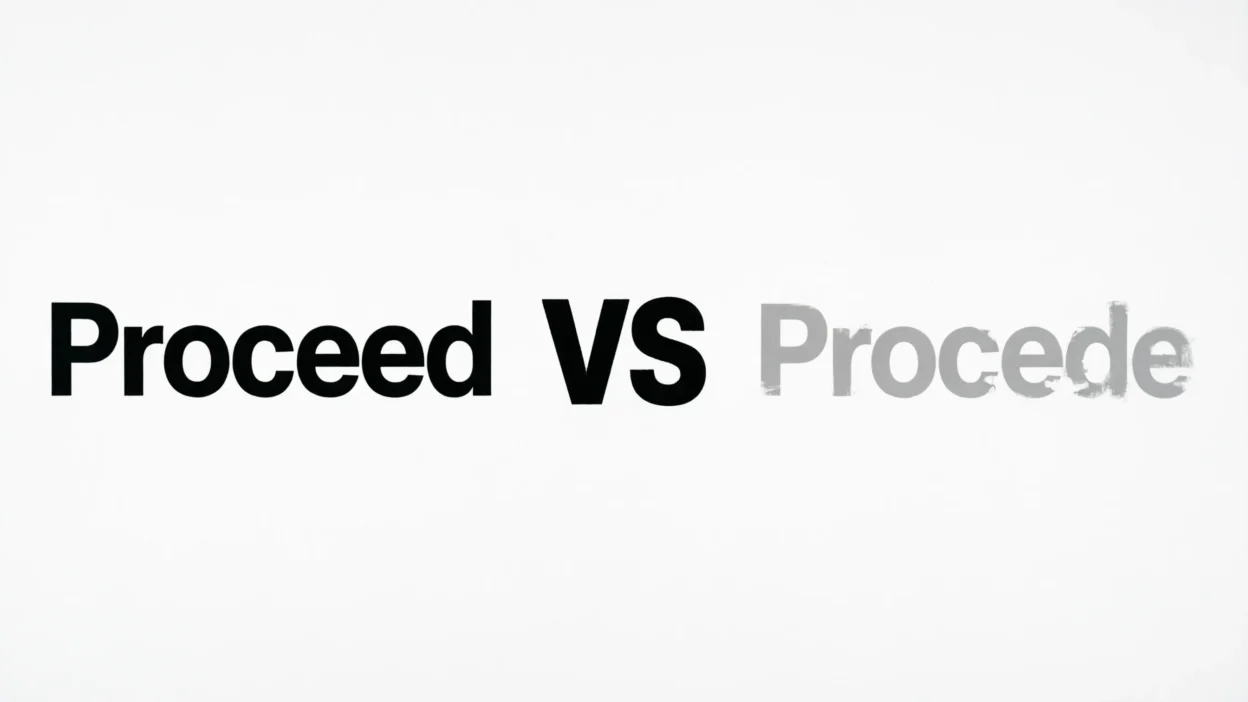
- ✅ Proceed = Correct spelling (means to continue or move forward)
- ❌ Procede = Incorrect spelling (common misspelling)
Always use “proceed” in proper English.
What Does “Proceed” Mean?
The word proceed is a verb that means:
- To continue doing something
- To move forward in a process
- To take the next step
Examples:
- Please proceed with the plan.
- After the break, we will proceed with the meeting.
- He decided to proceed carefully.
Related Forms:
- Proceeding (noun/verb form)
- Proceeds (noun – money gained from something)
What About “Procede”?
The spelling procede is incorrect and not recognized in standard English dictionaries.
Why Do People Write “Procede”?
- Confusion with words like precede
- Dropping one “e” by mistake
- Typing too quickly
👉 Important: Always remember that proceed has double “e”.
Proceed vs Procede: Key Differences
| Feature | Proceed ✅ | Procede ❌ |
|---|---|---|
| Correct Word | Yes | No |
| Meaning | Continue or move ahead | None |
| Usage | Formal & informal | Incorrect usage |
| Spelling | P-R-O-C-E-E-D | P-R-O-C-E-D-E |
Why “Proceed” Has Double ‘E’
The spelling of proceed includes double “e”, which often causes confusion.
Easy Memory Trick:
👉 Think: “Proceed needs to keep going—so it has extra ‘e’ energy!”
Or remember: pro + ceed → double “e” stays together.
Common Mistakes to Avoid
Here are the most common errors:
1. Dropping One “E”
❌ Let’s procede with the task.
✅ Let’s proceed with the task.
2. Confusing with “Precede”
- Precede = to come before
- Proceed = to continue
👉 These words sound similar but have very different meanings.
3. Spelling Errors in Fast Typing
Common mistakes include:
- procede
- procced
- proced
👉 Always proofread before submitting your writing.
Real-Life Examples of “Proceed”
Here are more examples in everyday contexts:
- You may proceed when ready.
- The officer signaled the car to proceed.
- We will proceed step by step.
- After approval, the project will proceed.
American vs British English Differences
There is no difference between American and British English.
- Both use proceed
- Both consider procede incorrect
So you can use proceed confidently anywhere.
Synonyms and Related Words
Using synonyms can make your writing more engaging.
Synonyms of “Proceed”:
- Continue
- Advance
- Move forward
- Progress
- Carry on
Related Words:
- Process
- Progress
- Procedure
- Proceeding
When to Use “Proceed” in Writing
Use proceed when:
- Giving instructions
- Describing steps in a process
- Writing formally or informally
Examples:
- Please proceed to the next section.
- The team will proceed with testing.
- We cannot proceed without approval.
Tips to Remember the Correct Spelling
Here are simple ways to avoid mistakes:
- ✅ Remember: double “e” in the middle
- ✅ Associate it with “keep going”
- ✅ Practice writing it correctly
- ✅ Use spell-check tools
- ✅ Read regularly to reinforce spelling
FAQs About Proceed vs Procede
1. Is “procede” ever correct?
No, procede is not a correct English word.
2. What does “proceed” mean?
It means to continue or move forward.
3. Why does “proceed” have double ‘e’?
It comes from its linguistic roots and follows a standard spelling pattern.
4. What is the difference between “proceed” and “precede”?
- Proceed = continue
- Precede = come before
5. Is “proceed” formal or informal?
It can be used in both contexts.
6. What is the noun form of “proceed”?
Proceeds (money gained) or proceeding (an event/process).
7. Is there a British vs American difference?
No, both use the same spelling.
8. Is this a common mistake?
Yes, many people mistakenly write procede.
Summary
The difference between proceed vs procede is simple but important. Proceed is the correct spelling and means to continue or move forward, while procede is a common misspelling that should be avoided.
Understanding this distinction helps improve your writing clarity and professionalism. Since this mistake appears often, mastering it gives you more confidence in both academic and everyday writing.
Actionable Takeaway
From now on, remember: proceed has double “e.” Use memory tricks, proofread your work, and practice regularly. Small spelling improvements can make a big impact on your communication skills.