If you’ve ever typed breeched when you meant breached, you’re not alone. These two words look similar, sound almost identical, and can easily confuse even careful writers—especially in fast typing or formal writing.
But here’s the truth: while both words exist, they mean completely different things. Using the wrong one can change your sentence entirely. This guide will help you clearly understand the difference, avoid mistakes, and use the right word with confidence.
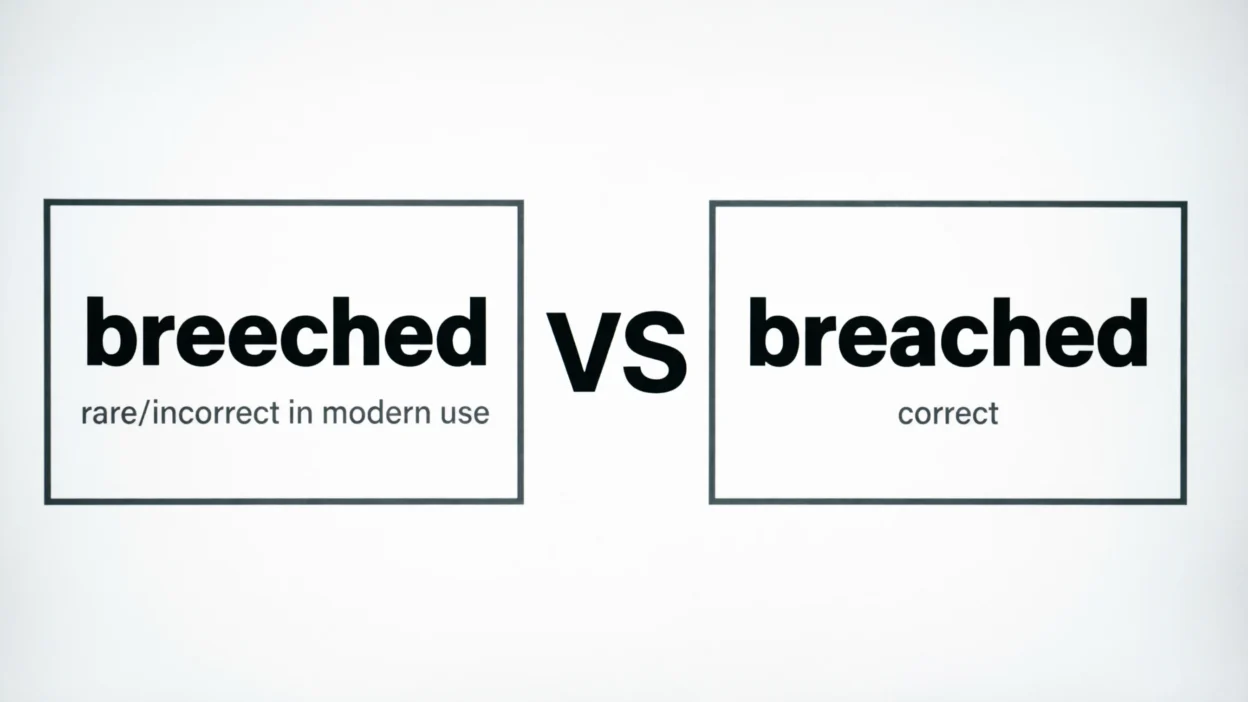
Quick Answer: Breeched vs Breached
- Correct (in most contexts): Breached ✅
- Also a real word: Breeched (rare, specific meaning) ⚠️
- Breached = broke, violated, or broke through something
- Breeched = dressed (a child) in breeches or related to clothing
👉 In everyday writing, you almost always want breached.
What Does “Breached” Mean?
Breached is the past tense of breach, meaning to break, violate, or cross a boundary.
Common meanings:
- Breaking a rule, law, or agreement
- Breaking through a barrier
- Creating a gap or opening
Examples:
- The company breached the contract.
- Hackers breached the security system.
- The dam was breached during the storm.
- He breached trust by sharing secrets.
It’s widely used in legal, technical, and everyday contexts.
What Does “Breeched” Mean?
Breeched is a much less common word and has a very specific meaning.
Meaning:
- To dress a boy in breeches (an old-fashioned type of pants)
- Historically used when young boys first wore trousers instead of gowns
Examples:
- The child was breeched at the age of six.
- In history, boys were breeched as a sign of growing up.
👉 This word is rare and mostly appears in historical or literary contexts.
Why Do People Confuse Breeched and Breached?
The confusion comes from three main reasons:
1. Similar pronunciation
Both words sound almost the same in casual speech.
2. Similar spelling
Only one letter difference:
- Breeched (ee)
- Breached (ea)
3. Autocorrect issues
Sometimes devices don’t catch the mistake, especially if both words are technically valid.
Breeched vs Breached: Side-by-Side Comparison
| Feature | Breached ✅ | Breeched ⚠️ |
|---|---|---|
| Meaning | Broke or violated something | Dressed in breeches |
| Usage | Very common | Very rare |
| Context | Legal, security, general writing | Historical/literary |
| Correct for “break” | Yes | No |
| Example | Breached contract | Breeched child |
American vs British English Differences
There is no difference between American and British English for these words.
- American English: Breached / Breeched
- British English: Breached / Breeched
Both spellings and meanings remain the same in both versions of English.
Examples of “Breached” in Sentences
Here are some real-world uses:
- The firewall was breached by attackers.
- She breached company policy.
- The wall was breached during the attack.
- They were fined for breaching safety regulations.
- Trust was breached in the relationship.
Examples of “Breeched” in Sentences
Though rare, here’s how it’s used:
- The boy was breeched in a traditional ceremony.
- In earlier centuries, children were breeched young.
Common Mistakes to Avoid
1. Using “breeched” instead of “breached”
❌ The system was breeched
✅ The system was breached
2. Confusing spelling patterns
- “ea” = break/violate → breached
- “ee” = clothing term → breeched
3. Using the wrong word in professional writing
This can make writing look inaccurate or unpolished.
4. Ignoring context
Always check if your sentence is about breaking something or clothing.
Easy Trick to Remember the Difference
Here’s a simple memory tip:
👉 “EA = break (breach)”
👉 “EE = clothes (breeches)”
- If you mean breaking a rule → breached
- If you mean clothing → breeched
Synonyms and Related Words for “Breached”
Using alternatives can improve your writing.
Synonyms:
- Violated
- Broken
- Crossed
- Infringed
- Penetrated
Example:
- The company violated the agreement.
- The wall was broken during the attack.
When Should You Use Each Word?
Use “breached” when:
- Talking about contracts, laws, or rules
- Describing security or data issues
- Mentioning physical or metaphorical barriers
Use “breeched” when:
- Writing about historical clothing
- Referring to old traditions involving children
👉 In modern writing, breached is used far more often.
Why Correct Usage Matters
Choosing the right word affects how your writing is understood.
Benefits:
- Prevents confusion
- Improves credibility
- Makes writing more professional
- Ensures accurate communication
Using breeched instead of breached in a serious context (like cybersecurity) can look like a major mistake.
FAQs About Breeched vs Breached
1. Is “breeched” a real word?
Yes, but it’s rare and refers to clothing, not breaking something.
2. Which word should I use for data leaks?
Use breached.
3. Why do people mix them up?
Because they sound similar and differ by only one letter.
4. Is “breached” used in formal writing?
Yes, very commonly in legal and professional contexts.
5. Do British and American English differ?
No, both use the same spellings and meanings.
6. Can “breeched” be used today?
Yes, but mostly in historical or literary writing.
7. What part of speech are these words?
Both are past tense verbs.
8. Is “breach” related to law?
Yes, it’s commonly used in legal terms like “breach of contract.”
Final Summary
The difference between breeched vs breached comes down to meaning and usage. Breached is the word you’ll use in almost all modern contexts—it means to break, violate, or pass through something. On the other hand, breeched is a rare, historical term related to clothing.
Because the words look and sound similar, it’s easy to mix them up. But remembering their meanings—and especially the “EA = break” trick—can help you avoid this mistake completely.
Actionable Takeaway
Before you write, ask yourself:
👉 “Am I talking about breaking something?”
If yes, always choose breached. Avoid breeched unless you’re discussing historical clothing.