If you’ve ever wondered whether to write “wholistic” or “holistic,” you’re definitely not alone. Both words look similar and even sound the same, which makes the confusion very common—especially in health, wellness, and personal development contexts.
In this easy-to-follow guide, we’ll break down wholistic vs holistic, explain which spelling is correct, and show you how to use it confidently in everyday writing.
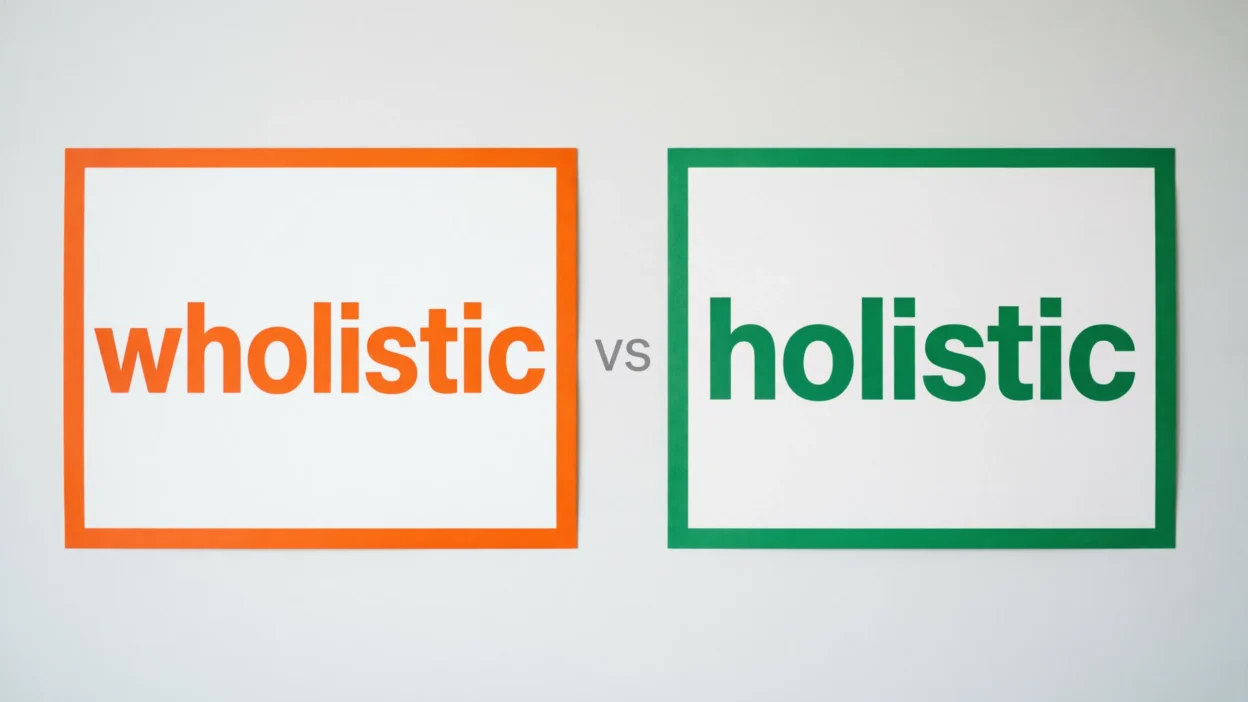
Quick Answer: Wholistic vs Holistic
- ✅ Holistic = Correct and standard spelling
- ⚠️ Wholistic = Less common variant (sometimes used, but not preferred)
Bottom line: Use holistic in most situations. It’s widely accepted and recognized.
What Does “Holistic” Mean?
The word holistic refers to an approach that considers the whole system rather than just individual parts.
Common meanings:
- Treating the whole person (mind, body, and spirit)
- Looking at the big picture
- Considering all factors in a situation
Examples:
- She follows a holistic approach to health.
- The teacher uses a holistic method for student development.
- We need a holistic solution to this problem.
What Does “Wholistic” Mean?
The word wholistic has the same meaning as “holistic,” but it is considered a nonstandard or alternative spelling.
It comes from the word “whole,” which is why some people prefer it for emphasis—but it’s not widely used in formal writing.
Examples:
- Some wellness brands promote a wholistic lifestyle.
- The clinic offers wholistic healing therapies.
Important Note:
Even though “wholistic” appears in some dictionaries, it’s still less common and less professional compared to “holistic.”
Wholistic vs Holistic: Key Differences
| Feature | Wholistic ⚠️ | Holistic ✅ |
|---|---|---|
| Spelling | Variant | Standard |
| Usage | Less common | Widely used |
| Acceptance | Informal/limited | Formal & universal |
| Meaning | Same | Same |
| Recommended? | Not usually | Yes |
Why Do People Use “Wholistic”?
Even though “holistic” is the standard, “wholistic” still appears in certain contexts.
1. Emphasis on “Whole”
Some writers want to highlight the word “whole,” making “wholistic” feel more intuitive.
2. Branding and Marketing
Wellness brands sometimes use “wholistic” to stand out or appear unique.
3. Personal Preference
A few people simply prefer how it looks or feels.
Common Mistakes to Avoid
Here are some common issues related to this keyword:
- ❌ Using “wholistic” in formal or academic writing
- ❌ Assuming both spellings are equally accepted
- ❌ Mixing both spellings in the same document
- ❌ Thinking “wholistic” is more correct (it’s not)
Pro Tip:
If you’re unsure, always go with holistic—it’s the safer and smarter choice.
Tips to Remember the Correct Spelling
1. Keep It Simple
Most English users recognize holistic, not “wholistic.”
2. Think Professional
For essays, blogs, or business writing → use holistic
3. Avoid Overthinking
Even though “whole” is part of the meaning, the correct spelling drops the “w.”
4. Use Tools
Spell-checkers and grammar tools prefer holistic
American vs British English: Any Difference?
There is no difference between American and British English for this word.
- 🇺🇸 American English: Holistic
- 🇬🇧 British English: Holistic
“Wholistic” may appear occasionally in both, but it’s still less common everywhere.
Real-Life Usage Examples
Correct Usage:
- A holistic diet includes physical and mental well-being.
- The company uses a holistic business strategy.
- Doctors recommend a holistic treatment plan.
Less Preferred Usage:
- ⚠️ She believes in wholistic healing methods.
- ⚠️ The center promotes wholistic care.
Related Words and Synonyms
To expand your understanding, here are similar terms:
- Comprehensive
- Integrated
- Whole-based
- All-inclusive
- Balanced approach
These words can sometimes replace “holistic” depending on context.
Why Correct Spelling Matters
Choosing the right spelling can impact how your writing is perceived.
1. Professionalism
“Holistic” looks more credible in formal contexts.
2. Clarity
Using the standard spelling avoids confusion.
3. SEO Benefits
“Holistic” is searched far more often than “wholistic.”
FAQs About Wholistic vs Holistic
1. Is “wholistic” wrong?
Not completely—it’s a variant, but not the standard spelling.
2. Which spelling should I use in essays?
Always use holistic for academic and formal writing.
3. Why do some brands use “wholistic”?
Mostly for branding or stylistic reasons.
4. Do both words mean the same thing?
Yes, they have identical meanings.
5. Is “wholistic” accepted in dictionaries?
Some dictionaries include it, but label it as a variant.
6. Is “holistic” more popular?
Yes, it’s significantly more common worldwide.
7. Can I use “wholistic” in casual writing?
You can, but “holistic” is still better.
8. How do I remember the correct spelling?
Just remember: drop the “w” → holistic is standard.
Final Summary
The difference between wholistic vs holistic comes down to usage and acceptance. While both words technically share the same meaning, holistic is the standard, widely accepted spelling used in professional, academic, and everyday contexts.
“Wholistic,” on the other hand, is a less common variant that may appear in branding or informal writing. To ensure clarity, credibility, and correctness, it’s best to stick with holistic in most situations.
Actionable Takeaway
- Use holistic for all formal and professional writing
- Avoid “wholistic” unless there’s a specific stylistic reason
- Stay consistent with one spelling
- Trust common usage over personal preference