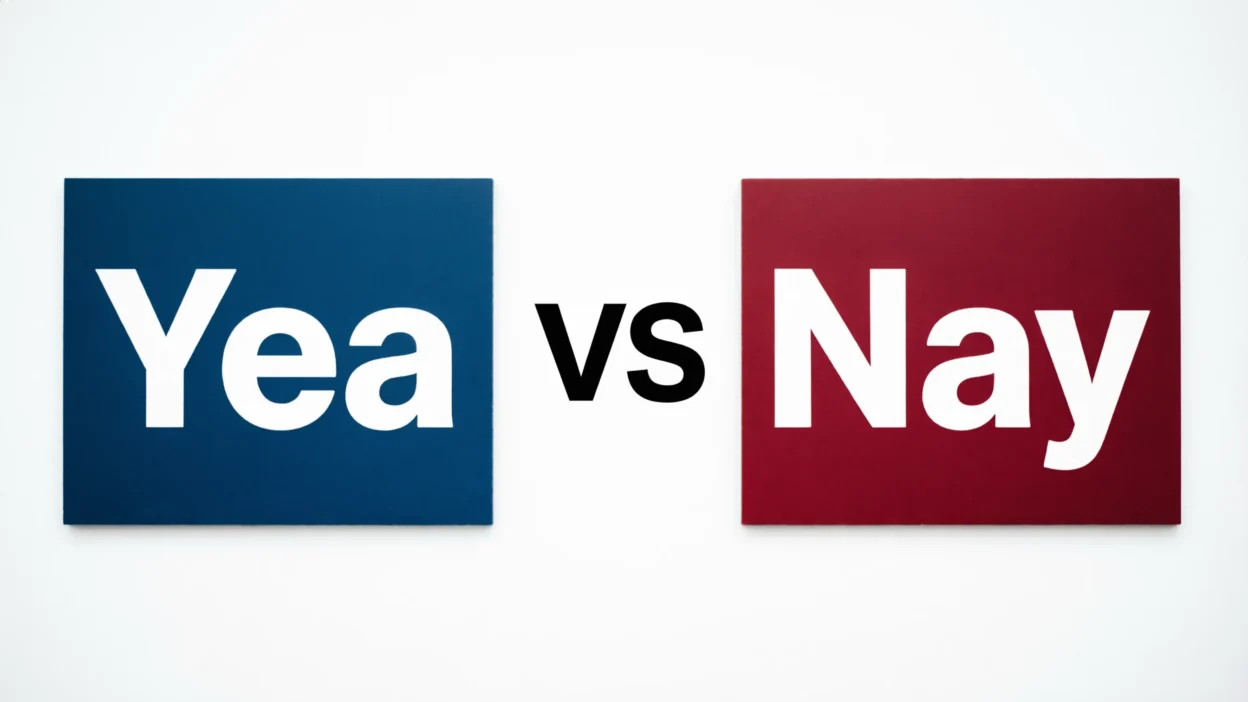
If you’ve ever come across the words yea and nay, you might have paused and wondered—are these just fancy versions of “yes” and “no,” or do they carry a deeper meaning? You’re not alone.
These terms show up in formal settings, historical texts, and even modern conversations, but their correct usage often confuses many writers and speakers.
Understanding yea vs nay is simpler than it seems once you break it down. In this guide, you’ll learn exactly what each word means, when to use them, common mistakes to avoid, and how they differ in modern English. By the end, you’ll feel confident using both words correctly in any context.
Quick Answer: Yea vs Nay
- Yea means yes or affirmative, often used in formal voting or old-fashioned language.
- Nay means no or negative, also commonly used in voting or formal contexts.
- Both words are more formal or archaic than everyday “yes” and “no.”
What Does “Yea” Mean?
“Yea” is an old English term that means yes or agreement. Today, it’s mostly used in formal settings, especially in voting situations like government decisions or official meetings.
Examples of “Yea” in Sentences:
- The council members voted yea on the new policy.
- All in favor, say yea.
- She gave a confident yea during the decision.
Key Points:
- Formal tone
- Often used in voting or legal language
- Less common in casual conversation
What Does “Nay” Mean?
“Nay” is the opposite of “yea.” It means no or refusal and is also used in formal or traditional contexts.
Examples of “Nay” in Sentences:
- The proposal received five yea votes and two nay votes.
- If you disagree, say nay.
- He responded with a firm nay.
Key Points:
- Formal or traditional usage
- Indicates disagreement or rejection
- Common in structured voting scenarios
Yea vs Nay: Key Differences
Here’s a simple comparison to make things crystal clear:
| Feature | Yea | Nay |
|---|---|---|
| Meaning | Yes / Agreement | No / Disagreement |
| Tone | Formal / Archaic | Formal / Archaic |
| Usage | Voting, official decisions | Voting, official decisions |
| Modern Use | Rare in daily speech | Rare in daily speech |
When Should You Use Yea vs Nay?
You should use yea and nay mainly in formal or ceremonial contexts, such as:
- Government or parliamentary voting
- Organizational meetings
- Historical or literary writing
- Formal debates
In everyday conversation, it’s better to stick with yes and no for clarity.
Common Mistakes to Avoid
Even though these words are simple, people often misuse them. Here are the most common mistakes:
1. Using “Yea” Instead of “Yeah”
- ❌ Incorrect: Yea, I agree with you.
- ✅ Correct: Yeah, I agree with you.
“Yeah” is informal; “yea” is formal.
2. Mixing Contexts
- ❌ Using “nay” in casual chat
- ✅ Use “no” in everyday situations
3. Spelling Confusion
- “Yea” ≠ “Yeah”
- “Nay” ≠ “Neigh” (which is the sound a horse makes)
4. Overusing Formal Language
Using “yea” and “nay” too often can make your writing sound unnatural unless the context demands it.
Yea vs Nay in Modern English
In modern English, both words are considered archaic or formal. You’ll rarely hear them in everyday speech unless someone is being humorous or dramatic.
However, they still appear in:
- Legal documents
- Government proceedings
- Historical literature
- Formal voting systems
American vs British English Usage
There’s no major difference between American and British English when it comes to “yea” and “nay.” Both regions:
- Recognize the same meanings
- Use them in similar formal contexts
- Avoid them in casual speech
The main difference is that both varieties of English prefer “yes” and “no” in daily communication.
Related Words and Synonyms
To improve your vocabulary and SEO relevance, here are some related terms:
Synonyms for Yea:
- Yes
- Affirmative
- Agreed
- Indeed
Synonyms for Nay:
- No
- Negative
- Denied
- Opposed
Using these alternatives can help your writing sound more natural depending on the context.
Real-Life Examples of Yea vs Nay
Formal Voting Scenario:
- “All those in favor, say yea.”
- “All those opposed, say nay.”
Literary Style:
- “He answered with a bold yea, standing firm in his belief.”
- “She whispered a quiet nay, unwilling to agree.”
Modern Humor:
- “Pizza tonight?”
- “Yea!”
(This usage is playful but not technically correct in casual speech.)
Why Do People Still Use Yea and Nay?
Even though these words are old-fashioned, they still exist because they:
- Add a sense of tradition and formality
- Are deeply rooted in legal and political systems
- Provide clarity in structured voting
They also carry a certain stylistic charm in writing.
FAQs About Yea vs Nay
1. Is “yea” the same as “yeah”?
No. “Yea” is formal and means “yes,” while “yeah” is informal and used in casual speech.
2. Can I use “nay” in everyday conversation?
It’s not recommended. Use “no” instead unless you’re being playful or dramatic.
3. Where are “yea” and “nay” commonly used?
They are mainly used in voting, legal contexts, and historical or formal writing.
4. Are these words outdated?
They are considered archaic but still relevant in specific formal settings.
5. What’s an easy way to remember the difference?
Think of yea = yes and nay = no.
6. Do schools still teach these words?
Yes, especially in grammar lessons and when studying historical texts.
7. Are “yea” and “nay” used globally?
Yes, but mainly in English-speaking countries and formal contexts.
8. Can using these words improve my writing?
Yes, if used correctly in the right context. Otherwise, they may sound unnatural.
Summary: Yea vs Nay
Understanding yea vs nay comes down to recognizing their role as formal alternatives to “yes” and “no.” While they may seem outdated, they still serve a purpose in structured settings like voting, legal discussions, and traditional writing. Using them correctly shows attention to detail and a strong grasp of language nuances.
In everyday communication, however, it’s best to stick with simpler, more modern words. Save “yea” and “nay” for situations where formality or stylistic tone matters. This balance will keep your writing both accurate and natural.
Actionable Takeaway
- Use “yea” for formal agreement (mainly in voting contexts)
- Use “nay” for formal disagreement
- Avoid using them in casual conversation
- Remember: clarity always comes first in communication