Have you ever typed “goodmorning” in a message and wondered if it’s correct? It looks natural when written quickly—but in proper English, small spacing details can make a big difference.
In this guide, we’ll break down “goodmorning vs good morning” so you can confidently use the correct form in texts, emails, and professional writing.
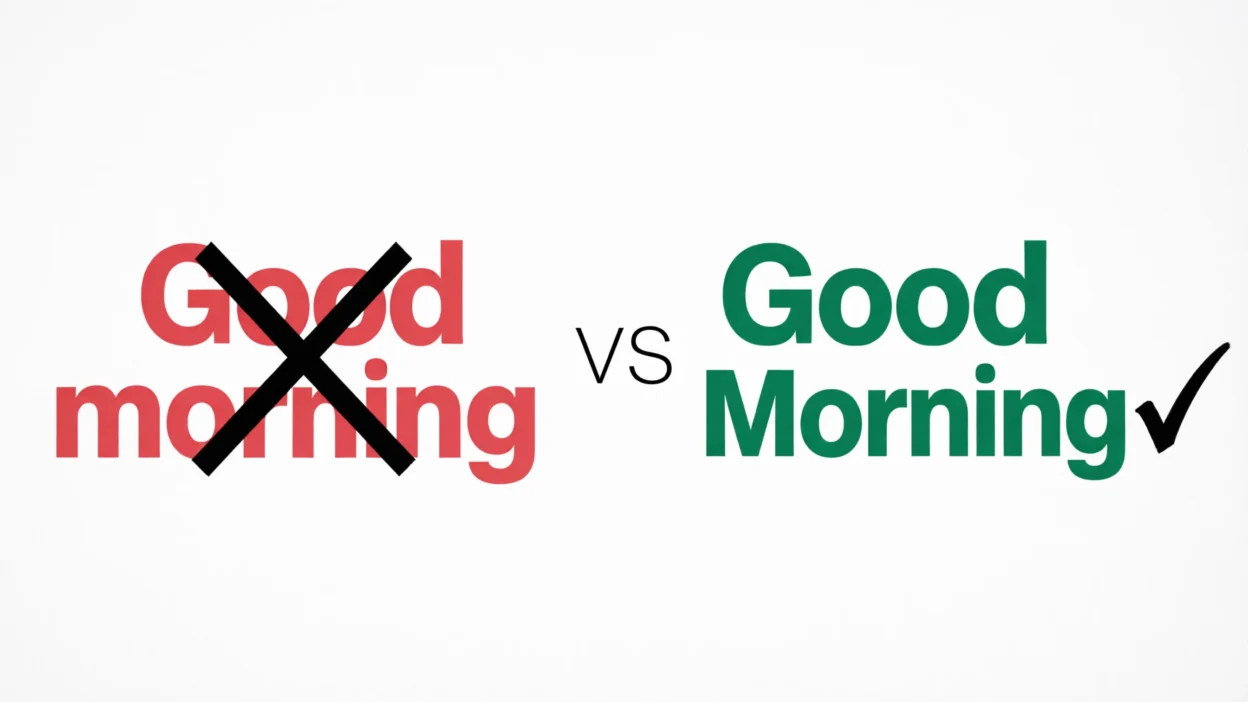
Quick Answer: Goodmorning vs Good Morning
- ❌ Goodmorning = Incorrect spelling
- ✅ Good morning = Correct form
Always write it as two separate words: “good morning.”
What Does “Good Morning” Mean?
Good morning is a common greeting used:
- At the start of the day (typically before noon)
- To politely greet someone
- In both formal and informal settings
Examples:
- Good morning, how are you today?
- She said, good morning with a smile.
- Good morning, everyone—let’s begin the meeting.
Why “Goodmorning” Is Incorrect
“Goodmorning” is a spacing mistake, not a real word.
It happens because:
- People type quickly in chats or texts
- It feels like one unit when spoken
- Some assume greetings can be combined
However, in standard English, “good” and “morning” must always remain separate words.
Goodmorning vs Good Morning: Key Differences
| Feature | Goodmorning ❌ | Good morning ✅ |
|---|---|---|
| Correct spelling | No | Yes |
| Dictionary form | No | Yes |
| Usage | Incorrect | Standard greeting |
| Word structure | Combined | Two words |
When to Use “Good Morning” (Real-Life Examples)
1. Formal Communication
- Good morning, sir.
- Good morning, I hope you are doing well.
2. Emails and Professional Writing
- Good morning, I’m writing to follow up on our meeting.
- Good morning, please find the attached document.
3. Casual Conversations
- Good morning! Ready for the day?
- He texted, good morning.
4. Public Speaking or Meetings
- Good morning, everyone.
- Good morning, folks.
Common Mistakes People Make
❌ Mistake 1: Combining the Words
- Incorrect: Goodmorning everyone
- Correct: Good morning everyone
❌ Mistake 2: Inconsistent Capitalization
- Incorrect: good Morning
- Correct: Good morning (capitalize at the start of a sentence)
❌ Mistake 3: Overusing Informal Chat Style
In texting, people may write “goodmorning,” but it’s not correct in proper writing.
Easy Trick to Remember
Think of it as a phrase, not a single word:
👉 “Good” + “morning” = two separate words
If you can say each word clearly, you should write them separately.
American vs British English Differences
There is no difference:
- 🇺🇸 American English: Good morning
- 🇬🇧 British English: Good morning
Both use the same spacing and meaning.
Related Greetings and Variations (LSI Keywords)
Here are similar phrases:
- Good afternoon
- Good evening
- Hello
- Hi
- Greetings
Example:
- Good evening is used later in the day, just like good morning is used earlier.
Goodmorning vs Good Morning in Sentences
Incorrect Sentences:
- Goodmorning everyone!
- He said goodmorning to his teacher.
Correct Sentences:
- Good morning everyone!
- He said good morning to his teacher.
Why Correct Spacing Matters
Using the correct form “good morning” helps you:
- Write more professionally
- Communicate clearly
- Avoid basic grammar mistakes
- Make a better impression in emails and messages
Even small errors like this can affect how your writing is perceived.
Frequently Asked Questions (FAQs)
1. Is “goodmorning” ever correct?
No, it is always incorrect.
2. What is the correct form: goodmorning or good morning?
The correct form is good morning.
3. Can I use “good morning” in emails?
Yes, it’s very common and appropriate in professional emails.
4. Should “good morning” be capitalized?
Capitalize it only at the beginning of a sentence or in formal greetings.
5. Is “good morning” formal or informal?
It works in both contexts.
6. Why do people write “goodmorning”?
Mostly due to fast typing or informal texting habits.
7. Are other greetings written as two words?
Yes, like good afternoon and good evening.
8. Can I use “morning” alone?
Yes, in informal contexts (e.g., “Morning!”).
Final Summary
The difference between “goodmorning vs good morning” is simple but important. “Good morning” is the correct form, written as two separate words, while “goodmorning” is a common spacing mistake that should be avoided.
Whether you’re writing emails, messages, or formal documents, using the correct version improves your clarity and professionalism. Small details like spacing can make a big impact on how your writing is perceived.
Actionable Takeaway
Next time you write:
- Always use “good morning” (two words)
- Avoid combining it into one word
- Double-check greetings in professional writing
👉 Clean, correct writing starts with small habits like this.