Have you ever typed “superceded” and paused, wondering if it’s right? You’re not alone—this is one of those tricky English words that doesn’t follow the usual spelling rules, making it easy to get wrong.
In this simple guide, we’ll break down “superseded vs superceded” so you can confidently use the correct form every time. Whether you’re writing professionally or casually, this will help you avoid a very common mistake.
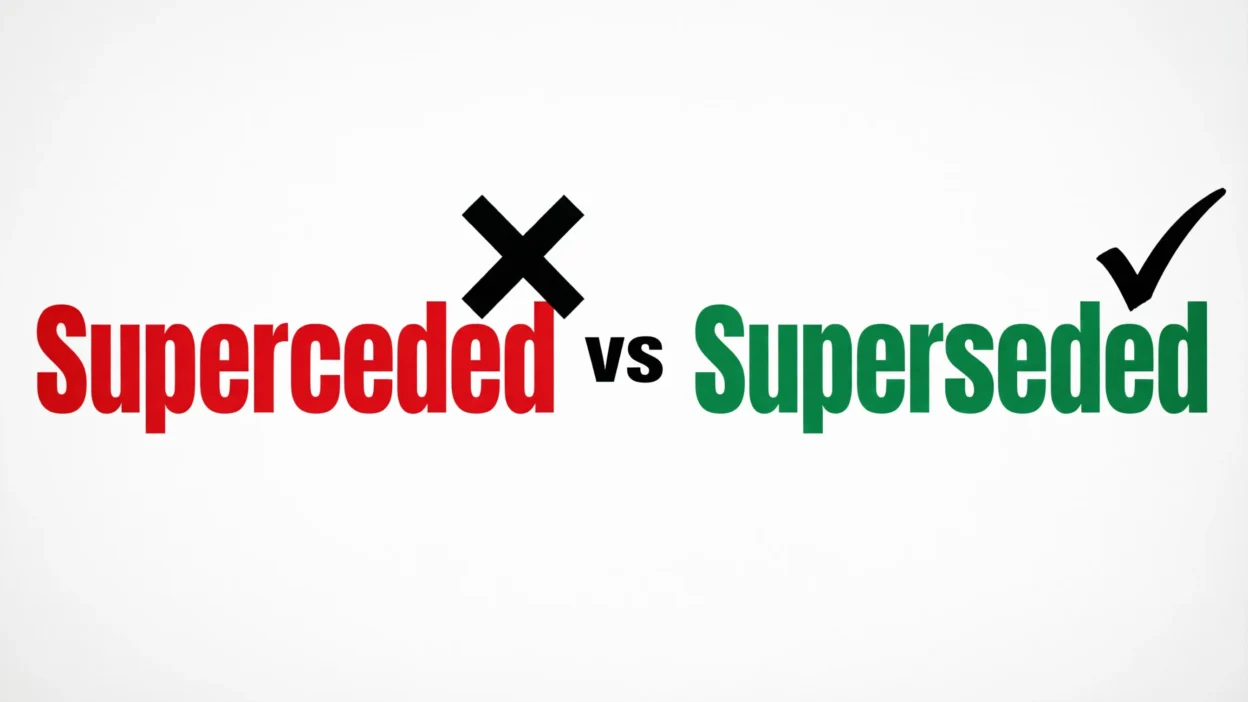
Quick Answer: Superseded vs Superceded
- ✅ Superseded = Correct spelling
- ❌ Superceded = Incorrect spelling
Always use “superseded” when you mean something has been replaced or made obsolete.
What Does “Superseded” Mean?
The word superseded means:
- Replaced by something newer or better
- Made outdated or no longer in use
- Set aside in favor of something else
It comes from Latin roots and is an exception to typical spelling patterns.
Examples:
- This policy has been superseded by a new regulation.
- The old software was superseded by a faster version.
- His earlier theory was superseded by new research.
Why “Superceded” Is Incorrect
“Superceded” is a common misspelling. People often write it this way because:
- Many English words follow the “cede” pattern (like proceed, succeed)
- It sounds similar when spoken
- It feels more “logical” based on spelling patterns
However, “supersede” is an exception, and its correct past form is superseded, not “superceded.”
Superseded vs Superceded: Key Differences
| Feature | Superseded ✅ | Superceded ❌ |
|---|---|---|
| Correct spelling | Yes | No |
| Dictionary word | Yes | No |
| Usage | Formal & informal | Incorrect |
| Meaning | Replaced or outdated | None |
When to Use “Superseded” (Real-Life Examples)
1. Laws and Policies
- The old law was superseded by new legislation.
- These guidelines have been superseded.
2. Technology
- The device was superseded by a newer model.
- This version has been superseded by an update.
3. Academic and Research Context
- The theory was later superseded.
- New findings superseded previous assumptions.
4. Business and Documents
- This agreement has been superseded by a revised contract.
- The report was superseded by updated data.
Common Mistakes People Make
❌ Mistake 1: Following the “-cede” Pattern
People assume:
- proceed, succeed → supercede
But this logic doesn’t apply here.
❌ Mistake 2: Spelling by Sound
Writing based on pronunciation leads to:
- “super-seed” → superceded (wrong)
❌ Mistake 3: Ignoring Exceptions
English has many irregular spellings, and “superseded” is one of them.
Easy Trick to Remember the Correct Spelling
Think of the word “seed” inside superseded:
👉 super + seed + ed → superseded
Even though it’s not the real root, this trick helps lock in the correct spelling.
American vs British English Differences
There is no difference in spelling:
- 🇺🇸 American English: Superseded
- 🇬🇧 British English: Superseded
Both use the same correct form.
Related Words and Synonyms (LSI Keywords)
To strengthen your vocabulary:
- Replaced
- Outdated
- Obsolete
- Overridden
- Displaced
- Substituted
- Updated
Example:
- The old system was replaced (or superseded) by a new one.
Superseded vs Superceded in Sentences
Incorrect Sentences:
- The policy was superceded last year.
- This version has been superceded.
Correct Sentences:
- The policy was superseded last year.
- This version has been superseded.
Why Correct Spelling Matters
Using the correct spelling “superseded” helps you:
- Maintain professional credibility
- Improve writing accuracy
- Avoid confusion in formal documents
- Enhance SEO and readability
Small spelling errors can reduce trust—especially in professional or academic writing.
Frequently Asked Questions (FAQs)
1. Is “superceded” ever correct?
No, it is always incorrect.
2. What is the correct spelling: superceded or superseded?
The correct spelling is superseded.
3. Why is “superseded” spelled differently?
It comes from Latin and doesn’t follow typical English “-cede” patterns.
4. What does “superseded” mean?
It means replaced or made obsolete by something newer.
5. Is “superseded” used in formal writing?
Yes, it’s commonly used in legal, business, and academic contexts.
6. Can I use “superseded” in everyday conversation?
Yes, though simpler words like “replaced” are also common.
7. What is a synonym for “superseded”?
Words like replaced, outdated, or obsolete work well.
8. Is there a British spelling of “superseded”?
No, both American and British English use the same spelling.
Final Summary
The difference between “superseded vs superceded” is straightforward: only “superseded” is correct. It means something has been replaced or made outdated, and it’s widely used in formal and everyday English.
Even though “superceded” might look logical, it’s simply a spelling mistake. By remembering the “seed” trick or practicing correct usage, you can avoid this common error and write with confidence.
Actionable Takeaway
Next time you write:
- Always choose “superseded”
- Remember: it contains “seed”
- Double-check spelling in formal writing
👉 One small spelling fix can instantly improve your writing quality.