If you’ve ever typed “undecisive” and paused to wonder if it’s correct, you’re not alone. These two words look similar, but only one is actually accepted in standard English. Choosing the wrong one can make your writing seem less polished—especially in professional or academic contexts.
In this guide, we’ll clearly explain indecisive vs undecisive, show you the correct usage, give examples, and help you avoid common mistakes so you can write with confidence.
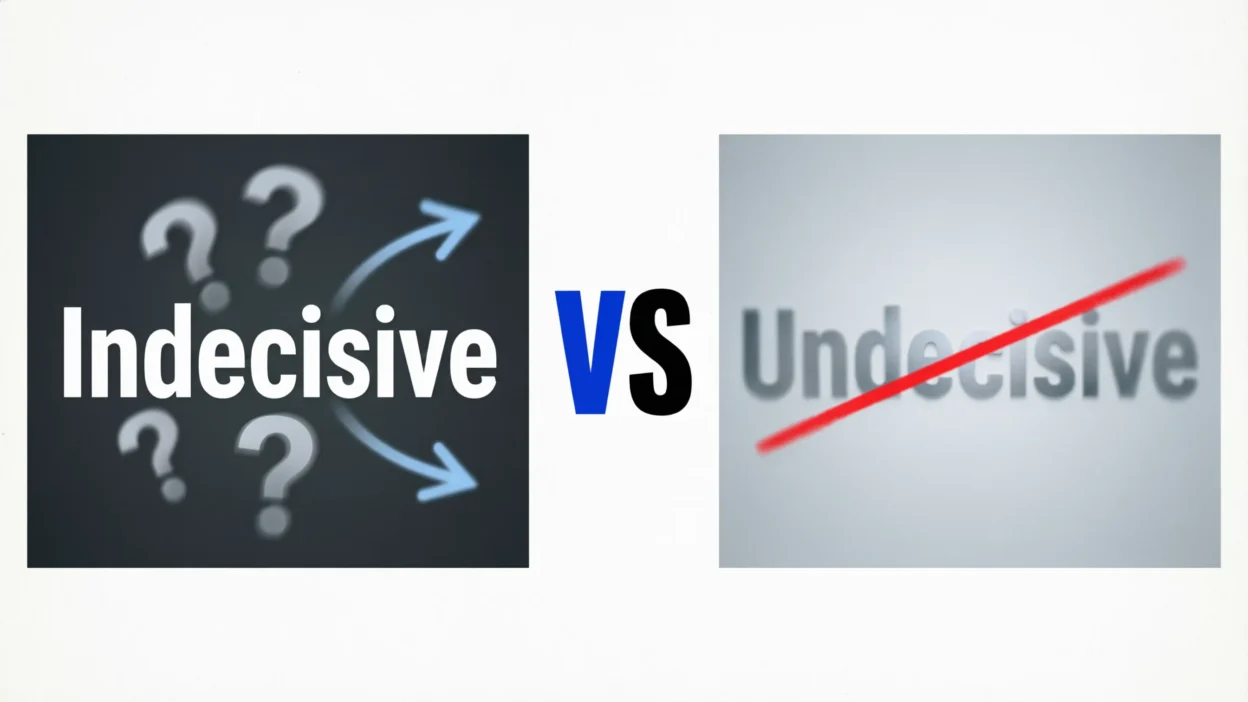
Quick Answer: Indecisive vs Undecisive
- Indecisive: ✅ Correct and widely accepted
- Undecisive: ❌ Not standard English (generally considered incorrect)
👉 In short: Always use “indecisive”
What Does “Indecisive” Mean?
“Indecisive” is an adjective used to describe someone who has difficulty making decisions or tends to hesitate between choices.
Examples:
- She is very indecisive when choosing what to eat.
- His indecisive nature makes planning difficult.
- I felt indecisive about the offer.
Key Points:
- Describes difficulty in decision-making
- Common in everyday and professional English
- Neutral to slightly negative tone
What About “Undecisive”?
“Undecisive” is not considered a standard or correct word in modern English. While some people may use it informally, it is generally avoided in proper writing.
Why It’s Incorrect:
- It doesn’t follow common English word formation patterns
- It’s not recognized in most major dictionaries
- It can make your writing seem unpolished
👉 Always replace it with indecisive
Indecisive vs Undecisive: Side-by-Side Comparison
| Feature | Indecisive | Undecisive |
|---|---|---|
| Correctness | ✅ Correct | ❌ Incorrect |
| Usage | Standard English | Non-standard |
| Meaning | Unable to decide | Intended same meaning |
| Recommendation | Always use | Avoid completely |
When to Use “Indecisive”
Use indecisive when:
- Someone struggles to make decisions
- You want to describe hesitation or uncertainty
- Writing in formal or informal contexts
Example Sentences:
- He’s too indecisive to lead the team.
- I’m feeling indecisive about this purchase.
Why “Undecisive” Is a Common Mistake
People often assume “undecisive” is correct because:
- Many English words use the prefix “un-” (like unclear, unhappy)
- It sounds similar to “indecisive”
However, English doesn’t always follow predictable patterns. In this case, “in-” is the correct prefix, not “un-”.
Common Mistakes (And How to Avoid Them)
1. Using “Undecisive” in Writing
❌ I’m very undecisive about this.
✔ I’m very indecisive about this.
2. Mixing Up Prefixes
❌ She is undecisive.
✔ She is indecisive.
👉 Remember: In- + decisive = indecisive
3. Assuming Informal Use Is Acceptable
Even in casual writing, “undecisive” is best avoided.
American vs British English Differences
There’s no difference between American and British English here.
- Both use indecisive
- Both avoid undecisive
This is one of those rare cases where English is fully consistent across regions.
Related Words and Synonyms (LSI Keywords)
To expand your vocabulary, here are similar words:
- Hesitant
- Uncertain
- Unsure
- Vacillating
- Ambivalent
- Doubtful
These can be useful alternatives depending on context.
Real-Life Usage Scenarios
Scenario 1: Shopping
- Can’t decide what to buy → indecisive
Scenario 2: Leadership
- A leader who struggles to choose → indecisive
Scenario 3: Everyday Decisions
- Choosing food, clothes, or plans → indecisive
FAQs About Indecisive vs Undecisive
1. Is “undecisive” a real word?
No. It’s generally considered incorrect in standard English.
2. Why do people use “undecisive”?
Because it sounds logical, but it’s not grammatically accepted.
3. What is the correct word?
“Indecisive.”
4. Can I use “undecisive” informally?
It’s not recommended, even in casual writing.
5. What does “indecisive” mean?
It means having difficulty making decisions.
6. Are there alternatives to “indecisive”?
Yes—words like hesitant, unsure, or uncertain.
7. Is this the same in British English?
Yes. Both British and American English use “indecisive.”
Final Summary
The difference between indecisive vs undecisive is straightforward: only indecisive is correct. It’s the standard word used to describe someone who struggles to make decisions. Undecisive, on the other hand, is not accepted in proper English and should be avoided.
Using the correct word helps your writing appear more polished and professional. Whenever you’re unsure, stick with indecisive—it’s always the right choice.
Actionable Takeaway
- ✅ Use indecisive in all contexts
- ❌ Avoid undecisive completely
- Remember: correct prefix = in-, not un-
- Practice using “indecisive” in daily sentences