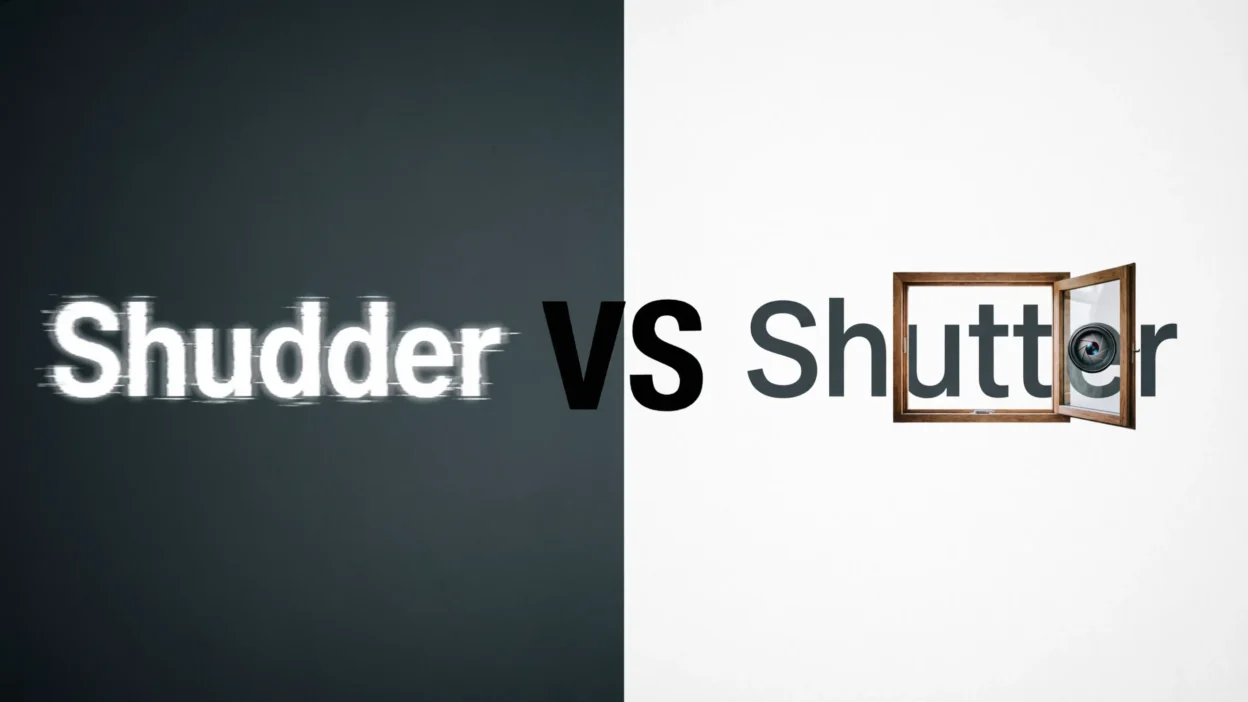
It’s easy to confuse “shudder” and “shutter”—they sound similar, but their meanings are completely different. Using the wrong one can change the entire meaning of your sentence, especially in writing where clarity matters.
In this guide, we’ll break down shudder vs shutter in a simple, human-friendly way. You’ll learn what each word means, how to use them correctly, common mistakes to avoid, and practical examples so you never mix them up again.
Quick Answer: Shudder vs Shutter
- Shudder: To shake or tremble (often due to fear, cold, or disgust)
- Shutter: A movable cover for a window or camera lens
👉 In short: Shudder = movement (feeling), Shutter = object (thing)
What Does “Shudder” Mean?
“Shudder” is a verb (and sometimes a noun) that describes a sudden shaking movement, usually caused by strong emotion or physical reaction.
Examples:
- She shuddered at the thought of the horror movie.
- He shuddered from the cold wind.
- The car shuddered as the engine failed.
Key Points:
- Describes physical or emotional reaction
- Often linked to fear, disgust, or cold
- Used mostly as a verb
What Does “Shutter” Mean?
“Shutter” is usually a noun, referring to a physical object that covers or protects something—like a window or a camera lens. It can also be used as a verb in certain contexts.
Examples:
- She closed the shutters before the storm.
- The camera shutter clicked.
- The shop was shuttered during the holidays.
Key Points:
- Refers to a thing (object)
- Common in buildings and photography
- Can be used as a verb (to close something)
Shudder vs Shutter: Side-by-Side Comparison
| Feature | Shudder | Shutter |
|---|---|---|
| Meaning | Shake or tremble | Cover or panel |
| Type | Verb/Noun | Noun/Verb |
| Context | Emotions, reactions | Windows, cameras, shops |
| Usage | Feeling or movement | Physical object or action |
| Example | I shuddered in fear | Close the shutters |
When to Use “Shudder”
Use shudder when describing:
- A physical reaction (shaking, trembling)
- A response to fear, cold, or disgust
- Sudden vibrations or jolts
Example Sentences:
- I shuddered when I heard the noise.
- The train shuddered to a stop.
When to Use “Shutter”
Use shutter when referring to:
- Window coverings
- Camera mechanisms
- Closing a business or place
Example Sentences:
- The storm forced them to shutter their windows.
- The company decided to shutter its stores.
Common Mistakes (And How to Avoid Them)
1. Mixing Up Spelling
❌ I shuttered at the scary scene.
✔ I shuddered at the scary scene.
👉 “Shudder” is about feeling, not objects.
2. Using “Shudder” for Objects
❌ Close the shudders before the rain.
✔ Close the shutters before the rain.
👉 “Shutters” are physical things.
3. Confusing Pronunciation-Based Usage
They sound similar, so always double-check meaning before writing.
American vs British English Differences
There’s no major difference between American and British English for shudder vs shutter. Both words are used the same way in spelling and meaning.
However:
- “Shutter” is commonly used in both for businesses (“shuttered stores”)
- “Shudder” is universally used for emotional or physical reactions
Related Words and Synonyms (LSI Keywords)
To strengthen your vocabulary, here are related terms:
For “Shudder”:
- Tremble
- Shake
- Quiver
- Shiver
- רעד (vibrate feeling context)
For “Shutter”:
- Blind
- Panel
- Cover
- Close down
- Seal
Real-Life Usage Scenarios
Scenario 1: Horror Movie
- You feel scared → You shudder
Scenario 2: Storm Preparation
- You close window covers → You shutter the house
Scenario 3: Business Closure
- A shop shuts permanently → It is shuttered
Scenario 4: Mechanical Movement
- A machine shakes → It shudders
FAQs About Shudder vs Shutter
1. Are shudder and shutter interchangeable?
No. They have completely different meanings—one is a reaction, the other is an object.
2. Is “shudder” always emotional?
Not always. It can also describe physical shaking, like a car engine.
3. Can “shutter” be used as a verb?
Yes. It means to close or shut down something.
4. Which is more common in daily use?
Both are common, but in different contexts.
5. How can I remember the difference?
- Shudder = shake (both have “d”)
- Shutter = shut (both relate to closing)
6. Is “shuttered” formal?
It’s commonly used in news and business contexts.
7. Can people “shutter”?
No. People shudder; buildings or businesses shutter.
Final Summary
The difference between shudder vs shutter is simple once you break it down. Shudder describes a reaction—usually a shake or tremble caused by fear, cold, or discomfort. It’s about how something feels or moves. On the other hand, shutter refers to a physical object like a window covering or the act of closing something, such as a shop or camera lens.
Understanding this distinction helps you avoid common mistakes and makes your writing more precise. Whenever you’re unsure, think about whether you’re describing a feeling or an object—that will guide you to the correct word.
Actionable Takeaway
- Use shudder for reactions or shaking
- Use shutter for objects or closing things
- Remember: Shudder = shake, Shutter = shut
- Practice with simple sentences to lock it in