If you’ve ever typed make due and paused to question it, you’re not alone. These two phrases sound similar, but only one is actually correct in standard English—and using the wrong one can weaken your writing.
In this guide, you’ll learn the real difference between make do vs make due, see clear examples, avoid common mistakes, and confidently use the correct phrase every time.
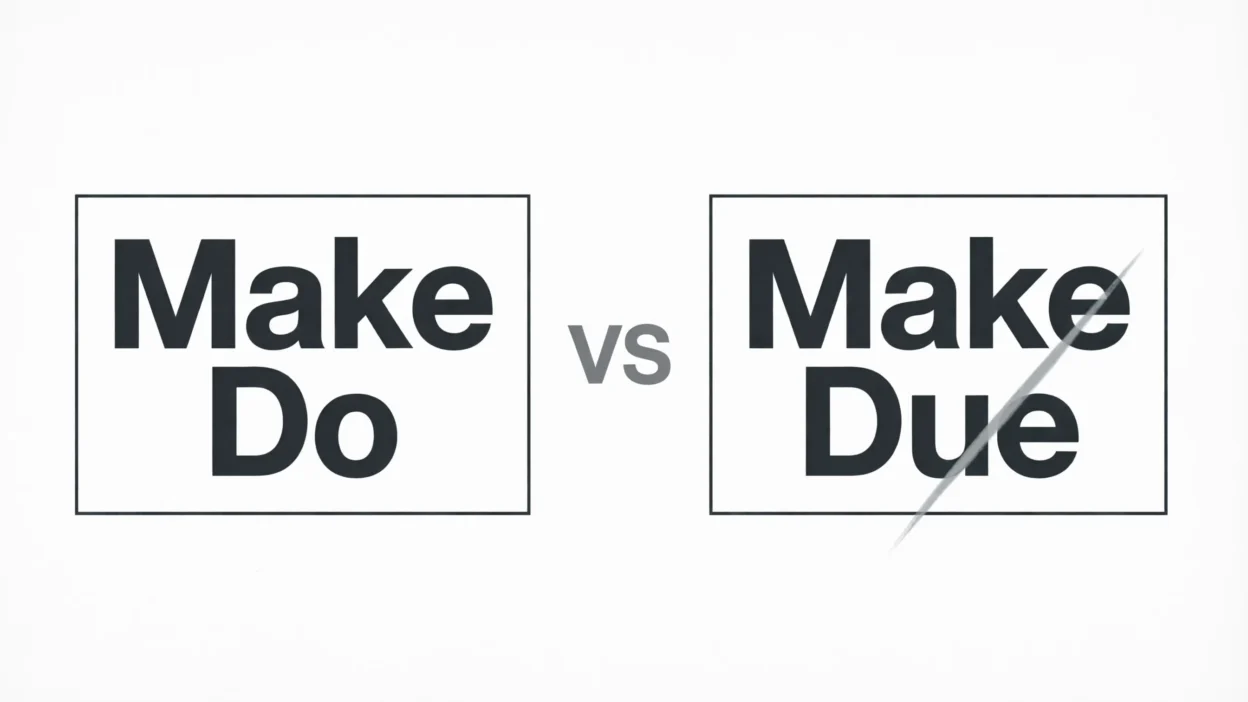
Quick Answer: Make Do vs Make Due
- Make do = to manage with what you have
- Make due = ❌ incorrect in this context
👉 Example:
- We didn’t have enough chairs, so we had to make do.
- ❌ We had to make due. (incorrect)
What Does “Make Do” Mean?
Make do is a correct and commonly used phrase. It means to manage or cope with limited resources or a less-than-ideal situation.
Common Uses of “Make Do”
- Managing without something:
- “We’ll have to make do without Wi-Fi.”
- Using alternatives:
- “She didn’t have milk, so she made do with water.”
- Accepting a situation:
- “It’s not perfect, but we’ll make do.”
Key Tip
Think of make do as making something work, even if it’s not ideal.
What Does “Make Due” Mean?
Make due is not a correct phrase in standard English for this meaning. It’s usually a mistake caused by confusion with the word due.
Why People Use It Incorrectly
- “Due” is a familiar word (as in due date)
- It sounds identical to “do”
- People assume it fits—but it doesn’t in this phrase
Correct Alternative
Always use make do, not make due, when talking about managing with limited resources.
Make Do vs Make Due: Side-by-Side Comparison
| Feature | Make Do | Make Due |
|---|---|---|
| Correct Usage | ✔ Yes | ❌ No |
| Meaning | Manage with what you have | No valid meaning here |
| Context | Limited resources | Incorrect phrase |
| Example | “We’ll make do.” | ❌ “We’ll make due.” |
| Memory Trick | Do = Action | Due ≠ Correct here |
How to Remember the Difference Easily
Use this simple memory trick:
- Make do = Do something with what you have
- Due = relates to deadlines (not this phrase)
👉 If your sentence is about coping or managing, always choose make do.
Common Mistakes to Avoid
Many writers accidentally use the wrong phrase.
❌ Incorrect Usage
- “We can make due for now.”
- “She made due with old tools.”
✅ Correct Usage
- “We can make do for now.”
- “She made do with old tools.”
Why It Matters
Using make due can make your writing look incorrect or unprofessional.
Examples of “Make Do” in Sentences
- “We didn’t have a map, so we had to make do.”
- “He forgot his charger but made do without it.”
- “They made do with limited supplies during the trip.”
- “I’ll make do until I buy a new one.”
American vs British English Differences
There is no difference between American and British English for make do vs make due.
- Both use make do as the correct phrase
- Both consider make due incorrect in this context
When Context Matters Most
Ask yourself:
- Are you talking about managing with what you have? → Use make do
- Are you referring to a deadline or obligation? → That’s where due belongs (but not in this phrase)
Quick Context Check
- “We’ll ___ without extra help.” → make do ✔
- “The payment is ___ tomorrow.” → due ✔ (different usage)
Related Words and Phrases
Understanding related expressions can help:
- Do = perform an action
- Due = expected or owed
- Make it work = similar meaning to make do
- Get by = manage with difficulty
👉 These reinforce why make do is the correct choice.
Why People Confuse Make Do and Make Due
Here are the main reasons:
- They are homophones (same pronunciation)
- “Due” is a more commonly recognized word
- Lack of awareness of the correct phrase
The solution? Focus on meaning—not just sound.
FAQs About Make Do vs Make Due
1. Is “make due” ever correct?
No, not in this context. It’s considered incorrect usage.
2. What does “make do” mean?
It means to manage or cope with limited resources.
3. Why do people say “make due”?
Because it sounds similar and “due” is a familiar word.
4. Can “due” be used correctly elsewhere?
Yes. Example: “The assignment is due tomorrow.”
5. Is “make do” formal or informal?
It’s acceptable in both formal and informal contexts.
6. What is a synonym for “make do”?
“Get by” or “manage.”
7. Is there a UK vs US difference?
No, both use make do.
8. How can I remember the correct phrase?
Think: Do = action, so make do means take action with what you have.
Final Summary
The difference between make do vs make due is straightforward: make do is correct, while make due is not. Make do means managing with limited resources or making something work despite challenges. It’s widely accepted in both American and British English.
If you ever feel unsure, remember that due relates to deadlines or obligations—not coping with a situation. Sticking to make do will keep your writing clear, correct, and professional.
Actionable Takeaway
- Always use make do for managing situations
- Avoid make due—it’s incorrect
- Link “do” with action to remember
- Practice using make do in daily sentences