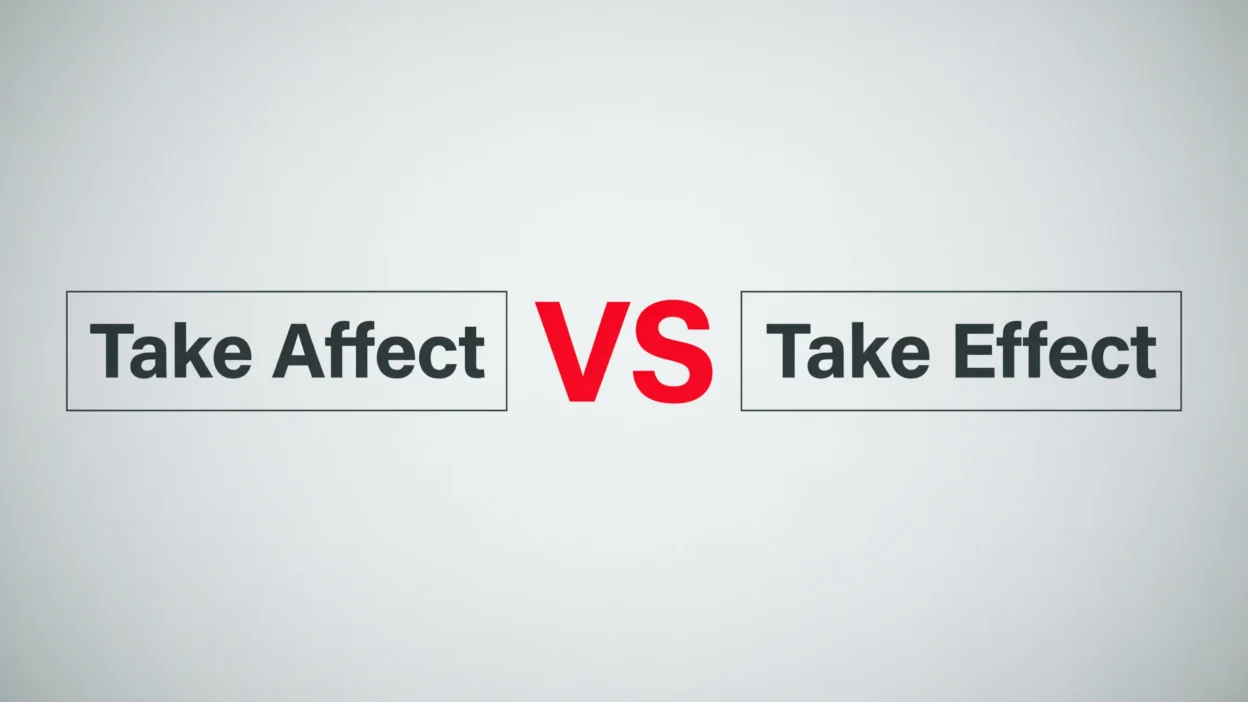
If you’ve ever written take affect and paused to question it, you’re not alone. This is one of the most common English mix-ups, especially because affect and effect sound so similar.
The good news? Once you understand one simple rule, you’ll never confuse them again. This guide will clearly explain the difference, show real examples, and help you use the correct phrase with confidence.
Quick Answer: Take Effect vs Take Affect
- Correct phrase: Take effect
- Incorrect phrase: Take affect
- Meaning of take effect: To begin working or become active
👉 In short: Always use take effect. Take affect is incorrect.
What Does “Take Effect” Mean?
The phrase take effect means something starts to work, apply, or become active.
Simple Definition
- To begin operating
- To start producing results
Example Sentences
- The new law will take effect next month.
- The medicine should take effect within an hour.
- The policy changes will take effect immediately.
Synonyms (LSI Keywords)
- Come into force
- Begin
- Start working
- Be implemented
- Go into effect
👉 These alternatives can help vary your writing naturally.
Is “Take Affect” Ever Correct?
No—take affect is incorrect in standard English.
Why It’s Wrong
- Affect is usually a verb (to influence something)
- In this phrase, we need a noun, which is effect
👉 So grammatically, take affect doesn’t make sense.
Take Effect vs Take Affect: Key Differences
Here’s a simple comparison:
| Feature | Take Affect ❌ | Take Effect ✅ |
|---|---|---|
| Correct usage | No | Yes |
| Grammar | Incorrect combination | Verb + noun (correct) |
| Meaning | Not valid | Begin or become active |
| Example | ❌ Will take affect soon | ✅ Will take effect soon |
👉 Always choose take effect in both writing and speech.
Why “Take Effect” Is Correct (Grammar Insight)
Let’s break it down:
- Take (verb) = to begin or assume
- Effect (noun) = result or outcome
So, take effect means to begin producing a result.
Quick Reminder: Affect vs Effect
- Affect (verb) = to influence
- Effect (noun) = result
👉 Example:
- The weather can affect your mood.
- The effect of the weather is noticeable.
Common Mistakes to Avoid
1. Writing “Take Affect” Instead of “Take Effect”
❌ The changes will take affect tomorrow.
✅ The changes will take effect tomorrow.
2. Confusing Affect and Effect
This is one of the most common grammar mistakes in English.
👉 Tip:
- If you need a noun → use effect
- If you need a verb → use affect
3. Overthinking the Phrase
Sometimes learners second-guess themselves because both words sound similar.
👉 Keep it simple: the correct phrase is fixed—take effect.
Real-Life Examples
Everyday Situations
- The painkiller will take effect soon.
- The changes didn’t take effect immediately.
Workplace Context
- The new policy will take effect from Monday.
- Salary adjustments will take effect next quarter.
Legal and Formal Context
- The law will take effect on January 1st.
- The agreement takes effect upon signing.
👉 This phrase is very common in formal and professional English.
American vs British English Differences
There is no difference between American and British English here.
- 🇺🇸 American English: take effect
- 🇬🇧 British English: take effect
👉 Same spelling and usage worldwide.
Tips to Remember the Correct Phrase
Use these simple memory tricks:
- Effect = End result → fits the phrase
- Think: It takes effect to produce an effect
- If you can replace it with “start working,” use take effect
👉 Quick check:
- Does it mean “begin”? → take effect
- If yes, you’re correct.
Related Words and Phrases
Expand your understanding with these:
- In effect: Currently active
- Cause and effect: Relationship between action and result
- Effective: Producing results
👉 Example:
- The rule is now in effect.
When to Use “Take Effect” Correctly
Use “Take Effect” When:
- Talking about laws, rules, or policies
- Referring to medicine or changes starting
- Describing when something becomes active
👉 Example:
- The new system will take effect next week.
Never Use “Take Affect”
- It is always incorrect in standard English
👉 Avoid it completely.
FAQs: Take Effect vs Take Affect
1. Is “take affect” ever correct?
No, it is always incorrect.
2. What is the correct phrase?
The correct phrase is take effect.
3. What does “take effect” mean?
It means to begin working or become active.
4. Why is “take affect” wrong?
Because affect is a verb, and the phrase requires a noun.
5. How can I remember the difference?
Think: effect = result, which fits the phrase.
6. Is “take effect” formal?
Yes, it is commonly used in formal and professional contexts.
7. Can I use it for medicine?
Yes, for example: “The medicine will take effect soon.”
8. Is there a US vs UK difference?
No, both use the phrase the same way.
Final Summary
The difference between take effect vs take affect is simple but important. Take effect is the correct phrase, meaning something begins to work or becomes active. On the other hand, take affect is incorrect and should never be used.
Understanding the difference between affect (verb) and effect (noun) makes this much easier to remember. Once you connect effect with results, the correct phrase becomes obvious.
Actionable Takeaway
Next time you write:
👉 If something is starting or becoming active, always use take effect
👉 Avoid take affect completely—it’s a common mistake
Practice this phrase in real-life contexts, and you’ll never get it wrong again.