Have you ever paused while writing and wondered whether to use “title” or “tittle”? You’re not alone. This tiny spelling confusion trips up students, writers, and even professionals because both words exist—but they mean very different things.
In this guide, you’ll quickly learn the correct usage, avoid embarrassing mistakes, and feel confident every time you write. Whether you’re crafting an essay, blog post, or formal document, understanding this distinction will sharpen your writing instantly.
Quick Answer
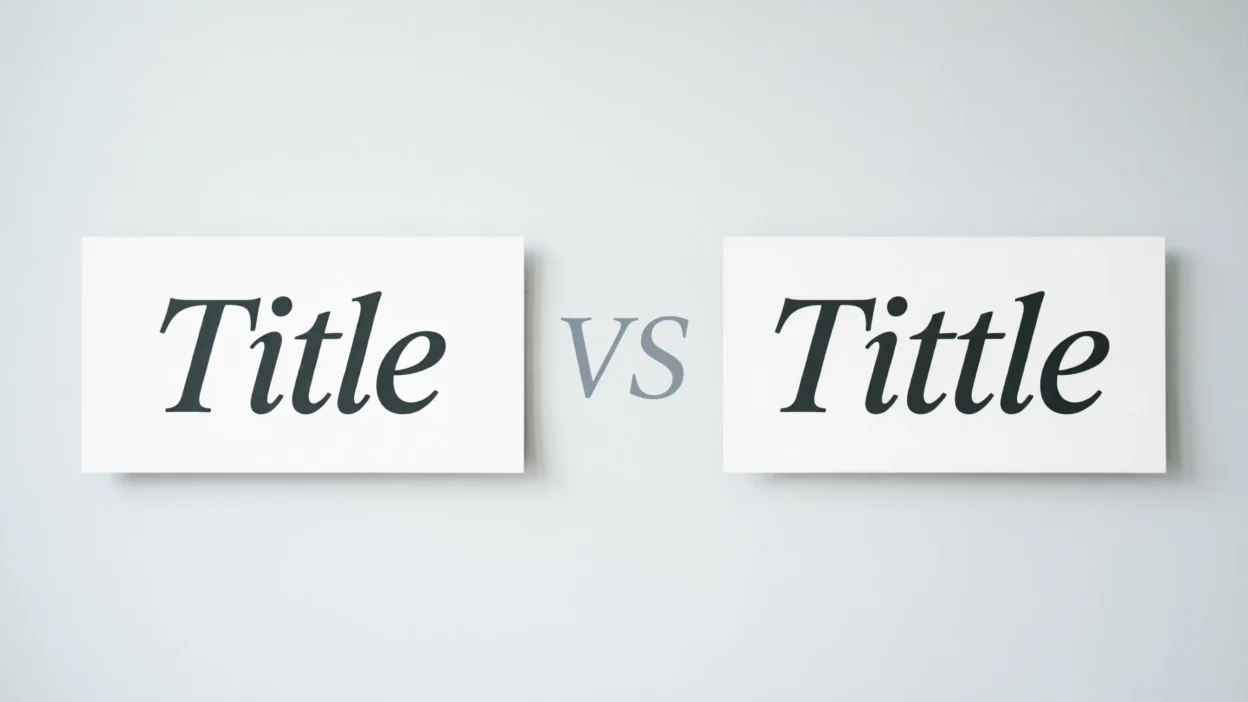
- Title = The correct word for headings, names of books, articles, movies, etc.
- Tittle = A rare word meaning a very small mark (like the dot over “i” or “j”)
👉 In 99% of everyday writing, you should use “title”, not “tittle.”
What Does “Title” Mean?
The word title refers to the name or heading of something. It’s one of the most commonly used words in writing and publishing.
Examples of “Title” in Sentences:
- The title of the book is Atomic Habits.
- She gave her essay a creative title.
- What’s the title of that movie you recommended?
Where You Use “Title”:
- Books and articles
- Blog posts and web pages
- Movies and TV shows
- Academic papers
- Job positions (e.g., “Job Title”)
In short, if you’re naming something, “title” is the correct word.
What Does “Tittle” Mean?
“Tittle” is a real word—but it’s rarely used in everyday conversation.
It refers to:
- A very small mark or point
- Specifically, the dot above letters like “i” and “j”
Examples of “Tittle”:
- Don’t forget the tittle when writing lowercase “i.”
- Every tittle matters in precise typography.
You might also hear it in the phrase:
- “Not one jot or tittle” (meaning not even the smallest detail)
Key Differences Between Title and Tittle
| Feature | Title | Tittle |
|---|---|---|
| Meaning | Name or heading | Small mark (dot over i/j) |
| Usage | Very common | Very rare |
| Context | Writing, media, jobs | Typography, linguistics |
| Example | Book title | Dot above the letter “i” |
| Frequency | Used daily | Hardly used |
👉 Bottom line: These words are not interchangeable.
Common Mistakes to Avoid
Even though the difference is simple, many people still mix them up. Here are the most common mistakes:
1. Using “Tittle” Instead of “Title”
❌ Incorrect: What’s the tittle of your essay?
✅ Correct: What’s the title of your essay?
2. Spellcheck Overconfidence
Sometimes spellcheck won’t flag “tittle” because it’s technically correct—just not what you meant.
3. Typing Errors
Since both words look similar, fast typing can lead to accidental misuse.
👉 Tip: If you’re talking about a name or heading, always double-check you wrote title.
American vs British English Differences
Good news—there’s no difference between American and British English for these words.
- Title is spelled the same in both: 🇺🇸 🇬🇧
- Tittle is also spelled the same (though rarely used)
So no matter where you are, the rule stays consistent.
Why This Confusion Happens
There are a few reasons people mix these words up:
- They differ by only one letter
- “Tittle” is unfamiliar but still valid
- Autocorrect doesn’t always help
- Pronunciation can sound similar in fast speech
Understanding the meaning is the easiest way to avoid mistakes.
Easy Memory Trick
Here’s a simple way to remember:
- Title = Important name (big thing)
- Tittle = Tiny dot (small thing)
👉 Big vs small = Title vs Tittle
When Should You Actually Use “Tittle”?
Almost never—unless you’re:
- Studying typography
- Teaching handwriting basics
- Discussing linguistic details
- Using the phrase “jot or tittle”
For everyday writing, emails, and content creation, you can safely ignore “tittle.”
FAQs
1. Is “tittle” a real word?
Yes, it’s a real word, but it’s rarely used and refers to a small mark like the dot over “i.”
2. Which is correct: title or tittle?
“Title” is correct for naming books, articles, and headings.
3. Why do people confuse title and tittle?
Because they look similar and differ by just one letter.
4. Can I use “tittle” in formal writing?
Only in very specific contexts like linguistics or typography.
5. What does “jot or tittle” mean?
It means “not even the smallest detail.”
6. Is “tittle” used in modern English?
Very rarely. Most people never use it in daily writing.
7. Does spellcheck catch this mistake?
Not always, because “tittle” is technically a correct word.
8. How can I avoid this mistake?
Remember: if it’s a name or heading, always use “title.”
Summary
The difference between title and tittle is simple but important. “Title” is the correct and commonly used word for naming books, articles, and headings. On the other hand, “tittle” refers to a tiny mark and is rarely used outside of technical contexts.
If you focus on meaning rather than spelling alone, you’ll never confuse them again. In almost every situation, “title” is the word you need, making it the safer and smarter choice in writing.
Actionable Takeaway
Next time you write anything—an essay, blog post, or message—pause for a second and check your spelling. If you’re naming something, go with “title” confidently. Save “tittle” for niche situations, and you’ll instantly improve your writing clarity and professionalism.