If you’ve ever paused while writing and wondered whether to use die or dye, you’re not alone. These two words sound identical, but their meanings are completely different—and mixing them up can change your sentence entirely.
In this guide, you’ll learn the clear difference between die vs dye, when to use each word, and how to avoid common mistakes. Whether you’re a student, writer, or just improving your English skills, this simple breakdown will make everything click.
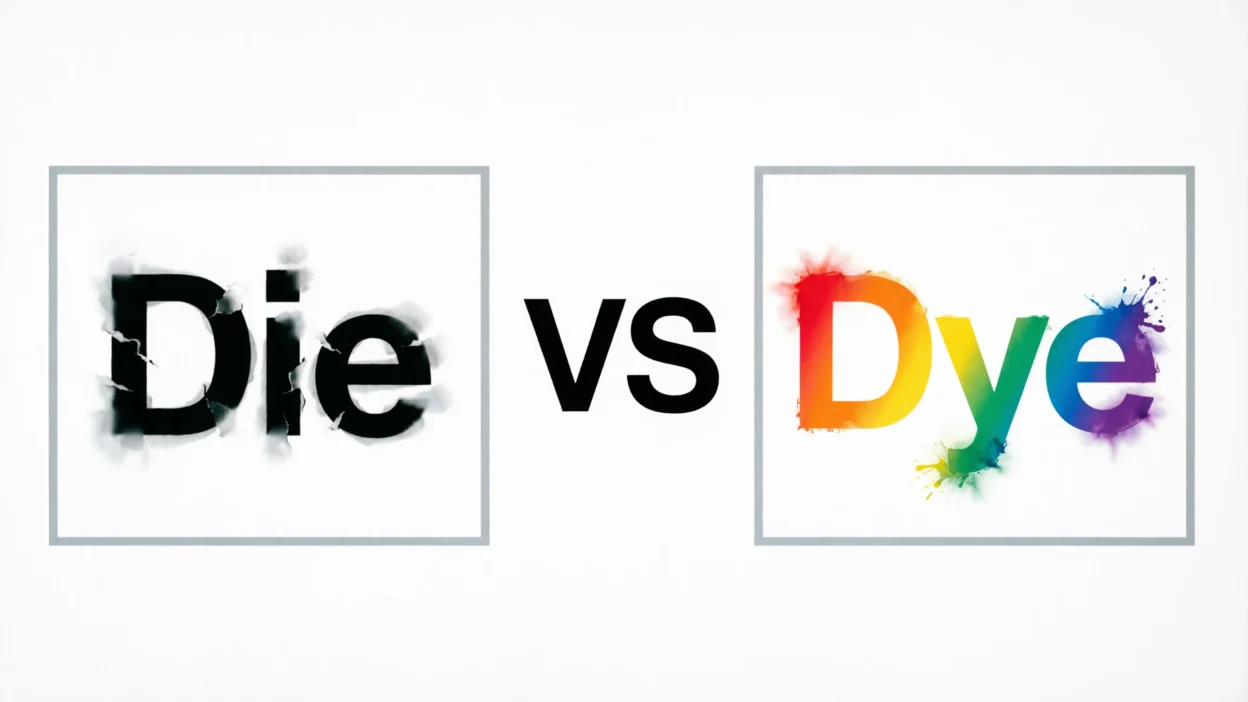
Quick Answer: Die vs Dye
- Die = to stop living or functioning
- Dye = to color or stain something
👉 Example:
- Plants die without water.
- She will dye her hair red.
What Does “Die” Mean?
The word die refers to death or stopping function. It can be used for people, animals, plants, or even machines.
Common Uses of “Die”
- To stop living:
- “The old tree will eventually die.”
- To stop working:
- “My phone might die soon.”
- Emotional or exaggerated use:
- “I’d die of embarrassment!”
Key Tip
Think of die as related to death, ending, or stopping.
What Does “Dye” Mean?
The word dye means to apply color to something, usually fabric, hair, or materials.
Common Uses of “Dye”
- Coloring hair:
- “She wants to dye her hair blonde.”
- Coloring fabric:
- “They dyed the clothes blue.”
- Artistic or creative use:
- “Natural plants can be used to dye fabrics.”
Key Tip
Think of dye as connected to color, paint, or staining.
Die vs Dye: Side-by-Side Comparison
| Feature | Die | Dye |
|---|---|---|
| Meaning | To stop living or working | To color something |
| Usage Type | Verb | Verb |
| Context | Life, death, failure | Hair, fabric, art |
| Example | “The battery will die.” | “She will dye her hair.” |
| Memory Trick | Die = Death | Dye = Design/Color |
How to Remember the Difference Easily
A simple memory trick can save you every time:
- Die = Death (both start with “D”)
- Dye = Design or Dyeing color
If color is involved, always choose dye.
Common Mistakes to Avoid
Even fluent English speakers mix these up. Here are the most common errors:
❌ Incorrect Usage
- “I want to die my hair.”
- “The flowers will dye without water.”
✅ Correct Usage
- “I want to dye my hair.”
- “The flowers will die without water.”
Why It Matters
Using the wrong word can make your sentence confusing—or unintentionally funny.
Examples of Die vs Dye in Sentences
Sentences with “Die”
- “Many plants die in extreme heat.”
- “His phone will die if he doesn’t charge it.”
- “Legends never die.”
Sentences with “Dye”
- “She plans to dye her dress green.”
- “They dyed the curtains to match the room.”
- “He accidentally dyed his shirt pink.”
American vs British English Differences
Good news—there’s no difference between American and British English when it comes to die vs dye.
- Both use die for death or stopping
- Both use dye for coloring
Spelling, meaning, and usage remain exactly the same across regions.
When Context Matters Most
Context is your best guide when choosing between die and dye.
Ask yourself:
- Is something ending or stopping? → Use die
- Is something being colored? → Use dye
Quick Context Check
- “The battery will ___.” → die ✔
- “She wants to ___ her hair.” → dye ✔
Related Words and Forms
Understanding related forms can deepen your knowledge:
Forms of “Die”
- Dies
- Died
- Dying
Forms of “Dye”
- Dyes
- Dyed
- Dyeing
👉 Note: Dying (from die) and dyeing (from dye) are often confused—watch the spelling carefully.
Why People Confuse Die and Dye
Here are the main reasons:
- They are homophones (same pronunciation)
- Spelling difference is subtle
- Context isn’t always obvious at first glance
The solution? Focus on meaning, not just sound.
FAQs About Die vs Dye
1. Are “die” and “dye” pronounced the same?
Yes, both words are pronounced exactly the same, which is why they are often confused.
2. Can “die” ever mean coloring?
No, die never relates to color. It only refers to stopping life or function.
3. Is “dye” only used for hair?
No, dye can be used for hair, fabric, clothes, and other materials.
4. What is the difference between “dying” and “dyeing”?
- Dying = the process of death
- Dyeing = the process of coloring
5. Is there a spelling difference in UK vs US English?
No, both words are spelled the same in American and British English.
6. How can I remember the difference quickly?
Think: Die = Death, Dye = Color
7. Can objects “die”?
Yes, informally. For example, “My laptop died.”
8. Can “dye” be used metaphorically?
Yes, but it still relates to color or transformation.
Final Summary
Understanding die vs dye comes down to meaning and context. Die is all about endings—life stopping or things no longer working. Dye, on the other hand, is about adding color and transforming appearance. Even though they sound the same, their uses are completely different.
If you ever feel unsure, pause and ask yourself: “Is this about death or color?” That simple question will guide you to the correct word every time. With a bit of practice, choosing between die and dye will become second nature.
Actionable Takeaway
- Use die when something stops or ends
- Use dye when adding or changing color
- Double-check context before writing
- Practice with real sentences to build confidence