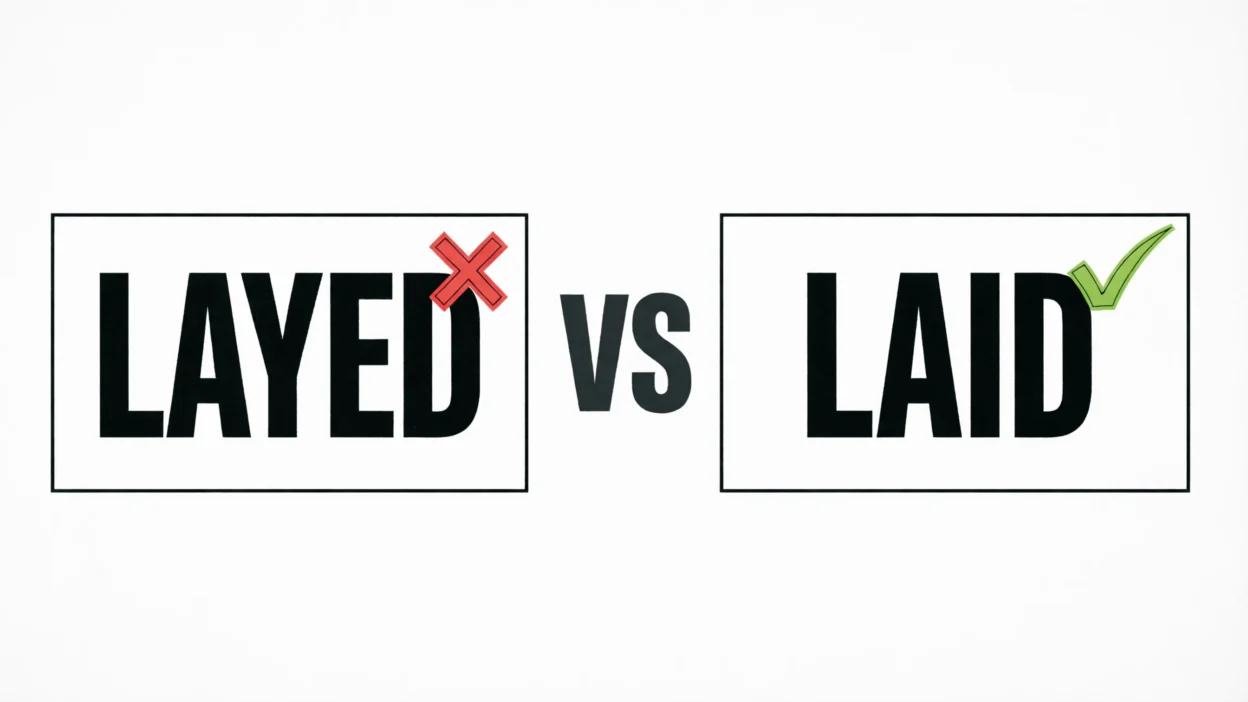
If you’ve ever paused while writing and wondered whether to use layed or laid, you’re not alone. This is one of those common English mistakes that even fluent speakers make. The confusion usually comes from similar pronunciation and tricky verb forms.
The good news? Once you understand the difference, it becomes easy to use the correct word every time. In this guide, we’ll break down layed vs laid in a simple, practical way—so you can write confidently and avoid embarrassing mistakes.
Quick Answer: Layed vs Laid
- “Laid” is the correct past tense and past participle of lay
- “Layed” is not a correct standard English word
✅ Correct: She laid the book on the table
❌ Incorrect: She layed the book on the table
What Does “Laid” Mean?
Laid is the past tense of the verb lay, which means:
- To put something down gently
- To place something somewhere
Examples:
- He laid his keys on the counter
- The hen laid eggs this morning
- She laid the baby in the crib
Key Tip:
Laid always needs a direct object (something being placed).
What About “Layed”?
Layed is not recognized as correct in standard English grammar.
Why do people use it?
- It sounds like it could be right
- People confuse it with regular verb patterns (like played, stayed)
- Lack of familiarity with irregular verbs
Important:
Even though you might see layed online or in informal writing, it is considered a spelling mistake in both academic and professional contexts.
Why the Confusion Happens
The confusion between layed vs laid comes from irregular verb rules and similarity with another verb: lie.
Here’s where it gets tricky:
- Lay (present) → Laid (past)
- Lie (present) → Lay (past)
Yes, lay itself can also be a past tense of lie! 😅
Example:
- I lay down yesterday (from lie)
- I laid the book down yesterday (from lay)
Layed vs Laid: Side-by-Side Comparison
| Feature | Layed ❌ | Laid ✅ |
|---|---|---|
| Correct spelling | No | Yes |
| Verb form | Incorrect | Past tense of “lay” |
| Usage in writing | Avoid | Standard English |
| Example | She layed the bag ❌ | She laid the bag ✅ |
| Formal writing | Not accepted | Fully accepted |
How to Use “Laid” Correctly
To use laid correctly, remember this simple rule:
👉 If you are placing something, use laid
Sentence Patterns:
- Subject + laid + object
- She laid the phone down
- They laid the foundation last year
More Examples:
- The workers laid bricks carefully
- He laid his head on the pillow
- She laid out her clothes for tomorrow
Common Mistakes to Avoid
Here are the most frequent mistakes people make with layed vs laid:
1. Using “layed” instead of “laid”
❌ He layed the book down
✅ He laid the book down
2. Confusing “lay” and “lie”
❌ I will lay down for a nap
✅ I will lie down for a nap
3. Mixing tenses incorrectly
❌ She has layed the table
✅ She has laid the table
4. Forgetting the object rule
- “Laid” always needs something being placed
LSI Keywords and Related Terms
To better understand layed vs laid, here are related terms and phrases:
- past tense of lay
- lay vs lie difference
- irregular verbs in English
- correct English grammar
- common spelling mistakes
- laid meaning and examples
- grammar rules for lay
- English writing tips
American vs British English Differences
There is no difference between American and British English when it comes to layed vs laid.
- Both use “laid” as the correct form
- Both consider “layed” incorrect
So whether you’re writing for a US or UK audience, always use laid.
Memory Trick to Remember the Difference
Here’s a simple trick:
👉 Laid = Paid (both are correct past forms)
👉 Layed = Played (but this pattern doesn’t apply here)
If you wouldn’t say “payed” instead of “paid,” then don’t say “layed.”
Real-Life Usage Examples
Let’s look at how laid appears in everyday writing:
In Conversations:
- “I laid your jacket on the chair.”
- “She laid everything out for the meeting.”
In Writing:
- The company laid the groundwork for future success
- He laid his cards on the table
In Idioms:
- Laid-back (relaxed personality)
- Laid to rest (buried)
When You Might See “Layed” Online
You might come across layed in:
- Social media posts
- Informal blogs
- Non-native English writing
However, for:
- Academic writing
- Professional emails
- SEO content
- Exams
👉 Always use laid
FAQs About Layed vs Laid
1. Is “layed” ever correct?
No, layed is not correct in standard English.
2. What is the past tense of “lay”?
The correct past tense is laid.
3. Why do people write “layed”?
Because it follows a common regular verb pattern, but lay is irregular.
4. What is the difference between “lay” and “lie”?
- Lay requires an object (you lay something)
- Lie does not (you lie down)
5. Is “laid” used in formal writing?
Yes, it is completely correct and widely accepted.
6. Can “laid” be used in passive voice?
Yes
Example: The foundation was laid last year
7. Is there a difference in pronunciation?
No major difference that affects usage—this confusion is mainly about spelling.
8. What’s the easiest way to remember?
Just remember: “laid” is correct, “layed” is always wrong
Final Summary
The difference between layed vs laid is simple but important. Laid is the correct past tense of lay and should be used in all forms of writing. On the other hand, layed is a common mistake that should be avoided entirely.
Understanding this rule helps improve your grammar, boosts your writing credibility, and ensures your content looks professional. Whether you’re writing emails, essays, or blog posts, using laid correctly makes a big difference.
Actionable Takeaway
From now on, whenever you think of using layed, pause and replace it with laid. Practice using it in sentences, and remember the rule: if you’re placing something, it’s always laid.
With just a little attention, this common mistake will completely disappear from your writing.