Have you ever hesitated while writing tieing or tying? You’re definitely not alone. This is a very common spelling confusion, especially because the base word “tie” behaves a little differently than most verbs.
In this easy, human-friendly guide, you’ll learn the correct spelling, why the confusion happens, and how to use the word properly in any context. Let’s clear it up once and for all.
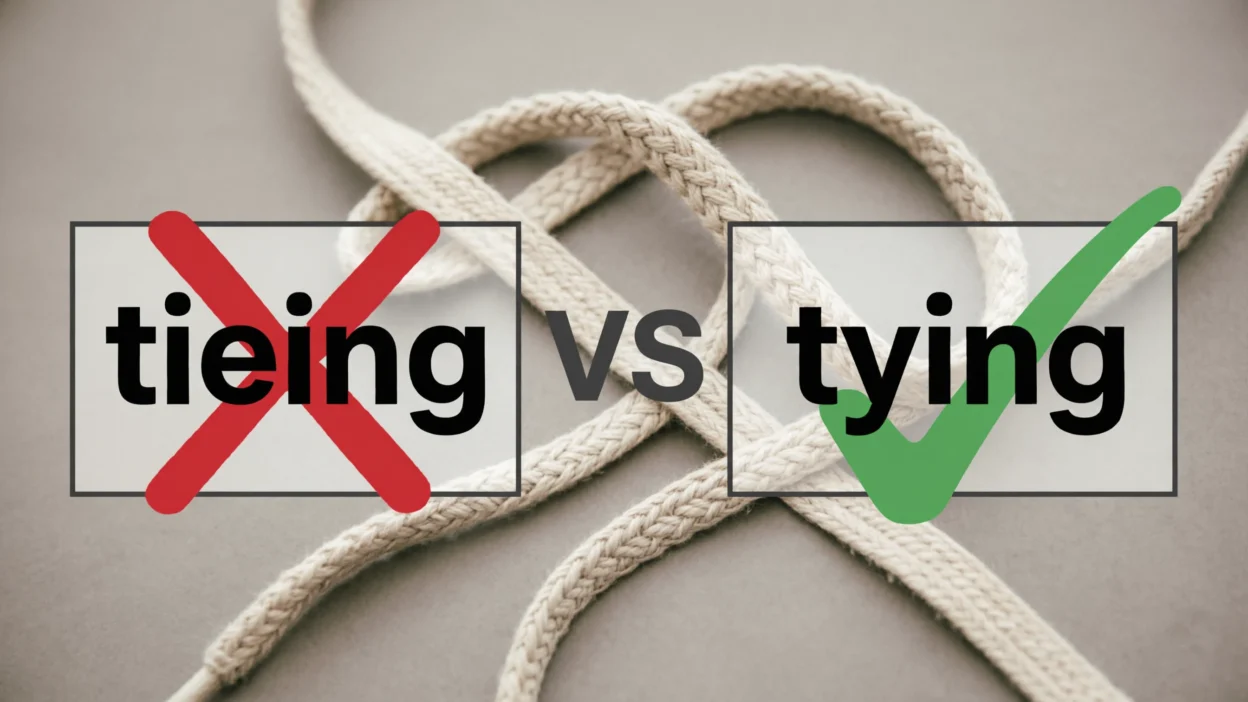
Quick Answer: Tieing vs Tying
- ❌ Tieing is incorrect
- ✅ Tying is the correct spelling
Whenever you talk about making a knot or fastening something, always use tying.
What Does “Tying” Mean?
Tying is the present participle (or -ing form) of the verb tie.
Simple Meaning:
- The act of fastening or securing something with a knot
- Connecting or linking something
Examples:
- She is tying her shoelaces.
- He is tying the rope to the pole.
- They are tying decorations for the event.
Related Keywords (LSI & Synonyms):
- fastening
- binding
- securing
- knotting
- linking
These related words help enrich your writing and improve SEO.
What About “Tieing”? Is It Ever Correct?
No—tieing is not correct in standard English.
It’s a common spelling mistake and should be avoided in all types of writing.
Why Do People Write “Tieing”?
Here are the main reasons:
- Adding “-ing” directly to “tie” without adjusting spelling
- Lack of awareness of irregular spelling rules
- Typing habits or autocorrect issues
Why “Tying” Is the Correct Spelling
The word tie follows a special spelling rule when adding -ing.
Spelling Rule:
When a verb ends in -ie, the “ie” changes to “y” before adding “-ing”.
Here’s how it works:
- tie → tying ✅
- die → dying
- lie → lying
This is why “tieing” is incorrect—it ignores this important rule.
Tieing vs Tying: Comparison Table
| Feature | Tieing ❌ | Tying ✅ |
|---|---|---|
| Correct spelling | No | Yes |
| Meaning | None | Fastening or making a knot |
| Usage | Incorrect | Correct in all contexts |
| Rule followed | No | Yes (ie → y rule) |
| Example | ❌ She is tieing shoes | ✅ She is tying shoes |
Common Mistakes to Avoid
1. Adding “-ing” Directly
- ❌ tieing
- ✅ tying
2. Forgetting the “ie → y” Rule
This is the most important rule for this word.
3. Confusing With Regular Verbs
Not all verbs behave the same—“tie” is irregular in this case.
4. Relying on Sound
Both spellings may sound similar, but only one is correct.
Examples in Sentences (Correct Usage)
Here are more examples using tying correctly:
- I am tying my hair back.
- He kept tying and untying the knot.
- She is tying ribbons on gifts.
- They are tying the boat to the dock.
- We are tying everything together nicely.
American vs British English Differences
There is no difference between American and British English.
- 🇺🇸 American English: tying
- 🇬🇧 British English: tying
Both follow the same spelling rule.
Memory Trick to Remember the Correct Spelling
Here’s a simple trick:
👉 Think: “ie becomes y before -ing”
- tie → tying
- die → dying
- lie → lying
This rule will help you avoid similar mistakes in the future.
When to Use “Tying” in Writing
Everyday Conversation
- I’m tying my shoes.
Storytelling
- She was tying a knot in the dark.
Formal Writing
- The process involves tying components together.
SEO Content
- Tips for tying fishing knots
- Best methods for tying shoelaces
Related Words and Variations
- Tie (base verb)
- Ties (present form)
- Tied (past tense)
- Untying (opposite action)
Example:
- He tied the rope securely.
FAQs About Tieing vs Tying
1. Is “tieing” ever correct?
No, “tieing” is always incorrect.
2. What is the correct spelling?
The correct spelling is tying.
3. Why does “tie” change to “tying”?
Because of the rule: “ie” changes to “y” before adding “-ing”.
4. Is tying used in formal writing?
Yes, it is correct in both formal and informal contexts.
5. What is the past tense of tie?
The past tense is tied.
6. Are there similar words with the same rule?
Yes—die → dying, lie → lying.
7. Is there any difference in British English?
No, both use “tying”.
8. What does tying mean?
It means fastening or securing something with a knot.
Final Summary
To sum it up, tying is the only correct spelling, while tieing is a common mistake caused by misunderstanding spelling rules. The key rule to remember is that verbs ending in “-ie” change to “y” before adding “-ing.”
Mastering this rule not only helps you with “tying” but also with similar words like “dying” and “lying.” Using correct spelling improves clarity, professionalism, and SEO performance in your writing.
Actionable Takeaway
Next time you write:
- ✔ Always use tying
- ❌ Avoid tieing
- 💡 Remember: ie → y before -ing
A quick mental check will help you get it right every time.