Have you ever typed “lovie” or “lovey” and wondered which one is actually right? These cute, affectionate words often appear in texts, captions, and casual conversations—but their spelling can be confusing.
In this guide, you’ll learn the difference between lovie vs lovey, when to use each one, and how to avoid common mistakes. Let’s make it simple and clear.
Quick Answer: Lovie vs Lovey
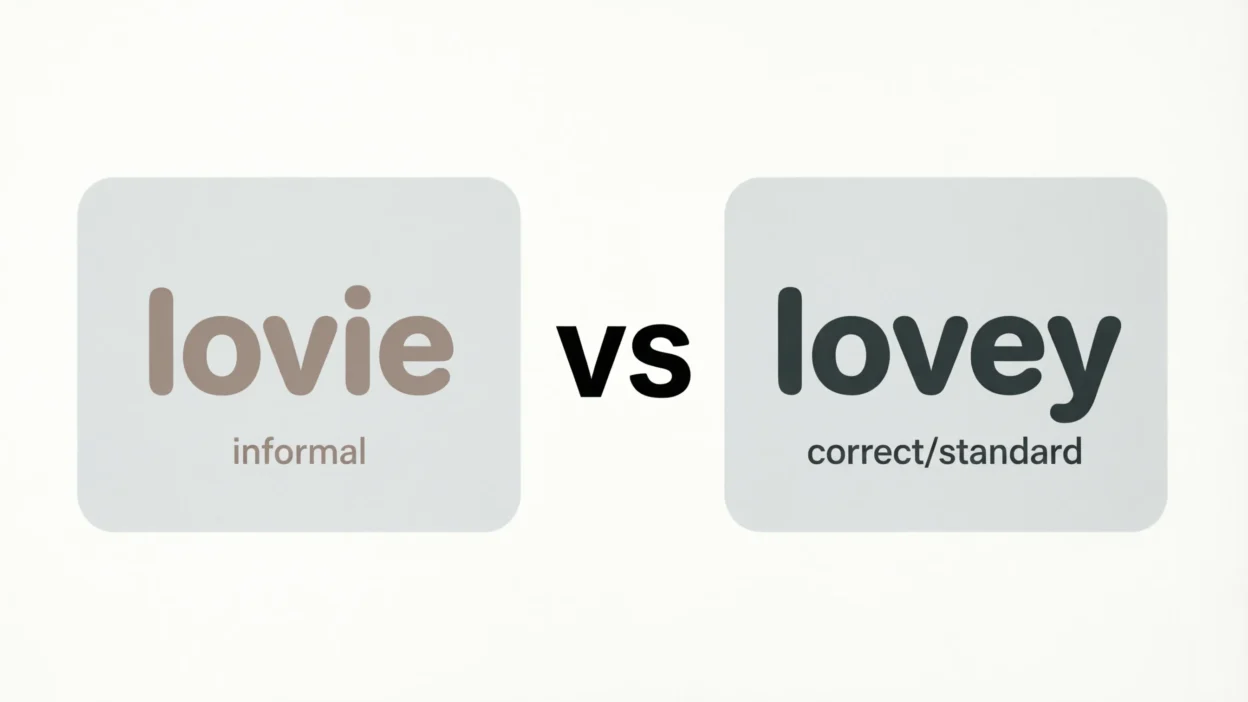
Both “lovie” and “lovey” can be correct, but “lovey” is more standard and widely accepted.
✔ Lovey → more common and correct
✔ Lovie → informal or alternative spelling
Why? “Lovey” is the traditional spelling used in dictionaries, while “lovie” is a modern, casual variation.
What Does “Lovey” Mean?
“Lovey” is a noun and sometimes an adjective used to express affection.
Meanings of “Lovey”
- A term of endearment (like “dear” or “sweetheart”)
- Someone who is loved or cherished
- Something cute or comforting (especially for children)
Examples of “Lovey” in Sentences
- Goodnight, lovey!
- She hugged her favorite lovey before sleeping.
- Come here, my lovey.
It’s warm, gentle, and commonly used in both speech and writing.
What Does “Lovie” Mean?
“Lovie” is an informal spelling of “lovey” and is often used in:
- Text messages
- Social media captions
- Personal or playful communication
Examples of “Lovie” in Sentences
- Miss you, lovie ❤️
- Hey lovie, how was your day?
- Good morning, lovie!
👉 It carries the same meaning but feels more casual and modern.
Key Difference Between Lovie and Lovey
The difference is mainly about usage and formality.
- Lovey = standard, dictionary-recognized
- Lovie = informal, stylistic variation
Comparison Table: Lovie vs Lovey
| Word | Correct? | Usage Type | Example Sentence |
|---|---|---|---|
| Lovie | ✔ Yes | Informal/slang | ✔ Goodnight, lovie |
| Lovey | ✔ Yes | Standard/common | ✔ Goodnight, lovey |
Common Mistakes to Avoid
Even though both can be used, here are some things to watch out for:
1. Using “lovie” in Formal Writing
❌ Dear lovie (in professional email)
✔ Dear [Name]
2. Assuming They Have Different Meanings
Both words mean the same—only tone and usage differ.
3. Overusing in Serious Contexts
These words are affectionate and may not suit formal or serious writing.
4. Confusing With “Love”
“Lovey/lovie” are nicknames, not replacements for the word “love” in all contexts.
Lovey vs Similar Words
Here are some related affectionate terms:
- Love = general affection
- Darling = romantic or warm tone
- Sweetie = playful and caring
- Honey = casual affection
Examples
- Good morning, darling.
- Thanks, sweetie!
- I miss you, love.
American vs British English Differences
There is no major difference between American and British English here.
However:
- Lovey is more traditionally recognized in both
- Lovie is more modern and informal (especially online)
When to Use “Lovey” or “Lovie”
Choose based on context:
Use “Lovey” When:
- Writing more clearly or traditionally
- You want a slightly polished tone
- Referring to children’s comfort items (common usage)
Use “Lovie” When:
- Texting or chatting casually
- Writing captions or messages
- Expressing playful affection
Helpful Memory Trick
Here’s a simple way to remember:
👉 “Lovey is the standard, lovie is the style.”
Or:
👉 “Formal? Use ‘lovey’. Casual? ‘Lovie’ is okay.”
FAQs About Lovie vs Lovey
1. Is “lovie” a real word?
Yes, but it is informal and less standard than “lovey.”
2. Which spelling is more correct?
“Lovey” is more widely accepted and traditional.
3. Do they have different meanings?
No, both express affection and mean the same.
4. Can I use “lovie” in professional writing?
No, it’s too informal.
5. Is “lovey” used for children?
Yes, especially for comfort items like stuffed toys.
6. Are these words commonly used today?
Yes, especially in texting and casual communication.
7. Which one should I use in general?
Use “lovey” for correctness and “lovie” for casual tone.
8. Is spelling important for affectionate words?
Yes, especially in formal or published content.
Final Summary
The difference between lovie vs lovey comes down to usage and formality. “Lovey” is the standard, dictionary-approved spelling, while “lovie” is a casual, modern variation often used in texting and social media.
Both words carry the same affectionate meaning, but choosing the right one depends on your context. For clarity and correctness, “lovey” is usually the safer choice, while “lovie” adds a relaxed, personal touch.
Actionable Takeaway
Next time you write:
👉 Use “lovey” for correct and standard English
👉 Use “lovie” for casual, friendly messages
Practice both in the right context to sound natural and confident.