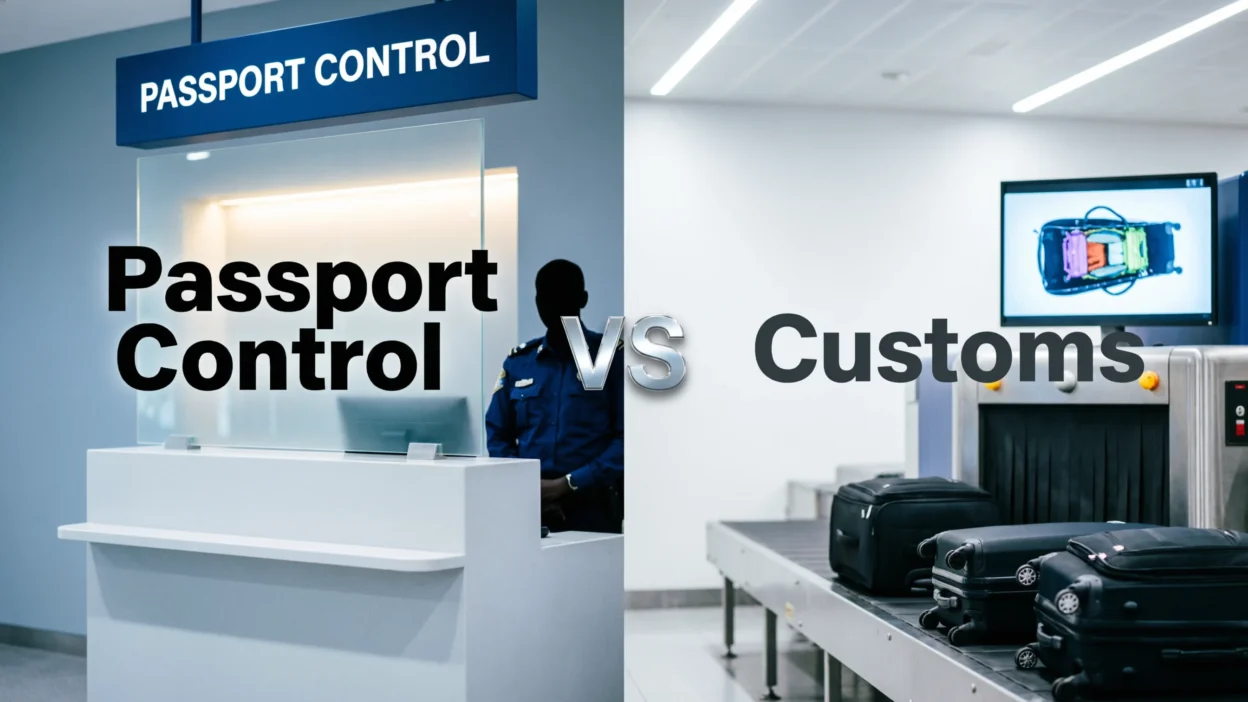
If you’ve ever traveled internationally, you’ve probably heard the terms passport control and customs used at airports.
Many travelers confuse these two processes because both happen after landing in another country. However, they serve completely different purposes and are handled by different authorities.
Understanding the difference between passport control vs customs can make international travel much smoother and less stressful.
Whether you are flying for vacation, study, business, or immigration purposes, knowing what happens at each checkpoint helps you avoid confusion, delays, and mistakes at the airport.
Quick Answer
The main difference between passport control and customs is this:
- Passport control checks who you are and whether you can legally enter the country.
- Customs checks what you are bringing into the country.
Simple Rule:
- Passport control = identity and immigration check
- Customs = baggage and goods inspection
Example:
- At passport control, officers examine your passport and visa.
- At customs, officers may inspect your luggage for restricted items.
What Is Passport Control?
Passport control is the immigration checkpoint where government officers verify your identity, nationality, travel documents, and permission to enter the country.
This process usually happens immediately after you get off an international flight and before collecting your luggage in many airports.
What Officers Check at Passport Control
- Passport validity
- Visa or travel authorization
- Entry requirements
- Purpose of travel
- Length of stay
Common Questions Asked
- Why are you visiting?
- How long will you stay?
- Where are you staying?
- Do you have a return ticket?
Examples of Passport Control Situations
- A tourist shows a visa before entering the country.
- A student presents university admission documents.
- An immigration officer stamps the traveler’s passport.
Purpose of Passport Control
The goal is to protect national borders and ensure travelers meet immigration laws.
What Is Customs?
Customs is the checkpoint where authorities inspect goods, luggage, and items entering the country. The focus is not your identity but the things you are carrying.
Customs usually happens after baggage claim.
What Customs Officers Check
- Restricted goods
- Duty-free allowances
- Food products
- Currency limits
- Illegal items
- Commercial goods
Examples of Customs Checks
- Declaring expensive electronics
- Carrying large amounts of cash
- Bringing food or agricultural products
- Paying import taxes on luxury items
Purpose of Customs
Customs protects the country’s economy, agriculture, environment, and public safety.
Passport Control vs Customs: Key Differences
| Feature | Passport Control | Customs |
|---|---|---|
| Main Focus | The traveler | The traveler’s belongings |
| Managed By | Immigration officers | Customs officers |
| Checks | Passport, visa, identity | Bags, goods, declarations |
| Purpose | Legal entry into country | Regulate imported items |
| Happens When | Before or after baggage claim depending on airport | Usually after baggage claim |
| Questions About | Travel plans and identity | Items you are carrying |
| Documents Needed | Passport, visa | Customs declaration form |
What Happens First: Passport Control or Customs?
In most international airports, the usual order is:
- Arrival from airplane
- Passport control (immigration)
- Baggage claim
- Customs inspection
- Exit airport
Simple Example
You land in another country:
- Immigration officers first check if you can enter legally.
- Then you collect your luggage.
- Customs officers check what you brought into the country.
However, some airports may have slightly different layouts.
What Happens at Passport Control?
The process is usually straightforward if your documents are correct.
Typical Steps
- Join the immigration queue
- Present passport and visa
- Answer basic travel questions
- Get passport stamped
- Continue into the country
Documents You May Need
- Passport
- Visa
- Boarding pass
- Hotel booking
- Return ticket
- Travel insurance
Common Reasons for Delays
- Expired passport
- Missing visa
- Suspicious travel history
- Incorrect documents
What Happens at Customs?
After collecting your bags, you normally pass through customs.
Two Common Airport Lanes
Green Channel
- “Nothing to declare”
- For travelers carrying allowed personal items only
Red Channel
- “Goods to declare”
- For taxable, restricted, or high-value items
Customs Officers May:
- Scan luggage
- Ask questions
- Open bags
- Check receipts
- Confiscate prohibited goods
Common Mistakes Travelers Make
Many international travelers misunderstand these airport procedures.
1. Thinking Passport Control and Customs Are the Same
❌ Incorrect idea:
- Both checkpoints do the same thing.
- Passport control checks people.
- Customs checks belongings.
2. Forgetting to Declare Restricted Items
Some travelers accidentally carry:
- fresh food
- plants
- large cash amounts
- luxury goods
Failure to declare can lead to fines.
3. Assuming Customs Always Checks Every Bag
Not every traveler gets stopped, but officers can inspect any luggage randomly.
Passport Control vs Customs in Everyday Travel
Most travelers interact with both during international trips.
At Passport Control
You may hear:
- “What is the purpose of your visit?”
- “How long are you staying?”
At Customs
You may hear:
- “Do you have anything to declare?”
- “Are you carrying food or cash?”
Understanding these processes reduces travel anxiety.
American vs British English Differences
There are slight vocabulary differences between American and British English regarding airport procedures.
American English
People often say:
- immigration
- customs
- border control
British English
British travelers may use:
- passport control
- customs
- border force
Example
- “We waited an hour at passport control.”
- “Customs officers checked our luggage.”
Both terms are understood internationally.
Do Domestic Flights Have Passport Control or Customs?
Usually, no.
Domestic Flights
- No passport control
- No customs inspection
Because you remain inside the same country.
International Flights
You normally pass through:
- immigration/passport control
- customs
Some countries also have security and biosecurity checks.
Easy Trick to Remember the Difference
Here’s a simple memory tip:
Passport Control = Person
Think:
- passport
- visa
- identity
- immigration
Customs = Cargo
Think:
- luggage
- goods
- declarations
- imports
This makes the difference much easier to remember.
FAQs About Passport Control vs Customs
Is passport control the same as immigration?
Yes. In most airports, passport control is part of immigration procedures.
Do customs officers check passports?
Sometimes they may ask for identification, but their main focus is your belongings and declarations.
Can customs open my luggage?
Yes. Customs officers have legal authority to inspect baggage.
What happens if I fail passport control?
You may be denied entry, questioned further, or returned to your departure country.
What items must be declared at customs?
This depends on the country, but common examples include:
- large cash amounts
- expensive goods
- food products
- alcohol
- commercial merchandise
Which comes first: immigration or customs?
Usually immigration/passport control comes first.
Do I go through customs when leaving a country?
Normally customs checks happen mainly upon arrival, though some countries perform export inspections.
Is passport control always at the airport?
No. It can also happen at land borders, seaports, and international train stations.
Final Thoughts on Passport Control vs Customs
Understanding the difference between passport control vs customs is essential for smooth international travel. While both are official border procedures, they serve very different purposes. Passport control focuses on verifying your identity and legal entry, while customs focuses on regulating the goods and items entering the country.
For most travelers, these processes are routine and straightforward when documents and declarations are handled correctly. Knowing what officers are checking, what questions to expect, and what items must be declared can save time and prevent unnecessary stress during your journey.
Actionable Takeaway
Remember this simple formula:
- Passport control checks you
- Customs checks your stuff
Before traveling internationally:
- Check passport and visa validity
- Review customs restrictions
- Declare restricted or taxable items honestly
- Keep travel documents accessible
Being prepared makes airport procedures faster and much more comfortable.