If you’ve ever paused mid-sentence wondering whether to write shiney or shiny, you’re not alone. This small spelling confusion shows up in everyday writing—from social media captions to professional emails—and it can subtly affect how polished your writing looks.
The good news? The difference is simple once you understand it. In this guide, you’ll learn which spelling is correct, why the confusion exists, and how to avoid making this mistake again with easy examples and tips.
Quick Answer: Shiney vs Shiny
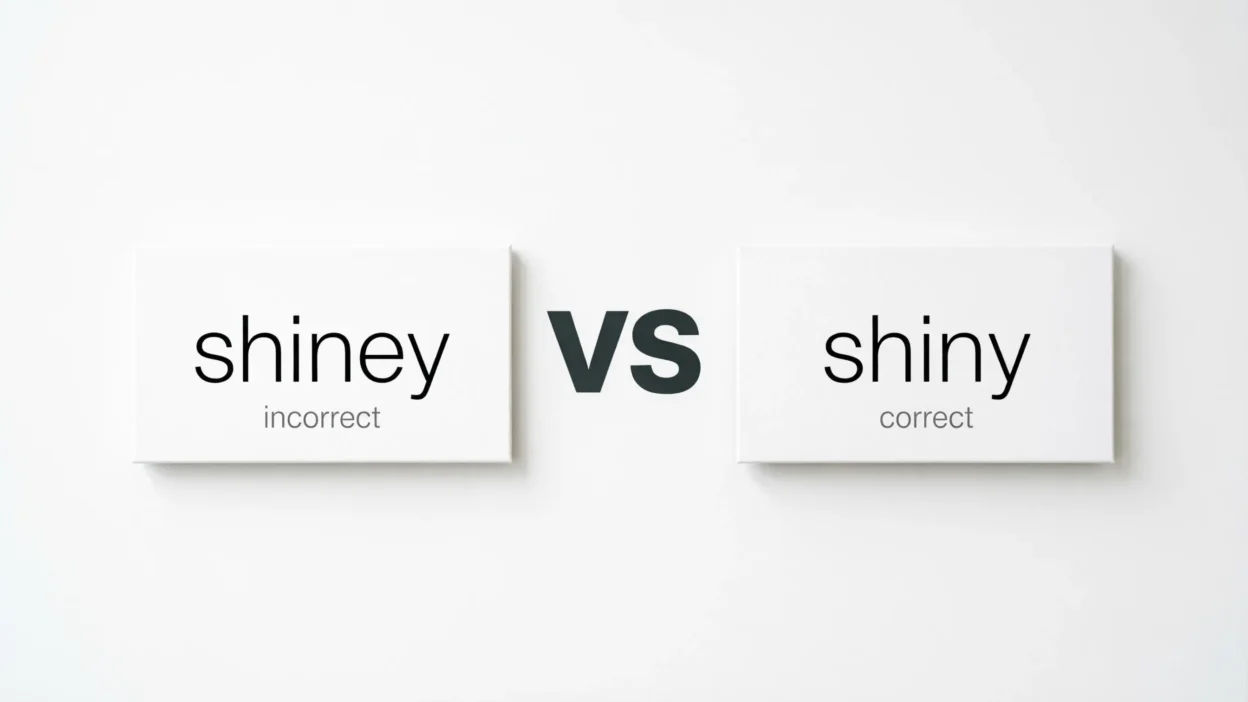
- Correct spelling: Shiny ✅
- Incorrect spelling: Shiney ❌
- Shiny means something that reflects light or looks bright and polished.
- Shiney is a common misspelling and should be avoided in formal and informal writing.
What Does “Shiny” Mean?
The word shiny is an adjective used to describe something that reflects light or appears bright, smooth, or glossy.
Common meanings:
- Reflecting light (e.g., a shiny surface)
- Looking new or polished
- Attractive in a bright or eye-catching way
Examples:
- The car looked shiny after the wash.
- She wore a shiny silver dress to the party.
- His shoes were clean and shiny.
It comes from the verb shine, but the spelling changes slightly when forming the adjective.
Why Do People Write “Shiney”?
The confusion happens because of how English words are formed from verbs. Since the base word is shine, many people assume the adjective should be shiney.
However, English spelling rules often drop the “e” before adding a suffix like “-y.”
Correct pattern:
- Shine → Shiny ✅
- Ice → Icy ✅
- Noise → Noisy ✅
So, shiney feels logical—but it’s not correct.
Shiney vs Shiny: Side-by-Side Comparison
| Feature | Shiny ✅ | Shiney ❌ |
|---|---|---|
| Correct spelling | Yes | No |
| Meaning | Bright, glossy, reflective | None (misspelling) |
| Usage | Formal and informal writing | Should be avoided |
| Dictionary status | Recognized word | Not recognized |
| Example | A shiny surface | Incorrect usage |
Is There an American vs British English Difference?
No—this is one of those rare cases where both American and British English agree completely.
- American English: Shiny ✅
- British English: Shiny ✅
Unlike words like color/colour or organize/organise, shiny is spelled the same worldwide.
Examples of “Shiny” in Sentences
Seeing the word in context helps reinforce correct usage.
- The new phone has a shiny finish.
- He picked up a shiny coin from the ground.
- The kitchen floor looked shiny after cleaning.
- Her hair was smooth and shiny.
- The trophy gleamed under the lights, looking incredibly shiny.
Common Mistakes to Avoid
Even simple words can trip people up. Here are the most frequent mistakes:
1. Adding an unnecessary “e”
❌ Shiney
✅ Shiny
2. Assuming phonetics equals spelling
Just because shiney sounds right doesn’t mean it’s correct.
3. Using autocorrect blindly
Some devices may not flag shiney as incorrect, so always double-check.
4. Mixing verb and adjective forms
- Verb: Shine
- Adjective: Shiny
They are related but not spelled the same way.
Easy Memory Trick to Remember the Correct Spelling
Here’s a quick way to lock it in:
👉 “Drop the E, add the Y”
- Shine → Shiny
If you remember this simple rule, you’ll never write shiney again.
Related Words and Synonyms for “Shiny”
Using synonyms can improve your writing variety and SEO strength.
Synonyms:
- Glossy
- Polished
- Gleaming
- Sparkling
- Lustrous
- Radiant
Example:
Instead of repeating shiny, you can say:
- The table had a glossy finish.
- Her necklace looked sparkling in the light.
When Should You Use “Shiny”?
You can use shiny in both casual and formal writing.
Common use cases:
- Product descriptions (e.g., shiny surfaces, shiny materials)
- Creative writing
- Everyday conversation
- Marketing and advertising
It’s a simple but powerful descriptive word that adds visual clarity.
Why Correct Spelling Matters
Using the correct spelling isn’t just about grammar—it affects how others perceive your writing.
Benefits of using “shiny” correctly:
- Improves credibility
- Makes writing look professional
- Enhances readability
- Avoids confusion
Even small mistakes like shiney can reduce trust in formal contexts.
FAQs About Shiney vs Shiny
1. Is “shiney” ever correct?
No, shiney is always incorrect. It’s a common misspelling of shiny.
2. Why is the “e” dropped in shiny?
English spelling rules often drop the final “e” before adding a suffix like “-y.”
3. Is “shiny” a formal word?
Yes, it can be used in both formal and informal contexts.
4. Do Americans and British spell it differently?
No, both use shiny as the correct spelling.
5. Can “shiny” describe people?
Yes, indirectly—like describing shiny hair, eyes, or clothing.
6. What part of speech is “shiny”?
It is an adjective.
7. Is “shiny” used in SEO or product descriptions?
Yes, it’s commonly used in eCommerce and marketing content.
8. Are there similar spelling mistakes like this?
Yes, examples include:
- Writey ❌ → Write + y = Writy (rare usage)
- Noisey ❌ → Noisy ✅
Final Summary
When it comes to shiney vs shiny, the answer is clear: “shiny” is the only correct spelling. While shiney might seem logical based on the root word shine, English spelling rules require dropping the “e” before adding “-y.” This small detail makes a big difference in writing accuracy.
Using the correct form not only improves clarity but also enhances your credibility, whether you’re writing casually or professionally. By remembering the simple rule—drop the “e” and add “y”—you can confidently avoid this common mistake every time.
Actionable Takeaway
Next time you write, pause for a second and check:
👉 If it comes from shine, always write shiny, never shiney.
Make it a habit, and your writing will instantly look more polished—just like something truly shiny.