Many people use the terms infection and infestation interchangeably, but they actually describe two very different health conditions. Understanding the difference matters because the causes, symptoms, treatments, and prevention methods are not the same.
Whether you are reading medical information, talking to a doctor, or simply trying to improve your health knowledge, knowing the distinction can help you make informed decisions.
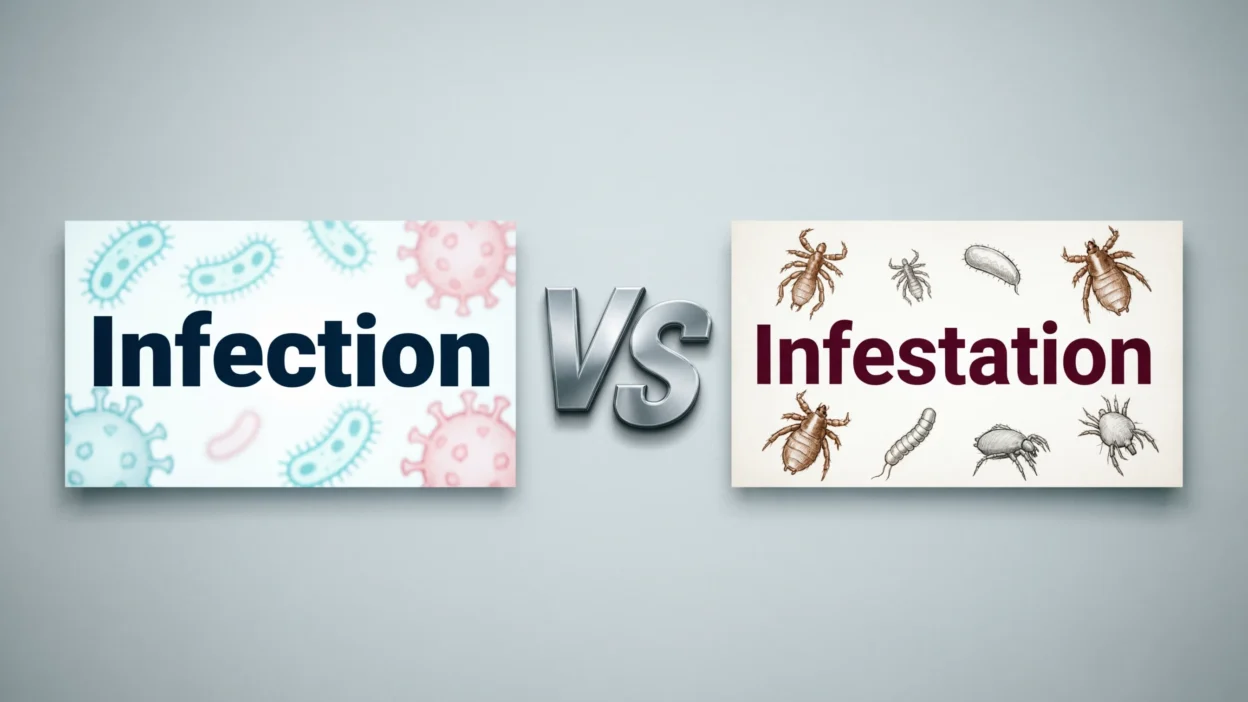
In simple terms, an infection happens when harmful microorganisms like bacteria, viruses, or fungi invade the body and multiply. An infestation, on the other hand, occurs when larger parasites or pests live on or inside the body.
While both can affect health and cause discomfort, they are diagnosed and treated differently. This guide explains everything clearly with examples, comparisons, and practical insights.
Quick Answer
The difference between infection vs infestation is mainly based on the type of organism involved.
- Infection = caused by microorganisms such as bacteria, viruses, fungi, or protozoa.
- Infestation = caused by larger parasites or pests such as lice, mites, ticks, or worms.
For example:
- Flu is an infection.
- Head lice are an infestation.
What Does Infection Mean?
An infection occurs when harmful microorganisms enter the body, multiply, and interfere with normal body functions. These microorganisms are usually microscopic and invisible to the naked eye.
Common causes of infections include:
- Bacteria
- Viruses
- Fungi
- Protozoa
Infections can affect almost any part of the body, including:
- Skin
- Lungs
- Blood
- Urinary tract
- Digestive system
Common Examples of Infections
Here are some familiar infection examples:
- Common cold
- Influenza (flu)
- COVID-19
- Urinary tract infection (UTI)
- Fungal nail infection
- Strep throat
Common Symptoms of Infection
Symptoms vary depending on the cause, but often include:
- Fever
- Pain
- Swelling
- Fatigue
- Redness
- Coughing
- Pus formation
Doctors usually treat infections with:
- Antibiotics for bacterial infections
- Antiviral medicines
- Antifungal medications
- Rest and hydration
What Does Infestation Mean?
An infestation happens when parasites or pests live on or inside the body. Unlike microorganisms, these organisms are usually larger and sometimes visible.
Infestations commonly involve:
- Insects
- Mites
- Worms
- Ticks
- Lice
Some infestations occur externally on the skin, while others happen internally in the intestines or tissues.
Common Examples of Infestations
Examples include:
- Head lice
- Scabies
- Tapeworms
- Fleas
- Bed bugs
- Tick infestations
Common Symptoms of Infestation
Symptoms may include:
- Intense itching
- Skin irritation
- Visible parasites
- Rashes
- Bites
- Digestive problems in internal infestations
Treatment often involves:
- Antiparasitic medicines
- Medicated shampoos
- Hygiene measures
- Environmental cleaning
Infection vs Infestation: Main Differences
The easiest way to understand the difference is by comparing the organism causing the condition.
| Feature | Infection | Infestation |
|---|---|---|
| Cause | Microorganisms | Parasites or pests |
| Organisms Involved | Bacteria, viruses, fungi | Lice, mites, worms |
| Visibility | Usually microscopic | Often visible |
| Common Symptoms | Fever, inflammation | Itching, irritation |
| Treatment | Antibiotics, antivirals | Antiparasitic treatment |
| Examples | Flu, UTI, pneumonia | Scabies, lice |
Can an Infestation Cause an Infection?
Yes, sometimes an infestation can lead to a secondary infection.
For example:
- Excessive scratching from lice or scabies may break the skin.
- Broken skin allows bacteria to enter.
- This may cause a bacterial skin infection.
This is why treating infestations quickly is important. Ignoring them can create additional health complications.
Why People Confuse Infection and Infestation
Many people confuse these terms because both involve harmful organisms affecting the body. They may also share similar symptoms like redness, discomfort, swelling, or irritation.
Another reason is that some parasites carry infectious organisms. For instance:
- Mosquitoes spread malaria.
- Ticks can spread Lyme disease.
In these cases:
- The parasite causes infestation or bites.
- The microorganism causes infection.
Understanding this distinction improves medical communication and treatment accuracy.
Medical Meaning of Infection vs Infestation
In medical terminology:
- Infection refers to microbial invasion and multiplication.
- Infestation refers to colonization by multicellular organisms or ectoparasites.
Healthcare professionals carefully use these terms because proper diagnosis affects treatment plans.
For example:
- Antibiotics do not cure lice.
- Antiparasitic creams do not treat viral infections.
Using the correct term helps avoid confusion and incorrect treatment.
External vs Internal Infestation
Infestations can occur either externally or internally.
External Infestation
These affect the skin or hair.
Examples:
- Head lice
- Fleas
- Scabies mites
Internal Infestation
These affect internal organs or the digestive tract.
Examples:
- Roundworms
- Tapeworms
- Pinworms
Internal infestations may cause:
- Abdominal pain
- Weight loss
- Diarrhea
- Nutritional deficiencies
Infection vs Infestation in Animals
The terms are also widely used in veterinary medicine.
Animal Infections
Animals may develop:
- Ear infections
- Viral diseases
- Bacterial infections
Animal Infestations
Pets commonly experience:
- Flea infestations
- Tick infestations
- Worm infestations
Pet owners often need both medical treatment and environmental cleaning to fully solve infestations.
Common Mistakes People Make
Calling Every Skin Problem an Infection
Not every itchy condition is an infection. Scabies and lice are infestations, not infections.
Using Antibiotics for Infestations
Antibiotics kill bacteria, not parasites. Using them unnecessarily can contribute to antibiotic resistance.
Ignoring Environmental Treatment
With infestations, treating the body alone may not be enough. Bedding, clothes, carpets, and pets may also require cleaning.
Assuming Infestations Are Always Visible
Some infestations are difficult to detect without medical testing, especially internal parasites.
Infection vs Infestation in American and British English
The terms infection and infestation are spelled the same in both American and British English. Their meanings also remain largely identical.
However, healthcare communication styles may differ slightly:
- American English often uses simpler patient-friendly explanations.
- British English medical writing may sound more formal in clinical contexts.
Examples:
- American English: “He has a lice infestation.”
- British English: “The patient presents with a lice infestation.”
No major spelling variations exist for these terms.
How Doctors Diagnose Infection or Infestation
Diagnosis depends on symptoms and testing methods.
Infection Diagnosis
Doctors may use:
- Blood tests
- Urine tests
- Swabs
- Imaging scans
Infestation Diagnosis
Doctors may use:
- Skin examination
- Microscopic analysis
- Stool tests
- Visual inspection
Accurate diagnosis is essential because treatment approaches differ significantly.
Prevention Tips
Preventing Infections
- Wash hands regularly
- Stay vaccinated
- Avoid contaminated food
- Cover wounds properly
- Maintain strong immunity
Preventing Infestations
- Avoid sharing combs or hats
- Wash bedding frequently
- Keep pets treated for fleas and ticks
- Maintain household cleanliness
- Practice good hygiene
Prevention reduces health risks and minimizes spreading to others.
FAQs About Infection vs Infestation
Is lice an infection or infestation?
Lice are considered an infestation because lice are visible parasites living on the scalp.
Can worms cause infection?
Worms usually cause infestation, but they can sometimes trigger secondary infections or inflammation.
Is scabies an infection?
No. Scabies is an infestation caused by tiny mites.
Are fungal diseases infections?
Yes. Fungal diseases are classified as infections because fungi are microorganisms.
Can infestation spread from person to person?
Yes. Some infestations like lice and scabies spread through close contact.
Do antibiotics treat infestations?
No. Antibiotics mainly treat bacterial infections, not parasitic infestations.
What is the biggest difference between infection and infestation?
The main difference is the type of organism involved:
- Infection = microorganisms
- Infestation = larger parasites or pests
Can a person have both infection and infestation at the same time?
Yes. An infestation may damage the skin or body tissues and allow microorganisms to cause a secondary infection.
Final Thoughts on Infection vs Infestation
Understanding infection vs infestation is important for accurate health awareness and proper treatment. Although both conditions involve harmful organisms affecting the body, the organisms themselves are completely different. Infections come from microscopic pathogens like bacteria, viruses, and fungi, while infestations involve larger parasites such as lice, mites, and worms.
Knowing the difference helps people choose the right medical care, avoid treatment mistakes, and improve prevention habits. If symptoms persist or worsen, professional medical advice is always the safest option. Early diagnosis and targeted treatment can prevent complications and support faster recovery.
Actionable Takeaway
If you notice symptoms like fever, swelling, or discharge, think about possible infection causes. If you experience itching, visible bugs, or skin crawling sensations, an infestation may be more likely.
Never self-medicate without understanding the root cause. Proper diagnosis leads to safer and more effective treatment.