Have you ever typed “villian” and paused, wondering if it looked right? You’re not alone. This is a very common spelling mistake, especially because the word sounds exactly like it’s spelled incorrectly.
Spelling it correctly matters—whether you’re writing a story, a social media post, or something professional. In this guide, you’ll learn the correct spelling, meaning, examples, and simple tricks to avoid this mistake forever.
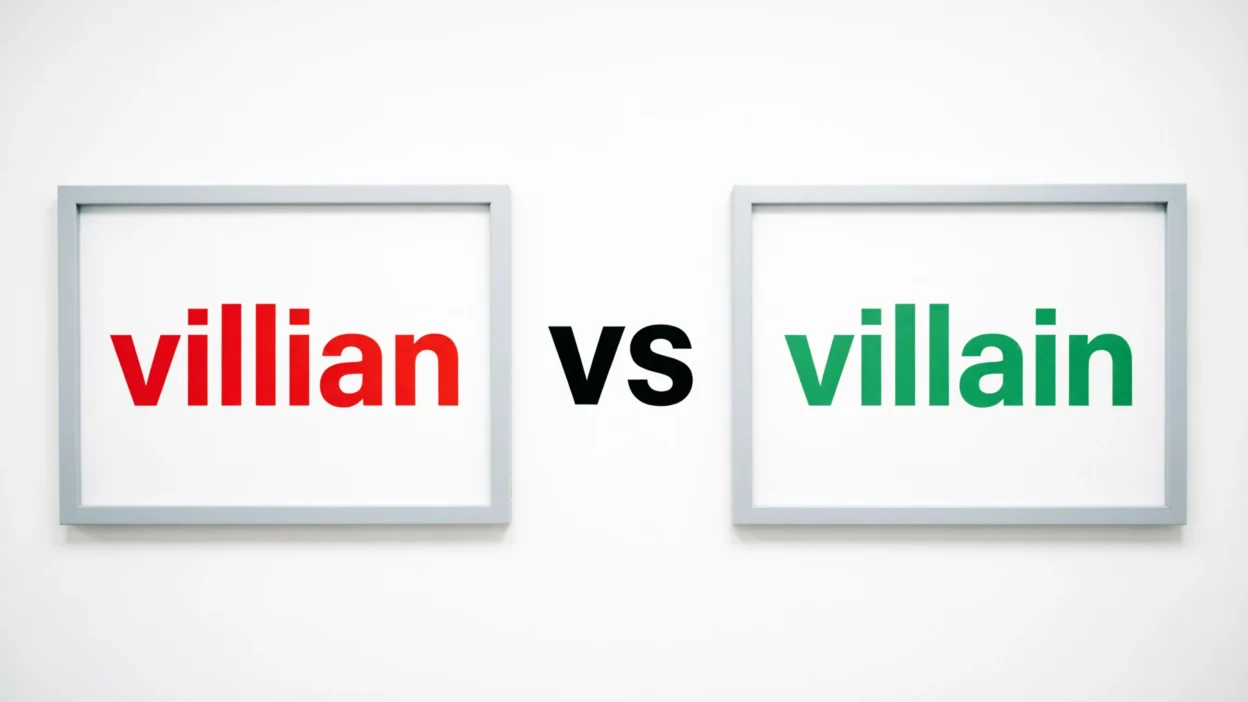
Quick Answer: Villain vs Villian
- ✅ Villain = Correct spelling
- ❌ Villian = Incorrect spelling
👉 Always use “villain” with “ai”, not “ia”.
What Does “Villain” Mean?
The word villain is a noun that refers to:
- A bad or evil character in a story
- Someone who does harmful or dishonest actions
Simple Examples:
- The villain tried to take over the city.
- Every superhero needs a strong villain.
- He played the role of a villain in the movie.
It’s widely used in storytelling, movies, books, and even everyday language.
Why Do People Write “Villian”?
The confusion between villain vs villian happens mainly because of pronunciation.
Here’s why:
- The sound of “ai” and “ia” can feel similar
- People often write words how they hear them
- Typing quickly leads to letter swapping
👉 But remember: “villian” is not a correct English word.
American vs British English Differences
This word is simple—no differences here.
| Word | American English | British English |
|---|---|---|
| villain | villain | villain |
✅ The spelling “villain” is the same in both American and British English.
Examples in Real-Life Sentences
Let’s see how to use villain correctly.
Correct Usage:
- The villain was finally defeated.
- She loves stories with a clever villain.
- The plot revolves around a mysterious villain.
Incorrect Usage:
- ❌ The villian escaped the police.
- ❌ He acted like a villian in the story.
Common Mistakes to Avoid
Here are frequent errors:
- ❌ Writing villian instead of villain
- ❌ Mixing up “ai” and “ia”
- ❌ Relying only on pronunciation
Quick Tip:
👉 The correct order is “ai” → villain
Easy Memory Trick
Here’s a simple trick:
👉 “A villain is always AI (artificially intelligent in movies!)”
- Focus on “ai” in the middle
- That’s the correct spelling: villain
Similar Words That Cause Confusion
If you mix up villain vs villian, you might also confuse:
- Captain vs Captian ❌
- Mountain vs Mountian ❌
- Certain vs Certian ❌
👉 These mistakes often come from switching vowel positions.
When Should You Use “Villain”?
Use villain when referring to:
- A bad character in stories
- Someone acting in a harmful or immoral way
- Figurative use (e.g., “He became the villain of the situation”)
Common Contexts:
- Movies and TV shows
- Books and novels
- Everyday conversations
Comparison Table: Villain vs Villian
| Feature | Villain | Villian |
|---|---|---|
| Spelling | ✅ Correct | ❌ Incorrect |
| Meaning | Evil character | Not a real word |
| Usage | Stories, movies, general use | Never used |
| English Variant | Same in US & UK | Not applicable |
Practical Writing Tips
To avoid spelling mistakes like this:
- Double-check tricky words
- Learn common vowel patterns
- Use spell-check tools
- Practice writing frequently
Small improvements lead to better writing.
FAQs About Villain vs Villian
1. Is “villian” ever correct?
No, “villian” is always incorrect.
2. What does “villain” mean?
It refers to a bad or evil character in a story.
3. Why is “villain” spelled with “ai”?
That’s the standard spelling in English—it doesn’t follow pronunciation exactly.
4. Is there a US vs UK difference?
No, “villain” is spelled the same in both.
5. Can I use “villain” in everyday speech?
Yes, it’s commonly used both literally and figuratively.
6. What are synonyms of “villain”?
- Antagonist
- Criminal
- Bad guy
- Enemy
7. Why do people confuse “ai” and “ia”?
Because they sound similar when spoken quickly.
8. How can I remember the correct spelling?
👉 Think: villain = ai in the middle
Final Summary
The difference between villain vs villian is simple but important. “Villain” is the correct spelling, while “villian” is a common mistake that should be avoided. The confusion usually comes from pronunciation and swapping vowel positions.
By remembering the correct letter order and practicing usage, you can easily avoid this error. Using the right spelling helps your writing look more polished, clear, and professional.
Actionable Takeaway
From now on:
- Always write villain, not villian
- Remember the “ai” in the middle
- Double-check words with tricky vowels
- Use spelling tools when unsure
Mastering small details like this builds strong, confident writing skills over time.