If you’ve ever hesitated between writing spicey or spicy, you’re definitely not alone. This is one of those small spelling mistakes that quietly slips into everyday writing—whether you’re describing food, personality, or even fashion.
The confusion makes sense. Since the root word is spice, many people naturally assume the adjective should be spicey. But English has its own rules, and once you understand them, this becomes an easy mistake to fix forever.
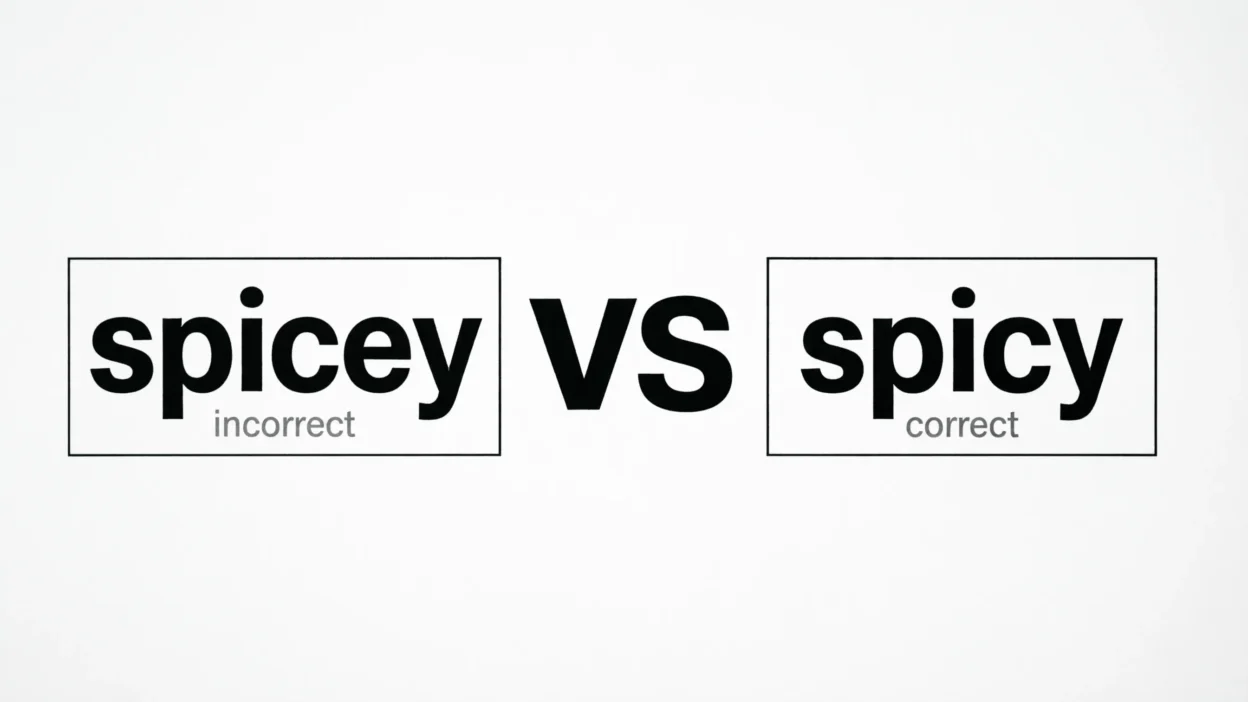
Quick Answer: Spicey vs Spicy
- Correct spelling: Spicy ✅
- Incorrect spelling: Spicey ❌
- Spicy means something full of spice, flavor, or excitement.
- Spicey is a common misspelling and should be avoided.
What Does “Spicy” Mean?
Spicy is an adjective used to describe something that has a strong flavor due to spices or something exciting, bold, or slightly intense.
Common meanings:
- Having a hot or flavorful taste
- Full of spices or seasoning
- Exciting, bold, or dramatic (informal use)
Examples:
- The curry was extremely spicy.
- She loves spicy snacks and street food.
- The conversation took a spicy turn.
- He added spicy sauce to his meal.
Why Do People Write “Spicey”?
The mistake happens because people try to form the adjective directly from the noun spice.
It feels logical:
- Spice → Spicey ❌
But English spelling rules don’t work that way here.
Correct rule:
When a word ends in “e”, you usually drop the “e” before adding “-y.”
Examples:
- Spice → Spicy ✅
- Ice → Icy ✅
- Noise → Noisy ✅
That’s why spicey is incorrect—even if it sounds right.
Spicey vs Spicy: Side-by-Side Comparison
| Feature | Spicy ✅ | Spicey ❌ |
|---|---|---|
| Correct spelling | Yes | No |
| Meaning | Flavorful, hot, bold | None (misspelling) |
| Usage | Formal & informal writing | Should be avoided |
| Dictionary status | Recognized word | Not recognized |
| Example | Spicy food | Incorrect usage |
American vs British English: Any Difference?
No difference at all in this case.
- American English: Spicy ✅
- British English: Spicy ✅
Unlike words such as flavor/flavour, both versions of English use the same spelling here.
Examples of “Spicy” in Sentences
Understanding comes faster when you see real-life usage.
- I can’t handle very spicy food.
- The wings were crispy and spicy.
- She enjoys spicy noodles late at night.
- That was a spicy debate on TV.
- He prefers mildly spicy dishes.
Common Mistakes to Avoid
1. Adding an extra “e”
❌ Spicey
✅ Spicy
2. Spelling based on sound
Just because spicey sounds right doesn’t make it correct.
3. Forgetting the spelling rule
Always remember: drop the “e” before adding “-y.”
4. Using incorrect spelling in formal writing
Even small mistakes can make writing look less professional.
Easy Trick to Remember the Correct Spelling
Here’s a simple rule you can use anytime:
👉 “Drop the E, add the Y”
- Spice → Spicy
If you follow this, you’ll never write spicey again.
Synonyms and Related Words for “Spicy”
Using variety makes your writing more engaging and SEO-friendly.
Synonyms:
- Hot
- Zesty
- Flavorful
- Tangy
- Peppery
- Fiery
Example:
- The dish was zesty and full of flavor.
- He likes fiery sauces.
When Should You Use “Spicy”?
You can use spicy in many everyday situations.
Common uses:
- Food descriptions (spicy dishes, spicy snacks)
- Informal conversations (spicy gossip, spicy topics)
- Content writing and marketing
- Social media captions
It’s a versatile word that works in both literal and figurative contexts.
Why Correct Spelling Matters
Correct spelling may seem small, but it has a big impact.
Benefits:
- Builds trust with readers
- Improves clarity
- Enhances professionalism
- Helps with SEO rankings
Using spicy instead of spicey ensures your writing looks polished and credible.
FAQs About Spicey vs Spicy
1. Is “spicey” ever correct?
No, spicey is always incorrect.
2. Why is the “e” removed in spicy?
English spelling rules require dropping the “e” before adding “-y.”
3. Is “spicy” formal or informal?
It works in both formal and informal contexts.
4. Do British and American English differ here?
No, both use spicy.
5. Can “spicy” describe things other than food?
Yes, it can describe conversations, personalities, or situations.
6. What part of speech is “spicy”?
It is an adjective.
7. Is “spicy” commonly used in marketing?
Yes, especially in food and lifestyle content.
8. Are there similar spelling mistakes?
Yes, for example:
- Icey ❌ → Icy ✅
- Noisey ❌ → Noisy ✅
Final Summary
When comparing spicey vs spicy, the correct spelling is clearly spicy. While spicey may feel logical because of the root word spice, it doesn’t follow standard English spelling rules. The correct form drops the “e” before adding “-y.”
By using spicy consistently, you not only avoid a common mistake but also improve the clarity and professionalism of your writing. Whether you’re talking about food, conversations, or creative content, the correct spelling always makes a better impression.
Actionable Takeaway
Next time you write, remember this simple rule:
👉 Spice → Spicy (drop the “e”)
Make it a habit, and your writing will stay sharp, clear, and error-free—just like a perfectly balanced spicy dish.