If you’ve ever typed more then and wondered if it looked right, you’re definitely not alone. This is one of the most common English mistakes because the words then and than sound similar but have completely different meanings.
Understanding the difference between more then vs more than is simple once you know the rule. In this guide, you’ll learn the correct usage, see clear examples, and avoid this mistake in your writing forever.
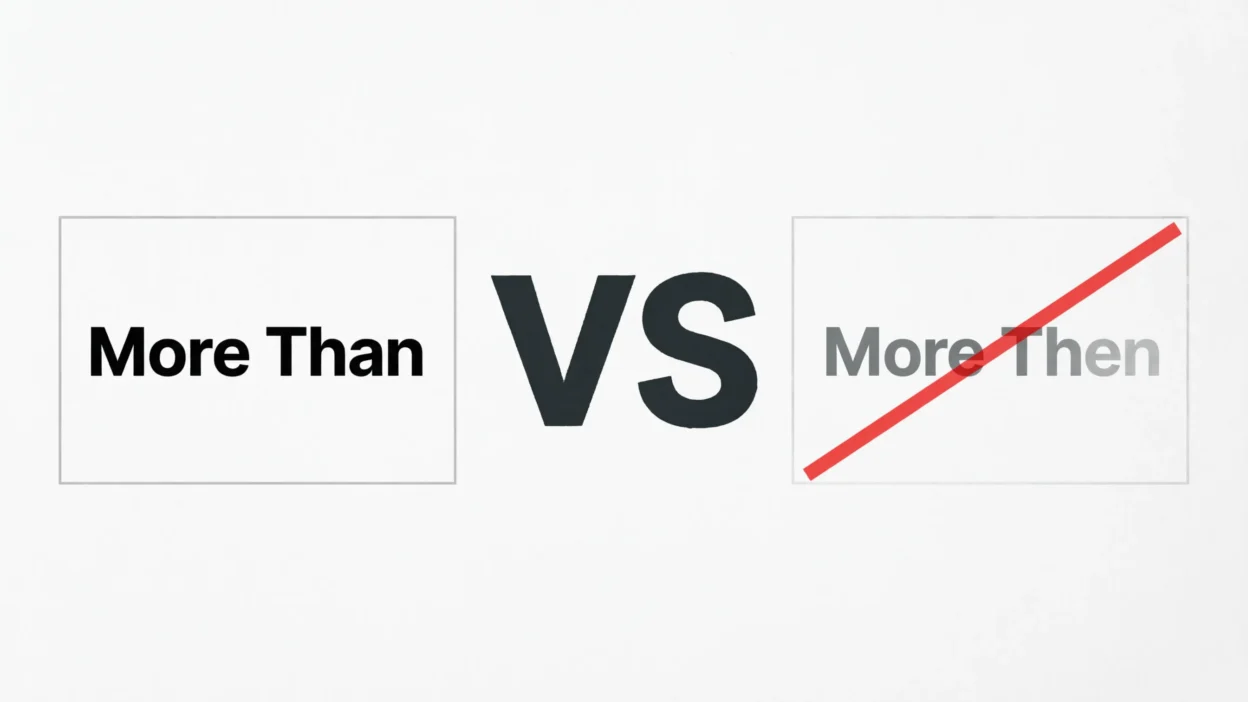
Quick Answer: More Then vs More Than
- ✅ More than = Correct phrase (used for comparison or quantity)
- ❌ More then = Incorrect in this context
Bottom line: Always use more than when comparing or talking about amounts.
What Does “More Than” Mean?
More than is used to show comparison or indicate a greater amount, number, or degree.
Examples:
- She has more than 10 books.
- This task is more than I expected.
- He earns more than his brother.
Synonyms & Related Phrases (LSI keywords):
- Greater than
- Exceeding
- Above
- Higher than
- In excess of
These help diversify your writing and improve SEO.
What Does “Then” Mean?
Then is not used for comparison. It relates to time, sequence, or result.
Examples:
- Finish your homework, then go outside.
- Back then, things were different.
- If it rains, then we’ll cancel the trip.
Why Do People Confuse “Than” and “Then”?
The confusion happens because:
- They sound very similar
- Both are short, common words
- Typing errors happen quickly
Simple rule:
👉 Than = comparison
👉 Then = time or sequence
More Then vs More Than: Side-by-Side Comparison
| Feature | More Than ✅ | More Then ❌ |
|---|---|---|
| Correct usage | Yes | No |
| Meaning | Greater amount or comparison | Incorrect phrase |
| Grammar role | Comparative phrase | Misuse of “then” |
| Common mistake | No | Yes |
| Professional usage | Accepted | Avoid |
Common Mistakes to Avoid
Here are frequent errors:
- ❌ I have more then 5 friends
- ❌ This is more then enough
Correct versions:
- ✅ I have more than 5 friends
- ✅ This is more than enough
Pro Tip:
👉 If you’re comparing something, always choose than
American vs British English Differences
There’s no difference in this case:
- 🇺🇸 American English: More than
- 🇬🇧 British English: More than
Both forms use than for comparisons. “More then” is incorrect everywhere.
Real-Life Usage Examples
Correct:
- She is more than capable of handling the job.
- There were more than 100 people at the event.
- This is more than just a hobby.
Incorrect:
- ❌ He has more then me
- ❌ It costs more then expected
Easy Memory Trick
Use this quick trick:
👉 Than = comparison (both have “a”)
👉 Then = time (both relate to sequence)
So when comparing:
👉 Always pick than
When Should You Use “More Than”?
Use more than when:
- Comparing two things
- Talking about numbers or quantities
- Describing degree or intensity
Common contexts:
- Prices and amounts
- Performance comparisons
- Everyday conversations
- Academic and professional writing
Why Correct Usage Matters
Using the right phrase improves:
- ✅ Clarity in communication
- ✅ Professional writing quality
- ✅ Grammar accuracy
- ✅ Reader trust
Even a small mistake like “more then” can distract readers.
FAQs About More Then vs More Than
1. Is “more then” ever correct?
No, it is always incorrect when used for comparison.
2. What’s the difference between “than” and “then”?
- Than = comparison
- Then = time or sequence
3. Can “then” ever replace “than”?
No, they are not interchangeable.
4. Why is this mistake so common?
Because the words sound similar and are often mistyped.
5. Is “more than” formal or informal?
It works in both formal and informal writing.
6. How can I remember the difference?
Think: “than = compare”
7. Do grammar tools catch this mistake?
Sometimes, but not always—so it’s good to know the rule yourself.
Final Summary
The difference between more then vs more than is clear once you understand their roles. More than is the correct phrase used for comparisons and quantities, while more then is a common grammatical mistake that should always be avoided.
Mastering this small distinction can greatly improve your writing clarity and professionalism. Whether you’re writing emails, essays, or social posts, using more than ensures your message is accurate and polished.
Actionable Takeaway
Next time you write:
👉 If you’re comparing, use more than
👉 Avoid “more then” completely
This simple habit will instantly boost your grammar skills.