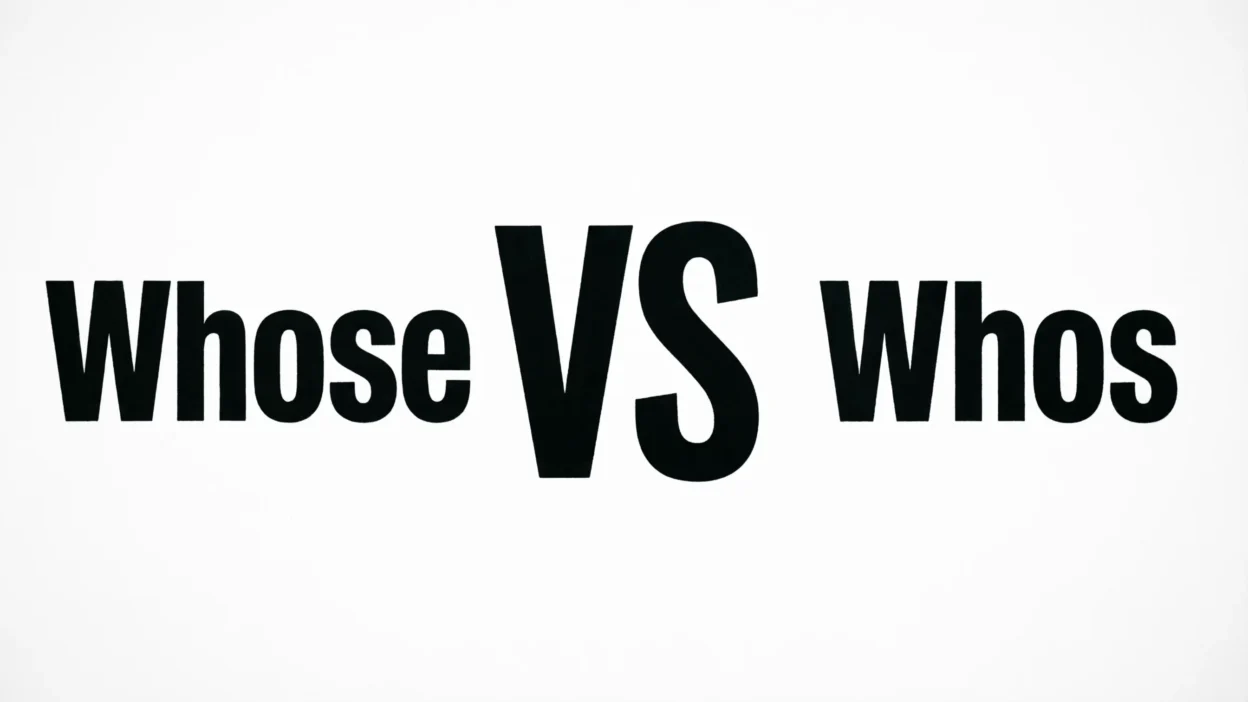
If you’ve ever typed whos and wondered if it should actually be whose, you’re not alone. This is one of the most common grammar mix-ups in English, especially because both words sound exactly the same when spoken.
The confusion usually comes from apostrophes and possession rules. But don’t worry—once you understand one simple trick, you’ll never mix up whos vs whose again. Let’s break it down in the easiest way possible.
Quick Answer: Whos vs Whose
- ❌ Whos = Incorrect (not a proper English word)
- ✅ Whose = Correct (shows possession)
👉 Always use whose when talking about ownership or belonging.
What Does “Whose” Mean?
Whose is a possessive pronoun. It’s used to ask or tell who something belongs to.
Meaning:
- Belonging to whom
- Ownership or relationship
Examples:
- Whose book is this?
- Do you know whose car is parked outside?
- She’s the person whose idea we followed.
It works similarly to:
- His
- Her
- Their
Why “Whos” Is Incorrect
The word whos (without an apostrophe or “e”) is not considered standard English.
Many people confuse it with:
- Who’s (with an apostrophe) = short for “who is” or “who has”
Compare:
- ✅ Who’s coming to the party? (Who is)
- ✅ Whose jacket is this? (possession)
- ❌ Whos jacket is this? (incorrect)
So, “whos” is simply a spelling error you should avoid.
Whos vs Whose: Comparison Table
| Feature | Whose ✅ | Whos ❌ |
|---|---|---|
| Correct spelling | Yes | No |
| Meaning | Possession | None |
| Grammar type | Pronoun | Invalid |
| Usage in writing | Formal & informal | Not used |
Common Mistakes to Avoid
Even experienced writers slip up here. Let’s look at the most common mistakes:
1. Forgetting the “E” in “Whose”
- ❌ Whos phone is ringing?
- ✅ Whose phone is ringing?
2. Confusing “Whose” with “Who’s”
- ❌ Who’s bag is this?
- ✅ Whose bag is this?
3. Overusing Apostrophes
People assume all ownership needs an apostrophe—but whose does not.
4. Relying Only on Sound
Since “who’s” and “whose” sound identical, context is key.
Is There a Difference in American vs British English?
There’s no difference at all for this word.
- 🇺🇸 American English: whose
- 🇬🇧 British English: whose
Both follow the same grammar rule and usage.
When Should You Use “Whose”?
Use whose anytime you’re asking or describing ownership.
Common Situations:
- Questions: “Whose shoes are these?”
- Relative clauses: “The student whose project won…”
- Formal writing: “An author whose work inspires…”
It’s widely used in both spoken and written English.
Easy Trick to Remember the Difference
Here’s a simple rule you’ll never forget:
👉 “Whose = possession (like his, her, their)”
👉 “Who’s = who is / who has”
Quick test:
- Replace with “who is”
- If it works → use who’s
- If not → use whose
Example:
- “___ book is this?”
- “Who is book is this?” ❌
- So the answer is: Whose book is this? ✅
Related Keywords and Synonyms
To strengthen your understanding, here are related terms:
- Who’s vs whose
- Possessive pronouns
- Grammar rules
- English homophones
- Ownership words
- Whose meaning
FAQs About Whos vs Whose
1. Is “whos” ever correct?
No, “whos” is not a correct English word.
2. What is the difference between “who’s” and “whose”?
“Who’s” means “who is” or “who has,” while “whose” shows possession.
3. Can “whose” refer to things, not people?
Yes, it can refer to objects or animals:
- The house whose roof collapsed
4. Why doesn’t “whose” have an apostrophe?
Because it’s a possessive pronoun, like “his” or “their,” which also don’t use apostrophes.
5. Is this mistake common?
Yes, it’s one of the most common grammar mistakes in English.
6. How can I quickly check which one to use?
Replace the word with “who is”—if it fits, use “who’s”; otherwise, use “whose.”
7. Is “whose” formal or informal?
It works perfectly in both formal and informal writing.
Final Summary
The difference between whos vs whose is simple once you understand the rule. Whose is the correct word used to show possession, while whos is just a common spelling mistake that should be avoided.
By remembering that whose = ownership and who’s = who is, you can quickly choose the right word every time. This small grammar fix can instantly improve your writing clarity and professionalism.
Actionable Takeaway
Before writing:
👉 Ask yourself: Am I talking about ownership?
- Yes → use whose
- No → check if you need who’s
Practice this rule in daily writing, and you’ll never confuse them again.