If you’ve ever written past away when talking about someone’s death, you’re not alone. It’s an easy mistake because past and passed sound exactly the same—but only one of these phrases is correct in English.
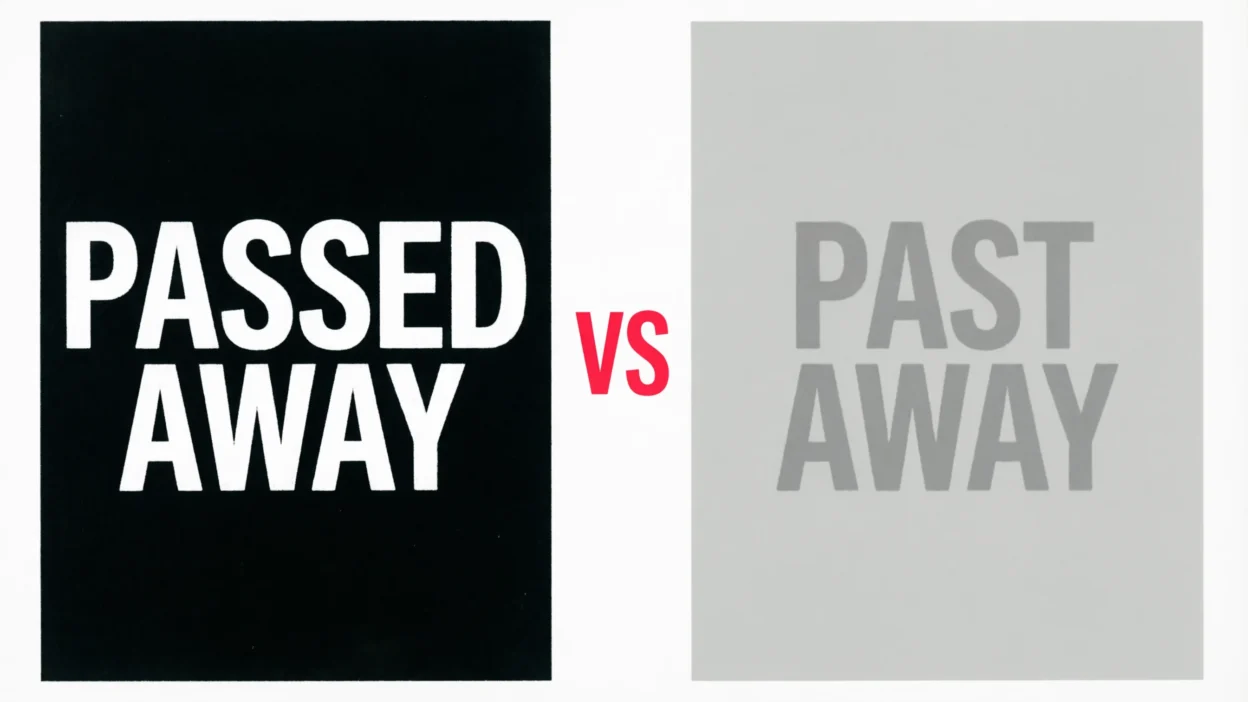
This guide will clearly explain passed away vs past away, show you the right usage, and help you avoid this common error with confidence and clarity.
Quick Answer
- ✅ Passed away = correct phrase (means died, in a polite way)
- ❌ Past away = incorrect and should not be used
👉 Simple rule: If you’re describing someone’s death, always use passed away.
What Does “Passed Away” Mean?
Passed away is a polite and respectful expression used to say that someone has died. It softens the emotional impact compared to directly saying died.
Why Use “Passed Away”?
It’s often used:
- In formal or respectful conversations
- When expressing sympathy
- In obituaries or announcements
Examples
- Her grandfather passed away peacefully.
- He passed away last night surrounded by family.
- We were saddened to hear that she passed away.
👉 It conveys respect, empathy, and sensitivity.
What About “Past Away”?
Past away is not a correct phrase in English. It’s simply a confusion between past (related to time or position) and passed (a verb).
Why It’s Incorrect
- Past is not a verb
- The phrase requires an action (the verb pass)
- Therefore, only passed away works
Incorrect Examples (Avoid These)
- ❌ He past away yesterday.
- ❌ She past away peacefully.
Passed Away vs Past Away: Comparison Table
| Feature | Passed Away | Past Away |
|---|---|---|
| Correct Usage | ✅ Yes | ❌ No |
| Meaning | A polite way to say “died” | No valid meaning |
| Grammar Role | Verb phrase | Incorrect structure |
| Example | He passed away last year. | ❌ He past away last year. |
Easy Trick to Remember
👉 Passed = action (something happened)
If you can replace it with died, then passed away is correct.
Example:
- She passed away. → She died. ✅
- She past away. → ❌ doesn’t make sense
Common Mistakes (and Fixes)
❌ Incorrect: My uncle past away last week.
✅ Correct: My uncle passed away last week.
❌ Incorrect: She past away in her sleep.
✅ Correct: She passed away in her sleep.
❌ Incorrect: He has past away.
✅ Correct: He has passed away.
👉 Tip: If you see “past away,” it’s always wrong—replace it with passed away.
Real-Life Examples for Clarity
Correct Usage
- The author passed away at the age of 80.
- Our neighbor passed away peacefully.
- He passed away after a long illness.
Incorrect Usage (Avoid)
- Past away suddenly ❌
- Past away yesterday ❌
American vs British English
There’s no difference between American and British English in this case. Both use passed away as the correct expression.
However, you may also hear alternative phrases depending on tone:
- British English: “passed on”
- American English: “passed away” (more common)
All are acceptable—but past away is not.
Related Words and Synonyms (LSI Keywords)
Here are other respectful ways to express the same idea:
- Passed on
- Deceased
- Departed
- Late (e.g., the late Mr. Smith)
- No longer with us
These can help vary your language while maintaining sensitivity.
FAQs About Passed Away vs Past Away
1. Is “past away” ever correct?
No, it’s grammatically incorrect and should never be used.
2. Why do people confuse these phrases?
Because past and passed are homophones—they sound the same.
3. Is “passed away” formal or informal?
It works in both formal and informal contexts, especially when being respectful.
4. Can I just say “died” instead?
Yes, but passed away is softer and more polite.
5. What tense is “passed away”?
It’s past tense. Example: He passed away yesterday.
6. Is “has passed away” correct?
Yes. Example: She has passed away peacefully.
7. What is a more formal alternative?
Words like deceased or departed are more formal.
8. Which phrase should I use in writing?
Always use passed away for correctness and clarity.
Summary
The difference between passed away vs past away is simple but essential. Passed away is the correct and respectful phrase used to describe someone’s death, while past away is a grammatical error that should be avoided.
Using the correct form not only improves your writing but also ensures that your message is clear and appropriate—especially in sensitive situations.
Actionable Takeaway
Whenever you’re writing about someone’s death, remember this simple rule:
👉 If it means died, always use passed away.
A quick mental check can save you from a common mistake and help you communicate with clarity and respect.