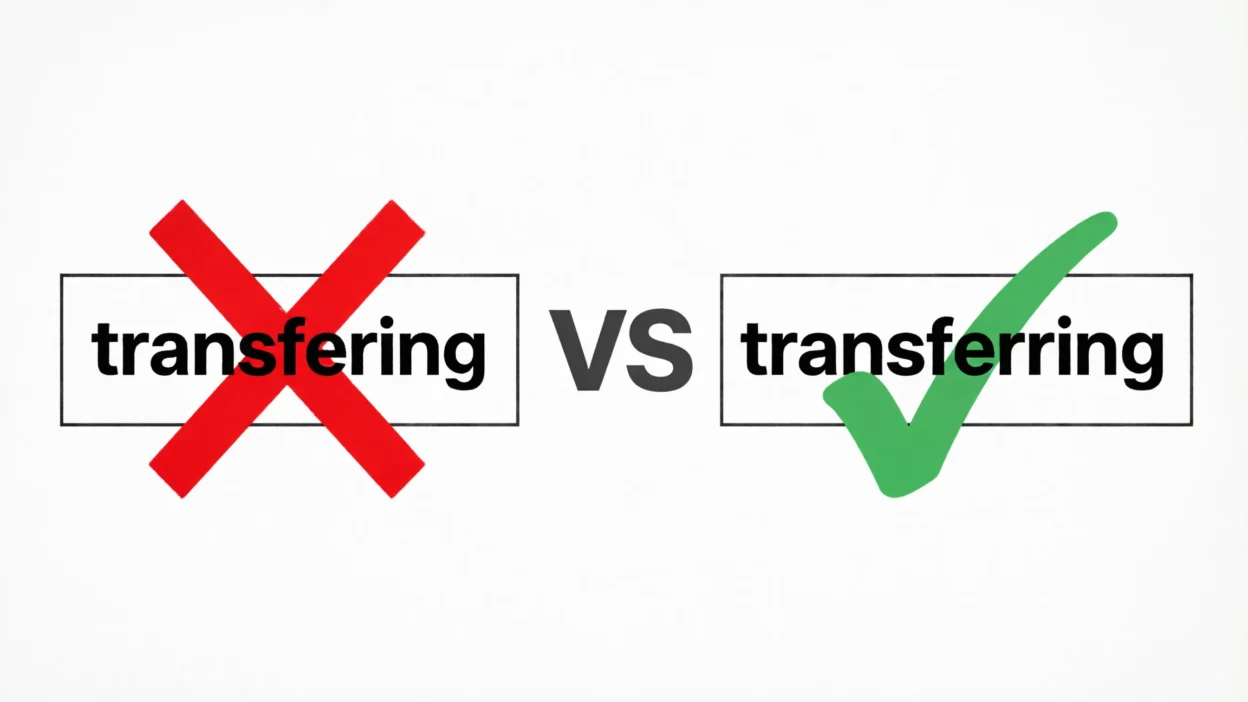
Have you ever typed offerred and paused, wondering if it looks right? You’re not alone—this is a very common spelling mistake, especially when forming the past tense of verbs.
English spelling rules can feel confusing, particularly when it comes to doubling letters. In this guide, you’ll quickly learn the correct form, why the mistake happens, and how to use the word confidently in everyday writing.
Quick Answer: Offerred vs Offered
- ✅ Offered is the correct spelling
- ❌ Offerred is incorrect
Always use offered in all types of writing.
What Does “Offered” Mean?
The word offered is the past tense of offer and means:
- Gave or presented something
- Proposed or suggested something
- Provided help, service, or opportunity
Examples:
- She offered help during the meeting.
- He offered his seat to the old man.
- The company offered a discount to customers.
Why “Offerred” Is Incorrect
The spelling offerred is a mistake caused by incorrectly doubling the letter r.
Here’s the rule:
You only double the final consonant when:
- The word ends in a consonant-vowel-consonant (CVC) pattern
- AND the stress is on the last syllable
Apply it to “offer”:
- OF-fer → stress is on the first syllable
- So, you do NOT double the “r”
✔ Correct: offer → offered
✘ Incorrect: offer → offerred
Offerred vs Offered: Comparison Table
| Feature | Offered ✅ | Offerred ❌ |
|---|---|---|
| Correct spelling | Yes | No |
| Grammar rule | Follows stress rule | Breaks rule |
| Recognized word | Yes | No |
| Usage | Formal & informal | Incorrect |
| Example | “She offered help.” | Incorrect |
Common Mistakes to Avoid
Watch out for these frequent errors:
- ❌ Writing offerred instead of offered
- ❌ Doubling consonants without checking stress
- ❌ Assuming all verbs double letters in past tense
Tip:
If the stress is at the beginning, don’t double the final consonant.
How to Remember the Correct Spelling
Simple tricks can make this easy:
- Think: “Offer → Offered (no extra ‘r’)”
- Remember: Stress is not at the end, so no doubling
- Practice writing sentences using “offered”
Memory Trick:
“If it’s OF-fer, don’t add another ‘r’!”
American vs British English
There is no difference between American and British English here.
- 🇺🇸 American English: Offered
- 🇬🇧 British English: Offered
Both use the same spelling.
Real-Life Examples of “Offered”
Seeing the word in context helps reinforce correct usage:
- She offered to help with the project.
- They offered a solution to the problem.
- He offered his opinion during the discussion.
- The school offered new courses this year.
Related Words and Similar Patterns
Understanding similar words makes this rule easier:
Words that follow the same pattern:
- Offer → Offered
- Visit → Visited
- Open → Opened
Words that DO double the consonant:
- Refer → Referred
- Prefer → Preferred
- Transfer → Transferred
Grammar Rule Explained Simply
Let’s break it down clearly:
Double the consonant when:
- Word ends in CVC pattern
- Stress is on the last syllable
Do NOT double when:
- Stress is on the first syllable
That’s why:
- Offer → Offered ✅
- Refer → Referred ✅
FAQs About Offerred vs Offered
1. Is “offerred” ever correct?
No, offerred is always incorrect in standard English.
2. Why don’t we double the “r” in offered?
Because the stress is on the first syllable (OF-fer), so no doubling is needed.
3. Is “offered” used in formal writing?
Yes, it is commonly used in academic, business, and professional writing.
4. What is the base form of “offered”?
The base verb is offer.
5. How can I avoid spelling mistakes like this?
Learn stress patterns and practice commonly used verbs.
6. Are there similar confusing words?
Yes:
- Occured ❌ → Occurred ✅
- Refered ❌ → Referred ✅
7. Can spell check fix “offerred”?
Most tools will flag it, but understanding the rule is better.
8. Does pronunciation affect spelling here?
Not always—English spelling often differs from pronunciation.
Final Summary
The difference between offerred vs offered is simple: offered is the correct spelling, while offerred is a common mistake caused by misunderstanding consonant doubling rules.
Once you understand that stress plays a key role, these types of errors become much easier to avoid. Using the correct spelling improves your writing clarity and professionalism.
Actionable Takeaway
Next time you write it, remember:
👉 “OF-fer is not stressed at the end—so no extra ‘r’ → offered.”
Practice it a few times, and you’ll never write offerred again.