Confused about sew vs sow? You’re not alone. These two words sound the same, but they have completely different meanings—and using the wrong one can quickly confuse your reader.
Whether you’re talking about stitching clothes or planting seeds, understanding the difference between sew and sow will help you write with clarity and confidence. Let’s break it down in a simple, practical way.
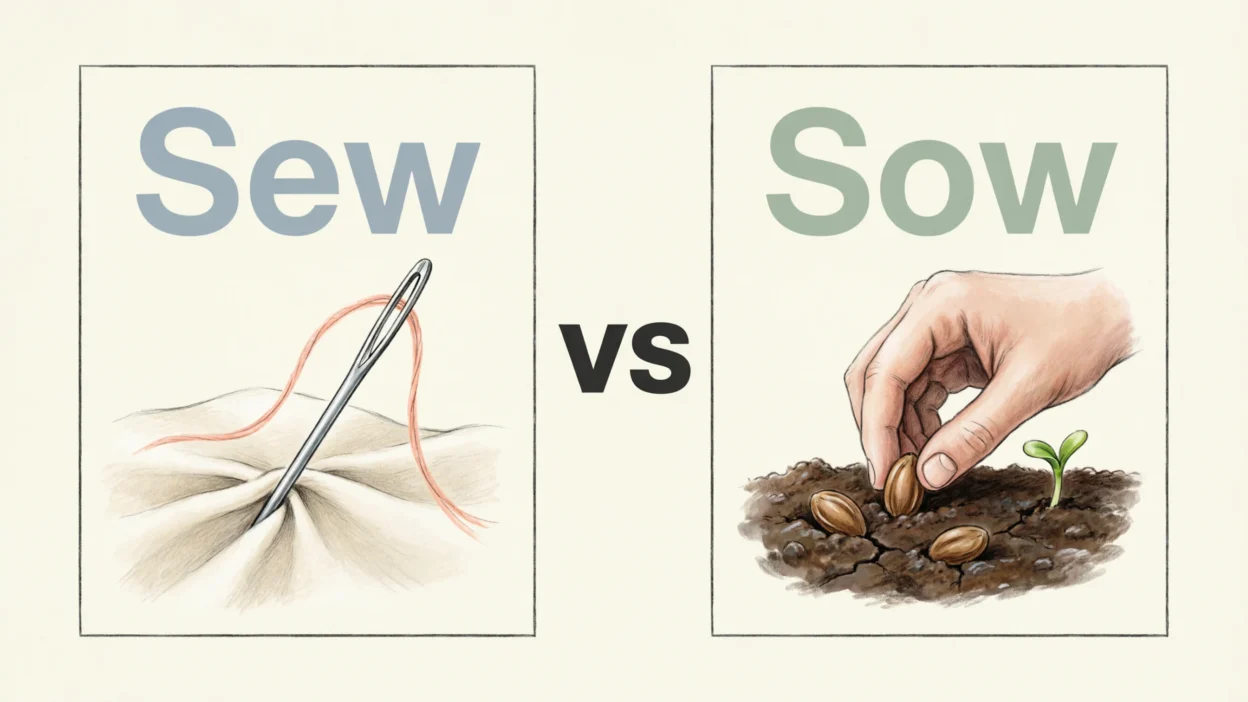
Quick Answer: Sew vs Sow
- Sew = To stitch fabric with a needle and thread
- Sow = To plant seeds or spread something
👉 Easy rule:
- Sew is for clothes and fabric
- Sow is for plants and growth
What Does “Sew” Mean?
The word sew is a verb that refers to stitching materials like fabric using a needle and thread or a sewing machine.
Common meanings of sew:
- To stitch fabric together
- To repair clothing
- To create garments
Examples of “sew” in sentences:
- She learned how to sew her own dresses.
- I need to sew a button onto my shirt.
- He is sewing a new cushion cover.
Related terms:
- Sewing machine
- Sewn (past participle)
- Seam
👉 Sew is all about fabric, thread, and stitching.
What Does “Sow” Mean?
The word sow is also a verb, but it has a completely different meaning—it relates to planting or spreading.
Common meanings of sow:
- To plant seeds in the ground
- To spread something (ideas, emotions, etc.)
Examples of “sow” in sentences:
- Farmers sow seeds in the spring.
- They sowed wheat across the field.
- His words began to sow doubt in her mind.
Related terms:
- Sown (past participle)
- Sowing season
- Reap what you sow
👉 Sow is about planting—literally or figuratively.
Sew vs Sow: Key Differences
| Feature | Sew | Sow |
|---|---|---|
| Meaning | Stitch fabric | Plant seeds / spread ideas |
| Context | Clothing, tailoring | Farming, growth, metaphor |
| Part of Speech | Verb | Verb |
| Example | Sew a dress | Sow seeds |
| Memory Tip | “Sew = Stitch” | “Sow = Seed” |
Common Mistakes and How to Avoid Them
❌ Mistake 1: Using “sow” for stitching
- Incorrect: I will sow this shirt.
- Correct: I will sew this shirt.
❌ Mistake 2: Using “sew” for planting
- Incorrect: Farmers sew crops in spring.
- Correct: Farmers sow crops in spring.
❌ Mistake 3: Confusing pronunciation
Even though both words are pronounced the same (/soʊ/), their meanings are completely different.
Easy Memory Tricks
- Sew → “E” for nEEdle
- Sow → “O” for grOwth
Or:
- Sew = stitch clothes
- Sow = plant seeds
American vs British English Differences
There are no spelling or usage differences between American and British English for sew vs sow.
- Both use sew for stitching
- Both use sow for planting
👉 Once you learn them, you’re good worldwide.
When to Use Sew in Writing
Use sew when referring to:
- Making or repairing clothes
- Stitching fabric
- Crafting textile items
Example contexts:
- Fashion and tailoring
- DIY and crafts
- Home repairs
When to Use Sow in Writing
Use sow when referring to:
- Planting seeds
- Agriculture or gardening
- Spreading ideas, emotions, or conflict
Example contexts:
- Farming
- Gardening
- Figurative language
Why This Confusion Happens
The confusion between sew vs sow happens because:
- They are homophones (same pronunciation)
- They have completely unrelated meanings
- Both are commonly used verbs
👉 Context is the key to choosing correctly.
Real-Life Examples for Clarity
- She plans to sew a new outfit for the event.
- I need to sew a patch onto my jeans.
- They will sow seeds before the rainy season.
- His actions may sow confusion among the team.
Seeing both words in real sentences helps reinforce their meanings.
FAQs About Sew vs Sow
1. Are sew and sow pronounced the same?
Yes, both are pronounced the same, which causes confusion.
2. What does “sew” mean in simple terms?
It means to stitch fabric using a needle and thread.
3. What does “sow” mean in simple terms?
It means to plant seeds or spread something.
4. Can sew and sow be used interchangeably?
No, they have completely different meanings.
5. What is the past tense of sew?
The past tense is sewed, and the past participle is sewn.
6. What is the past tense of sow?
The past tense is sowed, and the past participle is sown.
7. What does “reap what you sow” mean?
It means you experience the results of your actions.
Final Summary: Sew vs Sow
Understanding sew vs sow is all about context. Sew refers to stitching fabric, while sow relates to planting seeds or spreading ideas. Even though they sound the same, their meanings are completely different.
If you remember that sew is for clothes and sow is for growth, you’ll avoid most common mistakes. With a little practice, choosing the correct word will become second nature.
Actionable Takeaway
Before using either word, ask yourself:
👉 Am I talking about stitching or planting?
If it’s about fabric, use sew. If it’s about seeds or spreading something, use sow. This quick check will keep your writing accurate every time.