If you’ve ever typed “insue” and hesitated, you’re definitely not alone. This is a common spelling mix-up, especially because the word sounds straightforward but doesn’t follow typical spelling patterns.
Getting it right matters—especially in formal writing, emails, or academic work. In this guide, you’ll learn the correct spelling, meaning, usage, and how to avoid this mistake confidently.
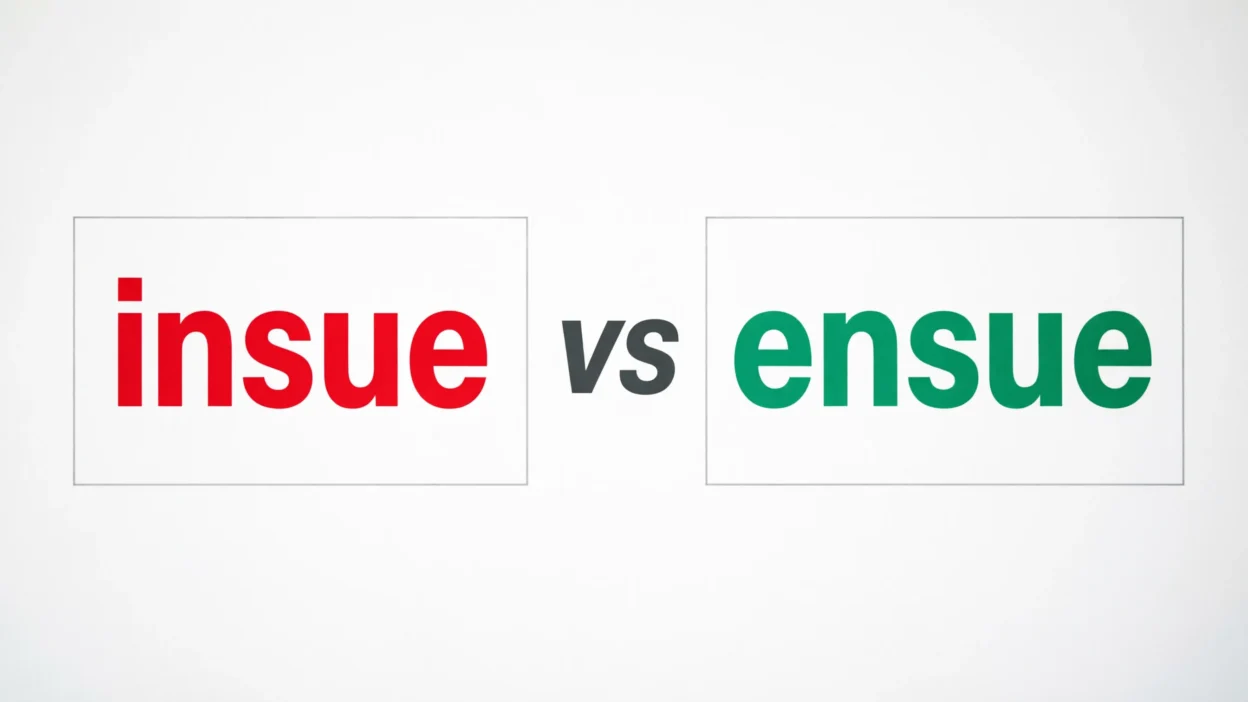
Quick Answer: Insue vs Ensue
- ❌ Insue = Incorrect spelling
- ✅ Ensue = Correct spelling
👉 Always use “ensue” when you mean something that happens as a result or follows an event.
What Does “Ensue” Mean?
The word ensue is a verb that means:
- To happen afterward
- To follow as a result
- To occur as a consequence
Simple Examples:
- Chaos will ensue if rules are ignored.
- A heated argument ensued after the discussion.
- Laughter usually ensues in that situation.
It’s commonly used in both formal and everyday contexts.
Why Do People Write “Insue”?
The confusion between insue vs ensue usually comes from pronunciation and spelling habits.
Here’s why it happens:
- The sound “en” and “in” can be easily mixed up
- “Ensue” is not a commonly used everyday word
- People assume it follows common prefixes like “in-”
👉 But in standard English, “insue” does not exist.
American vs British English Differences
Good news—this one is simple.
| Word | American English | British English |
|---|---|---|
| ensue | ensue | ensue |
✅ The spelling “ensue” is the same in both American and British English.
Examples in Real-Life Sentences
Let’s look at how to use ensue correctly.
Correct Usage:
- Panic may ensue if the system fails.
- Silence ensued after the announcement.
- Confusion often ensues in unclear situations.
Incorrect Usage:
- ❌ Panic may insue after the news.
- ❌ A fight insued between the players.
Common Mistakes to Avoid
Here are some typical errors:
- ❌ Writing insue instead of ensue
- ❌ Misunderstanding the meaning
- ❌ Using it in the wrong context
Quick Tip:
👉 If something happens as a result, the correct word is ensue.
Easy Memory Trick
A simple way to remember:
👉 “E comes before everything that follows.”
- The word starts with E → ensue
- It means something that comes next
Similar Words That Cause Confusion
If you struggle with insue vs ensue, you might also mix up:
- Ensure vs Insure vs Assure
- Accept vs Except
- Affect vs Effect
👉 These words sound similar but have very different meanings.
When Should You Use “Ensue”?
Use ensue when describing:
- Results or consequences
- Events that follow another event
- Reactions or outcomes
Common Situations:
- News reporting
- Formal writing
- Storytelling
- Cause-and-effect explanations
Practical Writing Tips
To avoid mistakes like this:
- Double-check uncommon words
- Learn meanings along with spelling
- Use grammar tools
- Practice writing in context
Clarity improves with small corrections.
FAQs About Insue vs Ensue
1. Is “insue” a real word?
No, “insue” is not a correct English word.
2. What does “ensue” mean?
It means to happen as a result or follow something.
3. Is “ensue” formal?
Yes, it’s often used in formal or semi-formal writing.
4. Is there any US vs UK difference?
No, “ensue” is spelled the same in both.
5. Can I use “ensue” in everyday speech?
Yes, but it’s more common in written or formal contexts.
6. What is the past tense of “ensue”?
The past tense is ensued.
7. What are synonyms of “ensue”?
- Follow
- Result
- Occur
- Develop
8. How do I remember the correct spelling?
👉 Think: E for Event → ensue (what happens next)
Final Summary
The difference between insue vs ensue is clear once you know the rule. “Ensue” is the correct spelling, while “insue” is incorrect and should never be used. The confusion usually comes from pronunciation and unfamiliarity with the word.
By understanding its meaning and usage, you can confidently use ensue in your writing—especially when describing results or consequences. Small spelling fixes like this can significantly improve your clarity and professionalism.
Actionable Takeaway
From now on:
- Always write ensue, not insue
- Use it when describing outcomes or consequences
- Remember the “E = Event follows” trick
- Proofread your writing carefully
Mastering words like this helps you communicate clearly and effectively every time.