If you’ve ever paused while typing “cancell” or “cancel,” you’re not alone. It’s one of those small spelling doubts that can quietly shake your confidence—especially in emails, essays, or professional writing.
The good news? The answer is simple once you understand it. In this guide, you’ll learn the correct spelling, why confusion happens, and how to avoid this mistake forever.
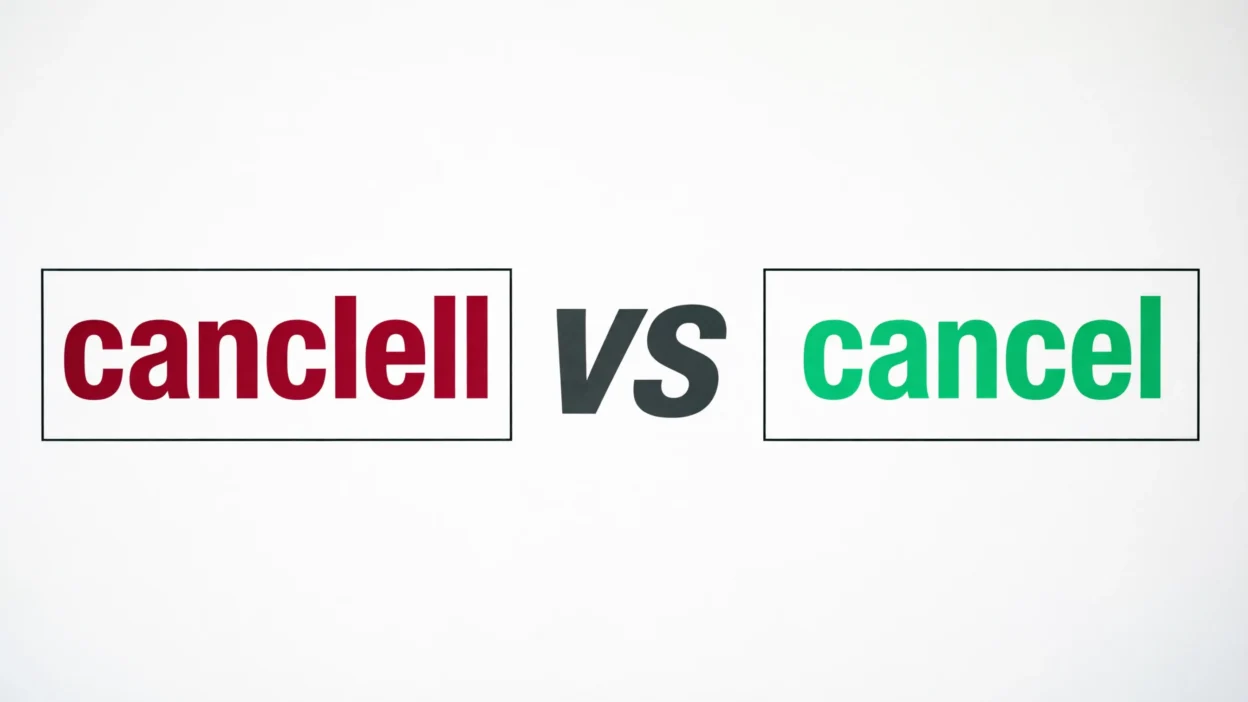
Quick Answer: Cancell vs Cancel
- ✅ Cancel = Correct spelling
- ❌ Cancell = Incorrect spelling
Use “cancel” in all contexts. The version with double “l” at the end (cancell) is not a valid English word.
What Does “Cancel” Mean?
The word cancel is a verb that means:
- To call something off
- To stop or prevent something from happening
- To remove or void something (like a subscription or order)
Simple Examples:
- I need to cancel my appointment.
- They decided to cancel the event due to rain.
- She will cancel her subscription tomorrow.
It can also be used as a noun in some contexts:
- The flight was a cancel (informal usage).
Why Do People Write “Cancell”?
The confusion often comes from how English handles double letters, especially in different forms of a word.
For example:
- cancel → cancelled (British English)
- cancel → canceled (American English)
Because “cancelled” has two “l”s in British English, many people mistakenly assume the base form is “cancell.” But that’s not correct.
👉 The base form is always cancel (with one “l”).
American vs British English Differences
This is where things get a bit tricky—but also interesting.
Base Word (Same Everywhere)
- ✅ cancel (correct in both American and British English)
Past Tense & Forms
| Form | American English | British English |
|---|---|---|
| Past tense | canceled | cancelled |
| Present participle | canceling | cancelling |
Key Takeaway:
- Americans use one “l” in endings (canceled, canceling)
- British English uses double “l” (cancelled, cancelling)
But again, the base word remains:
👉 cancel (never cancell)
Examples in Real-Life Sentences
Understanding through examples makes things stick better.
Correct Usage:
- Please cancel my order immediately.
- The teacher had to cancel the class.
- We may need to cancel our plans.
Incorrect Usage:
- ❌ Please cancell my booking.
- ❌ They will cancell the meeting.
Common Mistakes to Avoid
Here are the most frequent errors people make:
- ❌ Adding an extra “l” → cancell
- ❌ Mixing British and American styles in one sentence
- ❌ Assuming all forms follow the same spelling pattern
Quick Tip:
If you’re unsure, remember:
👉 “Cancel” = one “l” only
Easy Memory Trick
A simple way to remember this:
👉 “Cancel starts small, grows later.”
- Start with one “l” → cancel
- Add extra “l” only in certain forms (like cancelled in British English)
Similar Words That Cause Confusion
If you struggle with cancell vs cancel, you might also find these tricky:
- Travel vs Travell ❌
- Label vs Labell ❌
- Signal vs Signall ❌
👉 In most cases, the base form uses one “l”, and doubling happens only in specific grammatical forms.
When Does “Cancel” Change Its Spelling?
Let’s simplify it:
American English:
- cancel → canceled → canceling
British English:
- cancel → cancelled → cancelling
📌 Notice:
- Only the suffix forms change, not the base word.
Practical Writing Tips
To avoid spelling mistakes in daily writing:
- Use spell check tools
- Stick to one English style (American or British)
- Learn common patterns of double letters
- Proofread important documents
Consistency matters more than perfection.
FAQs About Cancell vs Cancel
1. Is “cancell” ever correct?
No, “cancell” is always incorrect in standard English.
2. Why does “cancelled” have two “l”s?
Because British English doubles the “l” when adding suffixes.
3. Is “cancel” spelled differently in the UK and US?
No. The base word “cancel” is the same everywhere.
4. Should I use canceled or cancelled?
- Use canceled in American English
- Use cancelled in British English
5. Why is this mistake so common?
Because people confuse the base word with its past tense forms.
6. Is “canceling” correct?
Yes.
- American English: canceling
- British English: cancelling
7. Can “cancel” be used as a noun?
Yes, but it’s informal (e.g., “That flight was a cancel”).
8. How can I remember the correct spelling?
Just remember:
👉 Cancel = one “l” always
Final Summary
The difference between cancell vs cancel is simple but important. The correct spelling is always “cancel”, while “cancell” is incorrect and should never be used. Most confusion comes from how the word changes in past tense—especially in British English, where “cancelled” includes an extra “l.”
To stay confident in your writing, focus on the base rule: start with one “l” and only adjust when forming other tenses (depending on your English style). This small habit can make a big difference in your clarity and professionalism.
Actionable Takeaway
From now on:
- Always write cancel (never cancell)
- Choose either American or British spelling and stay consistent
- Double-check words that change with suffixes
Mastering small spelling details like this helps you communicate clearly and confidently—every single time.