Have you ever written “agast” and wondered if it looked right? You’re not alone. This small spelling confusion often slips into everyday writing, especially when you’re trying to express shock or surprise quickly.
The truth is simple—but important. Using the wrong spelling can make your writing look unpolished. In this guide, you’ll clearly understand the difference between agast vs aghast, learn the correct usage, and avoid this mistake for good.
Quick Answer: Agast vs Aghast
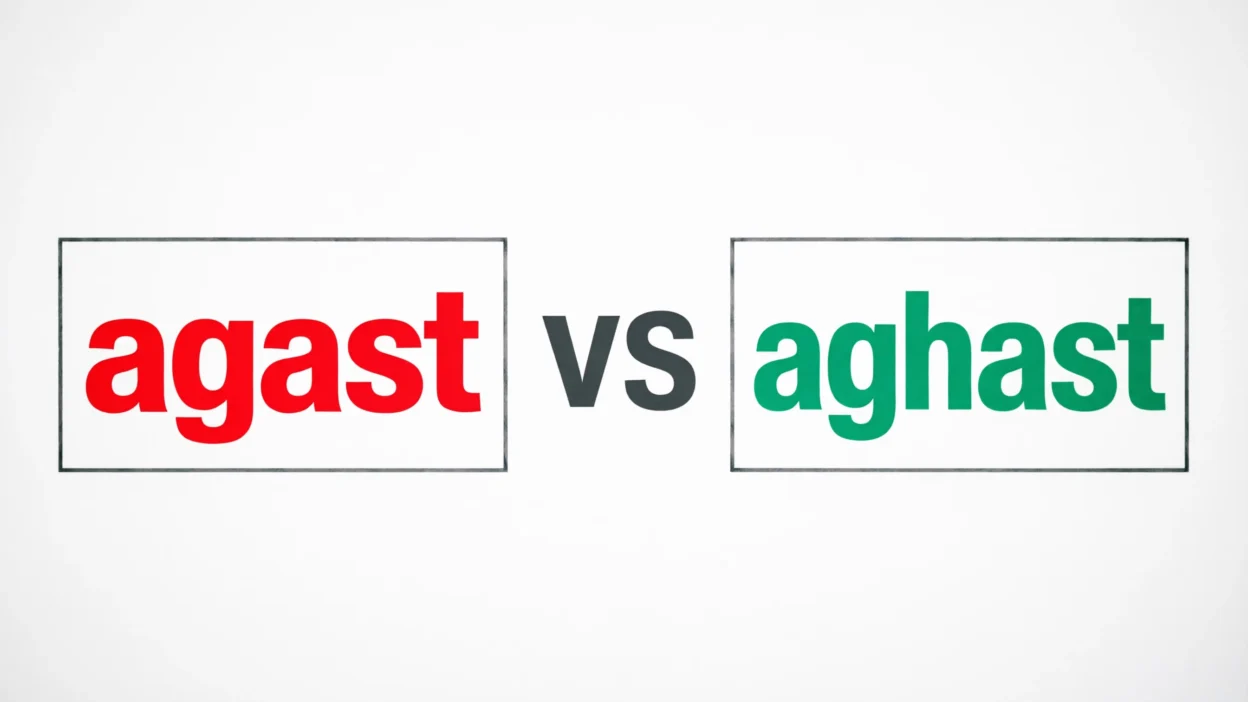
- ❌ Agast = Incorrect spelling
- ✅ Aghast = Correct spelling
👉 Always use “aghast” when describing shock, horror, or disbelief.
What Does “Aghast” Mean?
The word aghast is an adjective used to describe a strong feeling of shock, horror, or amazement—usually in a negative or surprising situation.
Simple Meaning:
- Feeling stunned
- Deeply shocked
- Filled with horror or disbelief
Examples:
- She was aghast at the terrible news.
- He looked aghast when he saw the damage.
- The audience sat aghast after the shocking twist.
It’s a powerful word often used in storytelling, journalism, and formal writing.
Why Do People Write “Agast”?
The confusion usually comes from pronunciation. When spoken quickly, “aghast” can sound like “agast,” especially for non-native speakers or in casual conversation.
Other reasons include:
- Dropping silent letters (like “gh”)
- Typing quickly without spell check
- Not recognizing “aghast” as a standard word
👉 But remember: “agast” is not a real English word.
American vs British English Differences
Here’s the easy part—there’s no difference here.
| Word | American English | British English |
|---|---|---|
| aghast | aghast | aghast |
✅ The spelling “aghast” is the same in both American and British English.
Examples in Real-Life Sentences
Seeing the word in context makes it easier to remember.
Correct Usage:
- I was aghast at how quickly things changed.
- She stood aghast, unable to speak.
- They were aghast at the unexpected outcome.
Incorrect Usage:
- ❌ I was agast at the news.
- ❌ He looked agast after hearing the story.
Common Mistakes to Avoid
Here are a few mistakes people often make:
- ❌ Writing agast instead of aghast
- ❌ Ignoring the “gh” in spelling
- ❌ Assuming pronunciation equals spelling
Quick Tip:
👉 If the situation involves shock or horror, the correct word is aghast (with “gh”).
Easy Memory Trick
Here’s a simple way to lock it in your memory:
👉 “A GHost leaves you aghast.”
- The “gh” in ghost reminds you of aghast
- Both relate to something shocking or frightening
Similar Words That Cause Confusion
If you mix up agast vs aghast, you might also struggle with:
- Ghost vs Gost ❌
- Night vs Nite ❌
- Though vs Tho ❌
👉 Silent letters can be tricky—but they matter.
When Should You Use “Aghast”?
Use aghast when you want to describe:
- Emotional shock
- Sudden disbelief
- A dramatic reaction
Common Situations:
- Storytelling
- News reports
- Formal writing
- Expressive descriptions
It adds emotional depth to your sentences.
Practical Writing Tips
To avoid spelling mistakes like this:
- Always double-check unusual words
- Use grammar tools or spell check
- Read your writing out loud
- Learn patterns of silent letters
Consistency builds confidence in writing.
FAQs About Agast vs Aghast
1. Is “agast” ever correct?
No, “agast” is not a correct English word.
2. What does “aghast” mean?
It means feeling shocked, horrified, or deeply surprised.
3. Is “aghast” formal or informal?
It’s slightly formal and often used in writing or storytelling.
4. Is there a difference between US and UK spelling?
No, “aghast” is spelled the same in both.
5. Why is “aghast” spelled with “gh”?
It comes from older forms of English where “gh” was pronounced.
6. Can I use “aghast” in everyday conversation?
Yes, but it’s more common in formal or expressive speech.
7. What are synonyms of “aghast”?
- Shocked
- Horrified
- Stunned
- Appalled
8. How can I remember the correct spelling?
👉 Think: ghost → aghast (both include “gh” and relate to shock)
Final Summary
The confusion between agast vs aghast is common, but the rule is simple: “aghast” is correct, and “agast” is not a valid word. The extra “gh” might seem unnecessary, but it’s essential for correct spelling.
Whether you’re writing a story, an email, or a formal piece, using the correct spelling ensures your message is clear and professional. Small details like this can make a big difference in how your writing is perceived.
Actionable Takeaway
From now on:
- Always use aghast when expressing shock
- Never use agast
- Remember the “ghost = aghast” trick
- Proofread your writing before sharing
Mastering these small spelling details helps you write with clarity, confidence, and credibility.