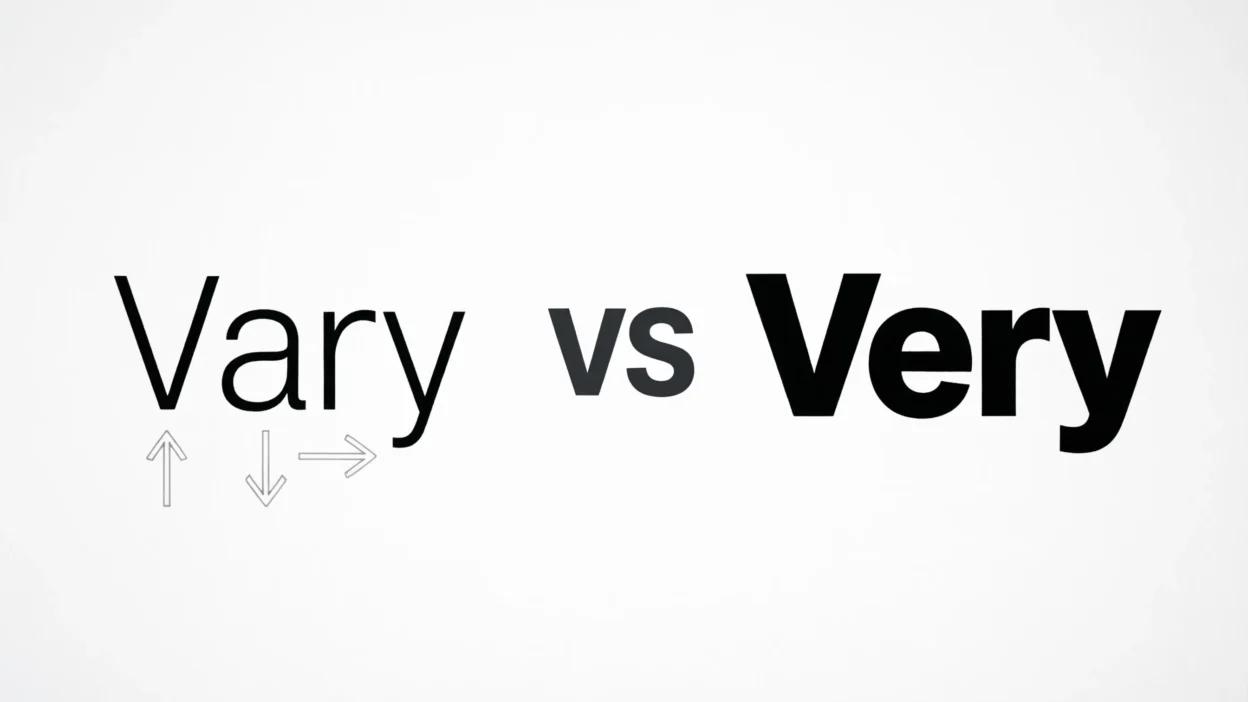
It’s surprisingly easy to mix up vary and very. They differ by just one letter, but their meanings—and how you use them—are completely different. A small mistake here can change the entire tone or clarity of your sentence.
If you’ve ever hesitated while writing vary vs very, this guide will make things simple. You’ll learn the meanings, see real examples, avoid common mistakes, and walk away confident in using both words correctly.
Quick Answer: Vary vs Very
- Vary: A verb meaning to change, differ, or become different.
- Very: An adverb used to emphasize or intensify something.
👉 Tip:
Use vary for change.
Use very for emphasis.
What Does “Vary” Mean?
Vary is a verb that describes change, difference, or variation. It’s often used when something is not constant.
Common Uses of Vary
- Describing differences
- Talking about changes over time
- Showing inconsistency
Examples of Vary in Sentences
- Prices vary depending on location.
- Results may vary from person to person.
- The colors vary across the design.
When to Use “Vary”
Use vary when:
- Something changes or differs
- There is no fixed pattern
- You’re describing variation
👉 Memory Trick:
Vary = variation or change
What Does “Very” Mean?
Very is an adverb used to strengthen or emphasize an adjective or another adverb.
Common Uses of Very
- Adding emphasis
- Intensifying descriptions
- Making statements stronger
Examples of Very in Sentences
- She is very happy today.
- This task is very important.
- He ran very quickly.
When to Use “Very”
Use very when:
- You want to intensify meaning
- You’re describing degree or extent
- You need emphasis in a sentence
👉 Memory Trick:
Very = very strong emphasis
Vary vs Very: Key Differences
Here’s a simple comparison to keep things clear:
| Feature | Vary | Very |
|---|---|---|
| Part of Speech | Verb | Adverb |
| Meaning | To change or differ | To emphasize or intensify |
| Usage Context | Variation, differences | Degree or intensity |
| Example | Prices vary | It’s very expensive |
| Function | Action word | Modifier |
Common Mistakes and How to Avoid Them
Because vary vs very look and sound similar, mistakes are common.
❌ Mistake 1: Using “very” instead of “vary”
- Incorrect: Prices very by season.
- Correct: Prices vary by season.
❌ Mistake 2: Using “vary” for emphasis
- Incorrect: She is vary happy.
- Correct: She is very happy.
❌ Mistake 3: Typing errors
This confusion often happens due to fast typing or autocorrect issues.
👉 Fix: Double-check whether you need a verb (vary) or an adverb (very).
American vs British English Differences
There’s no difference between American and British English in the usage of vary vs very.
- Both use vary for change
- Both use very for emphasis
Spelling and meaning remain consistent across regions.
Tips to Remember the Difference Easily
Use these quick memory tricks:
- Vary = change (both have “a”)
- Very = emphasis (both have “e”)
- Think: “Vary changes, very emphasizes”
Synonyms and Related Words (LSI Keywords)
For “Vary”
- Differ
- Change
- Fluctuate
- Alter
- Shift
For “Very”
- Extremely
- Highly
- Quite
- Really
- Exceptionally
Real-Life Usage Examples
Here’s how both words appear in everyday sentences:
- The results vary depending on effort.
- This is very easy to understand.
- Weather conditions vary throughout the year.
- She is very confident in her skills.
Why This Difference Matters
Confusing vary vs very can:
- Make your writing unclear
- Change the intended meaning
- Reduce professionalism in formal communication
Clear usage helps your writing stay accurate and polished.
FAQs About Vary vs Very
1. Are “vary” and “very” pronounced the same?
No, they are pronounced slightly differently, though they can sound similar in fast speech.
2. Can “vary” be used as a noun?
No, “vary” is a verb. The noun form is “variation.”
3. Is “very” always an adverb?
Mostly yes, though it can sometimes act as an adjective (e.g., “the very idea”).
4. Why do people confuse vary and very?
Because of similar spelling and pronunciation.
5. Can I replace “very” with “extremely”?
Yes, in many cases, though tone may change slightly.
6. What’s a quick way to remember the difference?
Think: Vary = change, Very = emphasis.
7. Is this mistake common in writing?
Yes, especially in informal or fast typing situations.
Final Summary
The difference between vary vs very is simple but important. Vary is a verb that describes change or difference, while very is an adverb used to add emphasis. Even though they look similar, their roles in a sentence are completely different.
By remembering the idea—“vary changes, very strengthens”—you can easily avoid confusion. Paying attention to context and sentence structure will help you use both words correctly every time.
Actionable Takeaway
Before choosing a word, ask:
- Am I describing change? → Use vary
- Am I adding emphasis? → Use very
Practice using both in sentences, and the distinction will quickly become second nature.