It’s easy to confuse specs and specks—they sound nearly identical, and a small spelling slip can completely change your meaning. Whether you’re writing casually or professionally, using the correct word matters more than you might think.
In this guide, you’ll clearly understand the difference between specs vs specks, when to use each, and how to avoid common mistakes. By the end, you’ll feel confident choosing the right word every time.
Quick Answer: Specs vs Specks
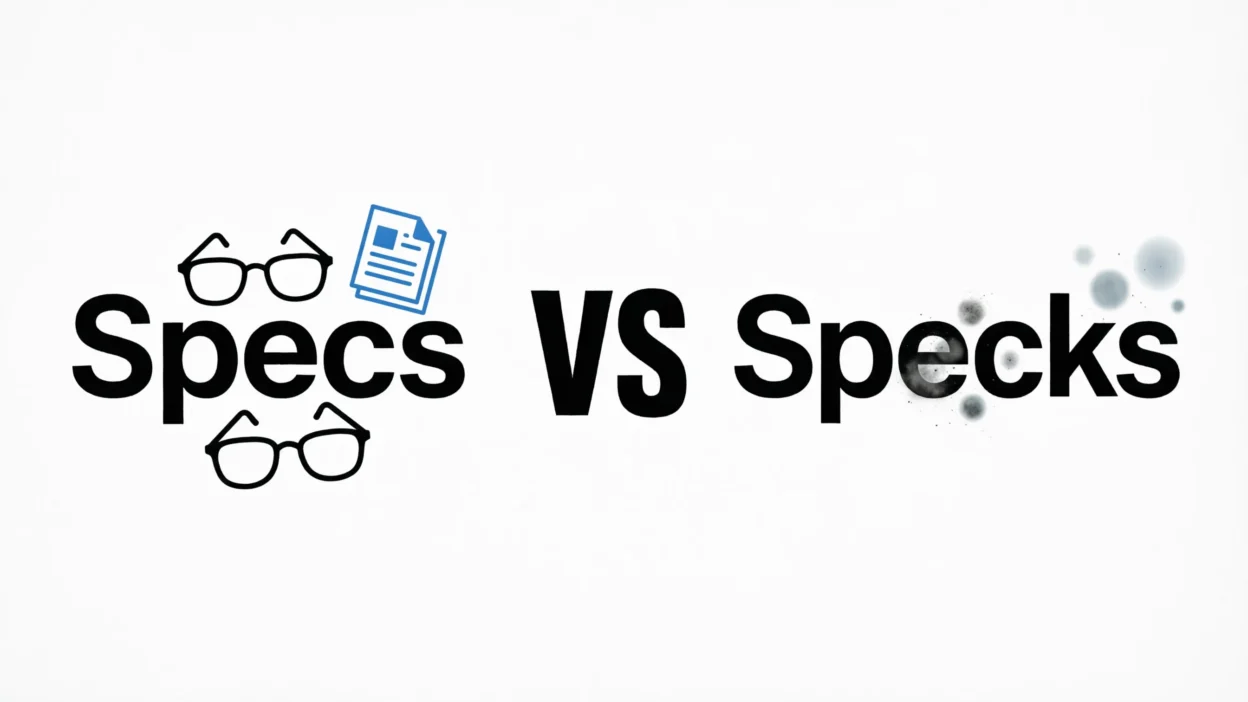
- Specs: Short for specifications or glasses (eyeglasses).
- Specks: Tiny spots, particles, or small bits of something.
👉 Tip:
Use specs for details or glasses.
Use specks for small dots or particles.
What Does “Specs” Mean?
The word specs has two common meanings depending on context.
1. Specs = Specifications
This refers to detailed information or technical descriptions about a product, system, or requirement.
Examples
- Check the phone specs before buying.
- The laptop’s specs include 16GB RAM and 512GB storage.
- We reviewed the project specs carefully.
2. Specs = Glasses (Informal)
In casual language, specs is short for eyeglasses.
Examples
- I can’t read without my specs.
- He cleaned his specs before driving.
- She bought new designer specs.
When to Use “Specs”
Use specs when referring to:
- Technical details or features
- Product descriptions
- Eyeglasses (informal usage)
👉 Memory Trick:
Specs = Specifications or spectacles
What Does “Specks” Mean?
Specks refers to very small spots, marks, or particles—often barely visible.
Key Characteristics of Specks
- Tiny in size
- Usually scattered or random
- Can refer to dust, dirt, or marks
Examples of Specks in Sentences
- There were specks of dust on the table.
- I noticed tiny specks of paint on my shirt.
- The sky was filled with specks of light.
When to Use “Specks”
Use specks when describing:
- Small particles
- Tiny dots or marks
- Bits of dirt, dust, or debris
👉 Memory Trick:
Specks = Small spots
Specs vs Specks: Key Differences
Here’s a quick comparison to make things crystal clear:
| Feature | Specs | Specks |
|---|---|---|
| Meaning | Details or glasses | Tiny particles or spots |
| Usage Context | Technology, products, eyewear | Dust, dirt, small marks |
| Part of Speech | Noun (plural) | Noun (plural) |
| Example | Check the phone specs | Dust specks on the screen |
| Common Usage | Very common | Less common but specific |
Common Mistakes and How to Avoid Them
Because specs vs specks sound the same, they’re often mixed up in writing.
❌ Mistake 1: Using “specks” for specifications
- Incorrect: Check the product specks.
- Correct: Check the product specs.
❌ Mistake 2: Using “specs” for small particles
- Incorrect: There are specs of dust.
- Correct: There are specks of dust.
❌ Mistake 3: Relying on sound instead of meaning
Both words are pronounced similarly, so always focus on context.
👉 Fix: Ask yourself—Am I talking about details or tiny particles?
American vs British English Differences
There’s no significant difference between American and British English for specs vs specks.
- Specs is used in both regions for specifications and glasses
- Specks consistently means small particles in both varieties
However, in British English, “specs” is more commonly used for glasses in everyday conversation.
Tips to Remember the Difference Easily
Make this distinction stick with these quick tips:
- Specs = Specs sheet (details)
- Specs = Spectacles (glasses)
- Specks = Small spots or particles
- Think: “Specks have ‘e’ for extra tiny”
Synonyms and Related Words (LSI Keywords)
Using related terms helps improve clarity and SEO.
For “Specs”
- Specifications
- Features
- Details
- Requirements
- Technical data
For “Specks”
- Particles
- Dots
- Flecks
- Grains
- Spots
Real-Life Usage Examples
Let’s see both words in context:
- The camera specs are impressive for its price.
- There are specks of dust on the lens.
- I forgot my specs at home.
- Tiny specks of sand covered the floor.
Why This Difference Matters
Confusing specs vs specks can:
- Change your intended meaning
- Make your writing look careless
- Confuse readers in technical or descriptive contexts
Clear and correct word usage improves both readability and professionalism.
FAQs About Specs vs Specks
1. Are “specs” and “specks” pronounced the same?
Yes, they are homophones—they sound alike but have different meanings and spellings.
2. Is “specs” short for spectacles?
Yes, in informal contexts, “specs” refers to eyeglasses.
3. Can “specks” refer to anything other than dust?
Yes, it can describe any tiny particles, such as paint, light, or dirt.
4. Which word is more common?
“Specs” is more commonly used, especially in tech and everyday speech.
5. Can I use “specks” metaphorically?
Yes, for example: “specks of hope” or “specks of light.”
6. Is it okay to use “specs” in formal writing?
Yes, especially when referring to specifications. For glasses, “eyeglasses” may be more formal.
7. How do I quickly remember the difference?
Think: Specs = details, Specks = tiny dots.
Final Summary
The difference between specs vs specks is simple but important. Specs refers to specifications or eyeglasses, while specks describes tiny particles or spots. Although they sound identical, their meanings are completely different.
By focusing on context and using simple memory tricks like “specs for details, specks for spots,” you can easily avoid confusion. Mastering this distinction will make your writing clearer and more professional.
Actionable Takeaway
Before using either word, pause and ask:
- Am I talking about details or glasses? → Use specs
- Am I talking about tiny particles? → Use specks
Practice using both in sentences, and the difference will quickly become second nature.